
The Senate has urged the Federal Government’s economic team to outline a clear pathway toward adopting a performance-priority-based budgeting system instead of the envelope budgeting system.
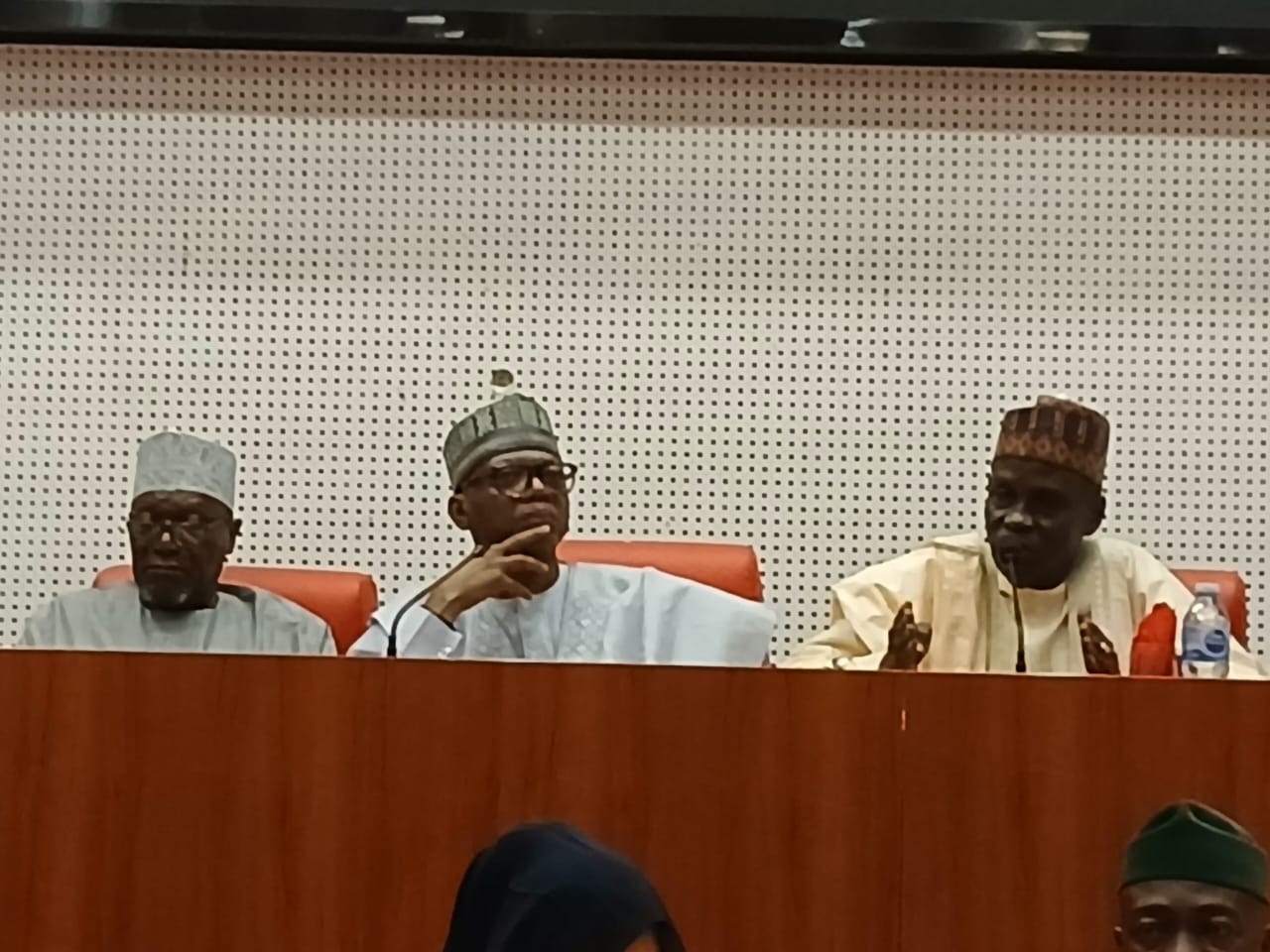
Chairman of the Senate Committee on Finance, Senator Muhammad Sani Musa, made the appeal during an interactive engagement with the economic team led by the Minister of Finance, Mr. Wale Edun.
Senator Sani Musa said a budget is based on projections, and if revenue targets are not met, effective implementation will fall short of expected outcomes.
He added that the current system appears inefficient, noting that while overhead and recurrent expenditures often receive full releases, capital components of the budget sometimes receive little or no funding. He described the situation as a major challenge that requires urgent attention.
“We see many government officials able to travel, and overhead and recurrent expenditures fully funded, while capital projects meant for Nigerians receive zero allocations. That is unacceptable to the committee. Nigeria cannot afford incremental adjustments when structural reform is required.”
However, the committee urged the Federal Government to revert to the old payment system for contractors instead of the current centralised system, which it said has left the government indebted to many contractors, including for projects executed in 2024, not to mention those of 2025.
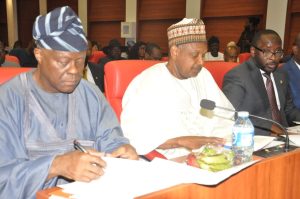
In their separate remarks, members of the committee supported the Chairman by advising the economic team to sit up for better budget planning and implementation as well as prompt payments of contractors.
Similarly, in their responses, the economic team assured the committee, and by extension Nigerians, that the outlook for 2026 is very positive regarding the implementation of the proposed ₦58.472 trillion budget.
The Minister of Finance, Mr. Wale Edun, explained to the committee that the country’s current ₦152 trillion debt profile was not accumulated through borrowing alone.
He said:
“Currently, government debt in naira terms is ₦152 trillion. About ₦30 trillion came from Ways and Means inherited by this government, and ₦9 trillion resulted from exchange rate adjustments.
So virtually half of that debt is made up of adjustments. It is not additional borrowing. Additional borrowing since 2023 is in the ₦20 trillion range.”
Earlier, at the beginning of the session with the economic team, the committee resolved to write to President Bola Tinubu, urging him to sack the Registrar-General of the Corporate Affairs Commission over his persistent refusal to appear before the committee.
The resolutions were taken during an interactive session with the Federal Government’s economic team, led by the Minister of Finance and Coordinating Minister of the Economy, Mr. Wale Edun.
Also in attendance were the Minister of Budget and National Planning, Senator Atiku Bagudu; the Accountant-General of the Federation, Dr. Shamseldeen Babatunde Ogunjimi; and the Chairman of the Nigeria Revenue Service (NRS), Zacch Adedeji.
Cov/Bashir M