The Chief lecturer, Early Childhood Care Development and Education at the Adamu Augie College of Education Argungu, Dr Adamu Ganya, has called for stronger parental engagement as a critical driver of quality Early Childhood Education (ECE), stressing that parents play a decisive role in shaping children’s academic success and overall development.
Dr Ganya made the call while presenting a paper titled “Why Parental Engagement Matters in Early Childhood Education” at a Media Dialogue on strengthening ECE and expanding access to quality education in three states of Zamfara, Sokoto and Kebbi.
The two day dialogue was organised to deepen public awareness and strengthen media advocacy around early learning, with support from the United Nations Children’s Fund (UNICEF), Sokoto State Universal Basic Education Board, and the European Union.
According to Dr Ganya, research consistently shows that children whose parents are actively involved in their education perform better academically.
He explained that, regular communication between parents and teachers helps to create a cohesive learning environment that supports children both at home and in school.
Beyond academic performance, he noted that, parental involvement significantly enhances children’s social and emotional development, including empathy, confidence, and self-esteem.
“When parents participate in their children’s early learning, they also grow more confident in their parenting skills and become better equipped to support learning at home,” he said.
Dr Ganya added that studies have identified parental engagement in early childhood education as a strong predictor of a child’s future success, stressing that early investment yields long-term benefits for individuals and society.
However, he acknowledged several barriers limiting effective parental engagement, including lack of awareness of parents’ roles in early education, limited financial and material resources, time constraints, language barriers, and socio-cultural factors that discourage some parents from participating actively in school activities.
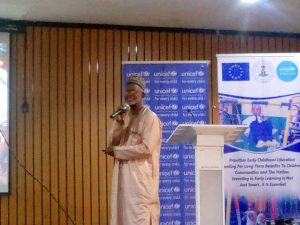

Dr Adamu Ganya emphasised that, understanding these challenges is essential to designing effective interventions that improve access to quality early childhood education across the states.
To address the gaps, Dr Ganya outlined practical strategies to promote parental engagement, such as flexible and regular communication channels between schools and parents, parent education programmes through workshops and training sessions, community partnerships with local organisations, and the creation of welcoming school environments that value parents’ contributions.
He also encouraged schools to provide volunteer opportunities that allow parents to participate in classroom activities and school events, fostering a sense of ownership and collaboration in the education process.
He however, described parental engagement as a vital pillar of quality early childhood education with far-reaching impacts on children’s cognitive, social, and emotional development, Dr Ganya urged stakeholders including government, educators, communities, and the media to work together to break down barriers and empower parents.
AMINU DALHATU