Federal Government has begun a fresh move to reposition the Federal Character Commission (FCC) as a stronger institution to manage Nigeria’s ethnic, religious and regional diversity to ensure fairness, inclusion and balance across all federal ministries, departments and agencies.
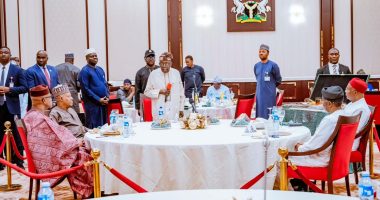
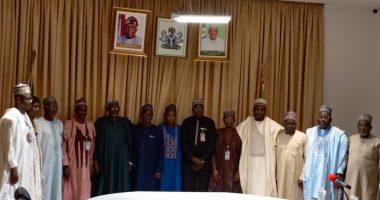
This was the thrust of discussions on Tuesday in Abuja at a two-day induction programme for newly-inaugurated commissioners of the Federal Character Commission, where the Chief of Staff to the President, Femi Gbajabiamila, declared that national unity was no longer a moral slogan but a strategic necessity for Nigeria’s survival and progress.
Mr Gbajabiamila, who was speaking at the event with the theme “Guiding the Effective Implementation and Enforcement of the Federal Character Principle”, said the FCC occupies a uniquely strategic position in Nigeria’s governance architecture, describing its mandate as central to peace, stability and confidence in the Nigerian project.
Mr Gbajabiamila reminded the commissioners that the Constitution empowers the Commission to ensure that the composition and conduct of federal institutions reflect Nigeria’s diversity, stressing that the responsibility before them was not theoretical but practical. According to him, Nigerians increasingly demand transparency, fairness and accountability, and expect to see themselves reflected in the institutions that govern them.
“National unity is not an abstract aspiration. It is a strategic necessity. Without unity, development plans falter, and reforms lose momentum,” he stated, urging the commissioners to act as “foot soldiers” of inclusion by enforcing the federal character principle with integrity and courage.
He cautioned against reducing federal character to a mere game of numbers, insisting that representation must go hand-in-hand with competence, professionalism and efficiency.
The Chief of Staff also urged the Commission to work constructively with ministries and agencies, correcting deviations firmly but fairly, while building public trust through transparency and consistency.
Mr Gbajabiamila further expanded the scope of the Commission’s responsibility beyond political appointments, noting that federal character also applies to the equitable distribution of infrastructure and social services. Drawing from his experience as a former Speaker of the House of Representatives, he recalled how a foreign loan proposal was stalled because it excluded the South-East, stressing that fairness must be visible in national budgeting and project allocation.
Dr George Akume, the Secretary to the Government of the Federation, represented by his Senior Technical Adviser, Professor Babatunde Benard, said the induction workshop was a deliberate policy step to reposition the FCC as a proactive, transparent and results-oriented institution. He said the appointment of the 5th Board reflected President Bola Tinubu’s confidence in their integrity, competence and patriotism.
Dr Akume charged the commissioners to intensify monitoring, strengthen data-driven oversight and ensure strict compliance with the federal character principle across all MDAs. He stressed that public trust in governance depended largely on how fairly and professionally the Commission discharged its mandate.
Ahmed Wase, the Chairman of the House Committee on Federal Character, called for a stronger collaboration between the legislature and the Commission in ensuring balanced representation across the federation.
Hon Hulayat Motunrayo Omidiran, the Executive Chairman of the FCC, described the workshop as a defining moment for the Commission, marking the transition from inauguration to purposeful service. She said the FCC under the current board would not be “business as usual”, pledging strict adherence to the law, ethical conduct and accountability.
According to her, the federal character principle is not a political slogan but a stabilising framework designed to foster unity, inclusion and justice in a diverse nation. She said the workshop would equip commissioners with practical tools for effective monitoring, enforcement and data-driven compliance.
The two-day induction is expected to strengthen institutional cohesion within the Commission and reposition it as a key stabilising force for national unity, at a time when Nigerians are calling for fairness, equity and inclusion in governance.
RN