Writing By Khadijah Aliyu Editing By Godwin Duru
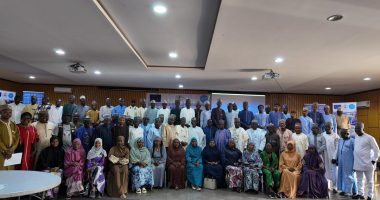
The Kano State Qur’anic and Islamiyya Schools Management Board QISMB in collaboration with UNICEF has organized a step-down training for 408 teachers on Foundational Literacy and Numeracy (FLN) under the Education and Youth Empowerment in Northern Nigeria (EYEPINN) project.
The participants were drawn from 10 focal EYEPINN local government areas, including Nasarawa, Gezawa, Kano Municipal, Gwale, Dala, Dawakin Tofa, Makoda, Dambatta, Tudun Wada, and Sumaila.
Speaking to journalists during the training, the EYEPINN Team Lead for Gwale, Dala, and Dawakin Tofa, Malam Jamilu Mukhtar, explained that the testing was organized to enhance the pedagogical skills of P1-2 IQS teachers in delivering foundational literacy and numeracy instructions.
He explained that the training focuses on equipping Islamiyya and Qur’anic school teachers with effective numeracy and literacy teaching methods for Primary One and Two pupils.
According to him, the programme covers number identification, geometry, measurement, phonetics, speaking, reading, and writing, as part of efforts to address persistent challenges such as out-of-school children, teacher capacity gaps, and the need for safe and effective learning environments.
“To Empower school teachers to effectively support pupils in developing essential foundational skills”.
Malam Jamilu further noted that the EYEPINN project prioritizes capacity building for primary school teachers, stressing that the initiative has already recorded positive results.
“Teachers trained under the first phase, particularly at Primary Three level, have cascaded the knowledge to their pupils, which has significantly improved learning outcomes,”
He urged participants to remain committed to the training and apply the acquired skills to ensure maximum benefit for learners.
One of the participants, a class teacher at Sunusiyya Islamiyya Primary School, Gwale Malama Aishatu Hussaini, described the initiative as apt and timely.
She noted that the FLN training has enhanced students’ comprehension and understanding of classroom instructions.
Malama Aishatu called for the expansion of the training to include subjects such as primary science, health education, social studies, and civic education to achieve broader educational objectives.
Another participant, Malam Muhammad Tasiu Abbas from Al’amanat Tahfizul Qur’an, Kofar Waika, said the initiative has significantly simplified teaching and learning processes.
He explained that the structured lesson notes now clearly allocate time for introduction, lesson delivery, and assessment, unlike in the past when teachers spent long hours without students fully understanding the lessons.
Malam Abbas also appealed for the inclusion of science-related subjects in the programme to further strengthen learning outcomes.
Khadijah Aliyu