Leading figures from Nigeria’s private sector, civil society organisations, and development finance institutions have sought to forge innovative pathways for building economic resilience and countering violent extremism in the country’s most vulnerable regions.
This was the highlight of the roundtable discussion in Abuja, convened by the Preventing and Countering Violent Extremism (PAVE) Network in collaboration with the Global Community Engagement and Resilience Fund (GCERF).
In his opening remarks, Chairman of PAVE Network, Jaye Gaskia emphasised that the initiative seeks more than financial contributions from the private sector. “We are not here just for financial resources. We are also looking for technical expertise, ideas, and all other forms of support,” he stated
Central to the discussions was the unveiling of the Preventing and Countering Violent Extremism (PCVE) – Knowledge, Innovation, and Resource Hub (PCVE-KIRH), a digital platform designed to consolidate research, tools, and expertise for community-level interventions
Gaskia explained that the hub would function as both a knowledge repository and a community of practice, connecting practitioners across Nigeria and beyond to share innovations, incubate solutions, and scale successful initiatives.
The roundtable advanced a transformative approach to livelihoods through value-chain cooperatives. Unlike traditional cooperative models that cluster individuals around a single activity, the proposed framework integrates entire production ecosystems—encompassing producers, transporters, processors, packagers, and distributors—to create sustainable and resilient economic structures.
“Many existing cooperatives are just groups of individuals clustered around a single activity. But what we are building are value-chain cooperatives,” Gaskia explained, noting that the model also links communities to secondary markets while addressing social and emotional recovery needs in conflict-affected areas.
Adenale Adegoke of Agroxchange Group outlined practical applications of this integrated approach, highlighting in-grower agro schemes, digital agriculture initiatives for youth, and end-to-end value chain coordination. “Our key goal is to establish a balance between social, economic, and environmental capital,” he said, noting that the model creates employment, increases incomes, and promotes sustainable agricultural practices.
A significant portion of the dialogue focused on unlocking development finance, particularly through the African Development Bank’s (AfDB) Fragility, Conflict, and Violence (FCV) Support Facility. Consultant with the AfDB,
The roundtable concluded with consensus on several imperatives: strengthening institutional frameworks, aligning projects with state development plans, conducting comprehensive feasibility studies, and building capacity to produce bankable proposals.
Participants also emphasised the importance of considering political economy factors, including alignment with gubernatorial tenures and long-term state development strategies.
By integrating private sector innovation, development finance mechanisms, and community-centred cooperative models, stakeholders expressed confidence that Nigeria’s fragile states can be transformed from zones of vulnerability into engines of sustainable growth and stability.
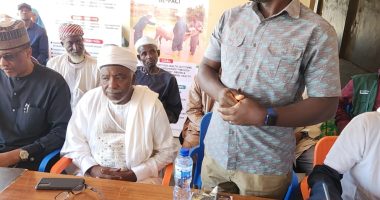
The roundtable discussion was attended by the National Coordinator, Media Against Violent Extremism (MAVE) Network, Senator Iroegbu
Other stakeholders, included Jaye Gaskia, Chairman of PAVE Network; Yetunde Adegoke, National Coordinator of GCERF Nigeria; Emmanuel Nehemiah, CEO of Nehemiah Foundation; Umar Saleh Anka, Director of Research at Green Legacy Nigeria; Adenale Adegoke, CEO of Agroxchange Group; and Ilyasu Ishak, Investment Coordinator at Robust International Commodities Limited, amongst others.
Fati Aliyu