Experts have called for urgent reforms in Nigeria’s climate governance and policy implementation to strengthen accountability, ensure gender inclusivity, and address the rising link between climate change, insecurity, and social vulnerability.
The Deputy Director of the National Institute for Legislative and Democratic Studies, Dr. Terfa Abraham, said this while speaking during a webinar organized by the Rule of Law and Empowerment Initiative, also known as Partners West Africa Nigeria (PWAN).
According to Dr Abraham, the National Assembly must first strengthen the legal framework for climate action in Nigeria, nothing that, the current Climate Change Act is weak and limits effective legislative oversight.
He noted that, under the existing law, the National Council on Climate Change (NCCC) is chaired by the President and Vice President, making it difficult for the National Assembly to hold the Council accountable.
“No legislator can effectively engage the Council in such a setup. We must amend the Act to create a clear and functional governance framework,” he emphasized.
Dr Terfa Abraham urged lawmakers to leverage their constituency projects to address local climate impacts, promote adaptation, and support women farmers through community-based initiatives.
“Climate change effects are happening right in the constituencies drought, erratic rainfall, biodiversity loss. Legislators must use their constituency engagement platforms to support climate-resilient farming, empower women, and promote sustainable livelihoods,” he added.

Dr. Abraham stressed that, Nigeria’s policy direction must recognize the link between climate change and insecurity, noting that, women are often the most affected during floods, droughts, and conflicts.
“Climate change leads to insecurity, and insecurity worsens climate impacts. During floods or conflicts, it is women who flee with children, lose farmland, and face food insecurity. Policies must be gender-responsive and sensitive to these realities,” he said.
He further called for the legislation of national development frameworks such as the Renewed Hope Agenda to ensure continuity beyond political cycles.
Also speaking, the Gender and GBV Expert Advisor, ACReSAL Project, Mrs. Helen John, underscored the importance of gender integration and capacity building at all levels of climate programming.
“Gender mainstreaming should not be treated as an afterthought. Policymakers and project managers must understand why gender integration is crucial and provide adequate funding for it,” she said.
Mrs. John emphasized that, women should not only be beneficiaries but also leaders and decision-makers in climate and development programs.
She cited examples from Nasarawa and Adamawa states where community women now lead mixed groups and have begun gaining access to land ownership through ACReSAL interventions.
In her remarks, the Child Protection Manager at Goal Prime Organization Nigeria, Hauwa Danjuma, highlighted the role of localization in ensuring sustainable, inclusive, and gender-responsive humanitarian interventions.
“Localization is the long-term solution to sustainable climate response. Local actors understand the context, cultural dynamics, and community needs better,” she explained.
Hauwa called for direct funding and capacity building for community-based women organizations to strengthen their technical and financial ability to engage in climate and peacebuilding processes.
“Most community-based women organizations lack capacity and resources. Empowering them will enhance women’s voices in decision-making and build local ownership of climate initiatives,” she added
Earlier, the Programme Manager of Partners West Africa Nigeria (PWAN), Aisha Isa, said the webinar was part of the organization’s quarterly dialogue series aimed at addressing emerging issues around climate, governance, and gender.
“We’ll continue to unpack challenges around climate, governance, and gender, bringing together experts, policymakers, and community leaders to shape solutions that are inclusive and leave no one behind,” she stated.
According to her, the session aimed to explore the interconnections between climate change, gender inequality, and conflict and Showcase women and youth-led grassroots initiatives promoting peace and environmental resilience.
Similarly to Co-create practical strategies for gender-responsive climate justice and Strengthen multi-stakeholder collaboration for peace and sustainability.
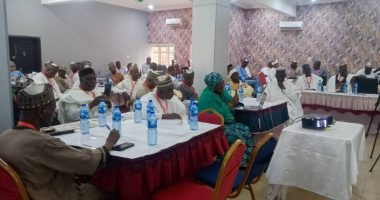
The webinar, titled “Climate Change and Conflict: Advancing Climate Justice through Gender-Responsive Peacebuilding,” brought together civil society actors, and development partners to deliberate on how gender-inclusive approaches can strengthen Nigeria’s climate resilience and peacebuilding efforts.
Background
The increasing incidence of climate-induced disasters continues to compound Nigeria’s security and development challenges.
According to the National Emergency Management Agency (NEMA), over 5.2 million Nigerians were affected by floods and climate disasters in 2024, resulting in 1,237 deaths, the displacement of 1.2 million people, and destruction of over 116,000 homes and 1.4 million hectares of farmland across 35 states.
Experts warn that without deliberate, gender-sensitive, and community-based interventions, climate change will continue to exacerbate poverty, displace rural populations, and fuel violent conflicts across the country.
AMINU DALHATU