
Writing By Khadijah Aliyu ; Editing By Godwin Duru
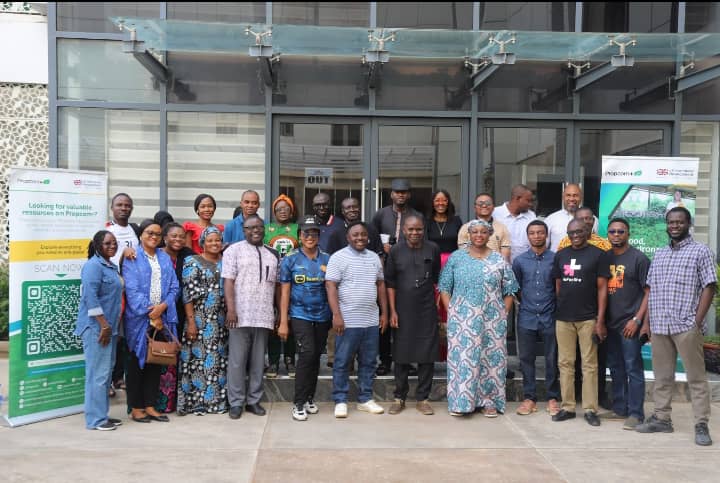
A UK-funded climate-smart agriculture programme,Propcom+, has organized a three-day media training and field tour aimed at equipping journalists with the skills and knowledge to report more effectively on climate-smart agricultural practices in Nigeria.
Participants, drawn from across northern Nigeria, Lagos, and Abuja, were exposed to innovative interventions and approaches designed to strengthen food systems, enhance resilience, and protect the environment.
The training aims at improving coverage of climate-smart agriculture by linking reporters to credible sources of information, data, and evidence, and enhancing storytelling skills to promote impactful journalism that can shape policy discourse and drive reforms.
In her welcome remarks, the Country Representative of Propcom+, Dr Adiya Ode explained that the programme, funded by the UK’s Foreign, Commonwealth and Development Office (FCDO), is an eight-year (2023–2030) initiative designed to transform Nigeria’s agricultural and land-use systems into resilient and sustainable engines of growth.
According to her, the program seeks to empower over four million rural farmers, with half of them women to adapt to climate risks, boost productivity, and protect natural ecosystems.
“The program is already delivering practical innovations that are transforming the livelihoods of Nigerian small holder farmers and entrepreneurs,”
Among the innovations highlighted were the promotion of climate-smart, biofortified seeds through local outgrowers, and the last-mile delivery of livestock vaccines using solar-powered fridges and trained Community Animal Health Workers (CAHWs).
These interventions, she explained, are creating jobs, increasing yields, and protecting livestock in underserved communities.
In his presentation titled “The Role of Media in Climate-Smart Agriculture Reporting and Advocacy”, the training facilitator Adam Alqali described journalists as partners in resilience who must remain committed to reporting in an accurate, inclusive, and impactful manner.
Alqali emphasized that journalists have the potential to serve as agenda setters for Nigeria’s climate-smart agriculture (CSA) future, shaping public discourse and influencing policy through their work.
He advised participants to adopt engaging storytelling techniques when reporting on climate-smart agriculture, such as starting with a character, using narrative, capturing direct quotes, incorporating visuals, and concluding with messages that inspire hope and policy action.
According to him, these approaches will not only humanize climate-smart agriculture stories but also strengthen advocacy and drive national conversations around resilience and sustainability.
Highlights of the training includes virtual presentations from the Propcom+ team and a media field tour that provided journalists firsthand exposure to how these interventions are impacting rural farmers and shaping Nigeria’s response to climate change.
Cov/Khadijah Aliyu