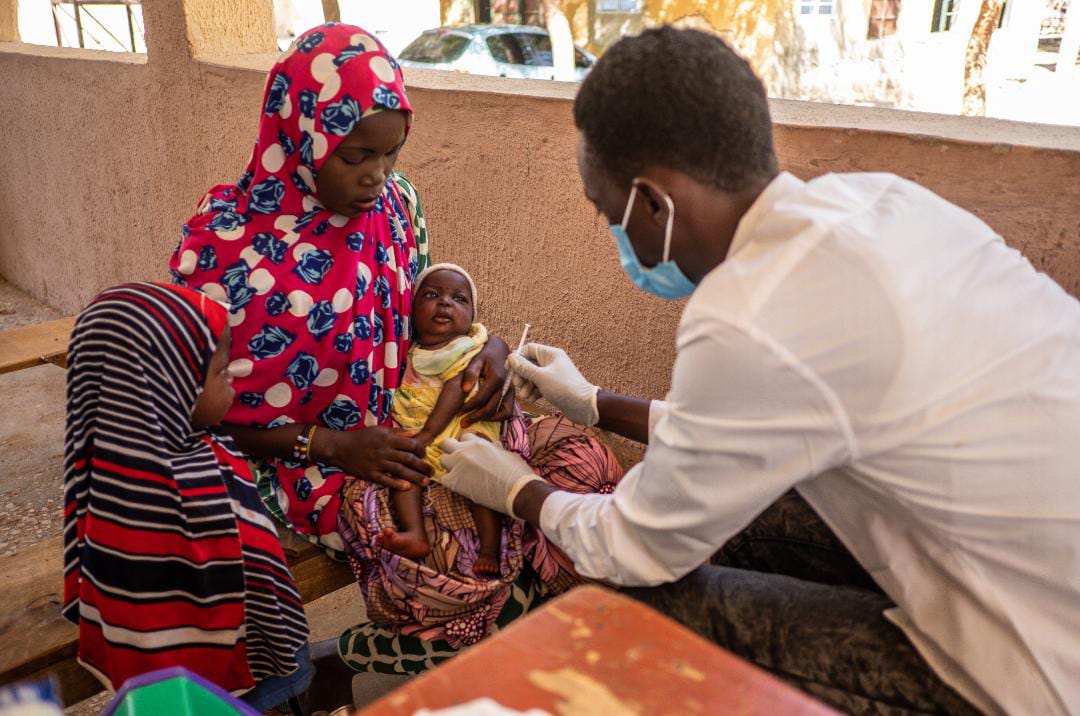

Save the Children Immunisation Accelerator, funded by GSK, has awarded grants to two innovative projects aimed at improving child immunisation coverage in Nigeria and Ethiopia.
The Save the Children’s Immunisation Accelerator Lead, Ermias Teshome, praised the selected projects, in a statement in Dutse, Jigawa State stating that locally driven innovations are essential to overcoming immunisation challenges.
It explains that the selected projects will receive nearly $100,000 each to scale up their solutions and address barriers to vaccination.
Nigeria and Ethiopia face significant immunisation challenges, with 2.1 million children in Nigeria and nearly one million in Ethiopia classified as ‘zero dose’ having never received a routine vaccine.
To tackle this, Save the Children launched the Immunisation Accelerator in April 2024, calling for innovative solutions from local organisations.
Following a review of 120 submissions, two projects were selected: The Centre for Integrated Health Programs (CIHP) in Nigeria and HABTech Solutions PLC in Ethiopia, the statement said.
These organisations will receive financial and technical support to implement their immunisation strategies.
CIHP’s innovation focuses on a social and behaviour change model that uses a ‘positive deviance’ approach.
This strategy encourages caregivers who have successfully vaccinated their children despite challenges to share their experiences and influence others.
According to CEO of CIHP, Dr. Bolanle Oyeledun, the project will work closely with Lagos State communities, particularly in urban slums, to identify missed vaccination opportunities and address caregiver-driven vaccine hesitancy.
In Ethiopia, HABTech Solutions has developed a digital innovation that uses data analytics and visualization to improve immunisation efforts.
The platform helps identify hard-to-reach children, track vaccine shortages, and provide real-time data for better decision-making.
The General Manager of HABTech, Adane Letta Mamuye, note that the tool will empower stakeholders to create targeted interventions for zero-dose children, ensuring they are not overlooked by traditional vaccination programs.
The statement also emphasises that the solutions developed by CIHP and HABTech have the potential to drive scalable impact in Nigeria, Ethiopia, and beyond.
The selected projects will be implemented alongside Save the Children’s vaccination programs with GSK. A second call for submissions is expected in April 2025.
REL/USMAN MZ