
By Shindong Bala
The European Union is supporting Kaduna, Benue and Oyo States, as well as the Federal Capital Territory, FCT, to strengthen the fight against Sexual and Gender-Based Violence through legislative reforms, improved institutional capacity and enhanced access to justice for survivors.
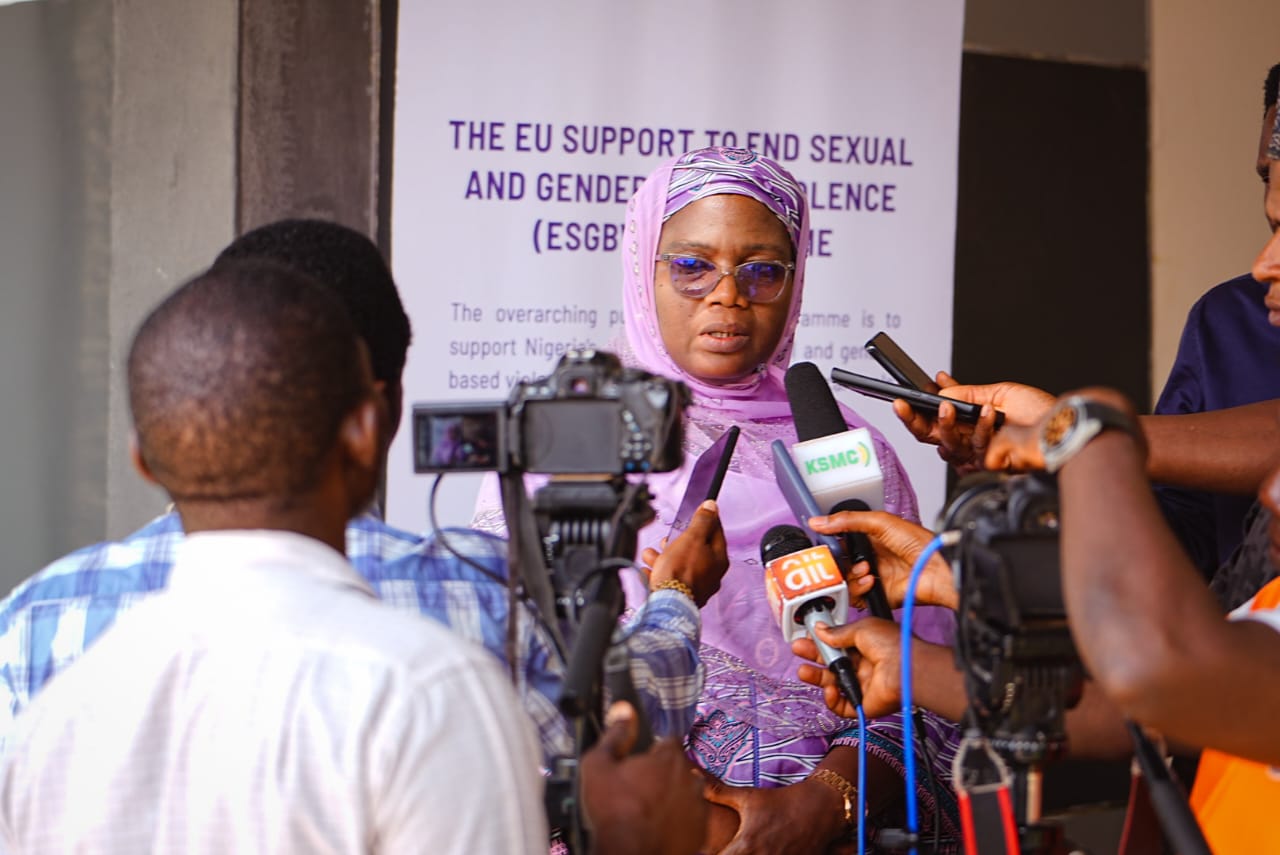
Senior Programme Manager of the European Support to End Sexual and Gender-Based Violence Programme, Mrs Mufuliat Fijabi, disclosed this at a capacity-building workshop on Gender-Based Violence in Kaduna.
Mrs Fijabi explained that the four-year programme, implemented through the International Institute for Democracy and Electoral Assistance, International IDEA, was designed to support the review of relevant legislation, develop standard operating procedures and strengthen the capacity of government institutions and other critical stakeholders responding to cases of sexual and gender-based violence.
She identified improved access to justice, institutional support and behavioural change through increased public awareness as the three major areas of intervention.
According to her, the training is aimed at equipping law enforcement agencies with the necessary skills to handle reported cases professionally, ensure timely responses and prevent survivors from being neglected in the process of seeking justice.
She added that the programme would also strengthen referral mechanisms to enable survivors to access medical care, counselling, social support and economic empowerment.
Speaking on Kaduna State’s intervention, a Principal State Counsel at the Ministry of Justice, Mrs Salvation Zainabu Kyari, said the ministry had established a Citizens’ Rights Department to provide accessible alternative dispute resolution services, particularly for vulnerable persons who cannot afford legal representation.
Mrs Kyari disclosed that the department had handled more than 180 cases in about two years, with over 90 per cent involving sexual and gender-based violence.
She explained that the department provides survivors with direct access to justice while also collaborating with law enforcement agencies and other relevant institutions where criminal investigations and prosecution are required.
Also speaking, a Social Welfare Officer with the Kaduna State Ministry of Women Affairs, Umar Abubakar Muhammad, said the ministry was working with development partners and social welfare officers across the state’s three senatorial districts to ensure that reported cases of gender-based violence received appropriate attention.
He said the ministry provides temporary shelter for survivors who require safe accommodation and also supports their rehabilitation through skills acquisition and other empowerment initiatives.
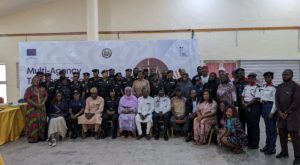
Similarly, the Officer in Charge of the Gender and Family Support Unit of the Kaduna State Police Command, Superintendent of Police David Dominic, said continuous capacity-building programmes were improving police officers’ response to gender-based violence cases.
Mr Dominic explained that the training also exposes officers to relevant provisions of existing laws, including the Violence Against Persons Prohibition Law, and equips them to handle cases beyond rape, such as domestic violence, assault and battery.
He said the training adopts a train-the-trainer approach, which enables participants to transfer the knowledge acquired to officers in their respective units.
The participants expressed optimism that sustained collaboration among government institutions, law enforcement agencies and development partners would improve the protection of survivors and reduce the incidence of sexual and gender-based violence in Kaduna State.
Editorial note: The report distinguishes between criminal cases requiring police investigation and prosecution and matters that may be addressed through alternative dispute resolution. This is important for legal and journalistic accuracy, particularly in reporting sexual and gender-based violence.