By Shindong Bala, Kaduna
The Kaduna State Reaching Out-of-School Children (ROOSC) Project has announced plans to return 100,000 out-of-school children to formal education within the four years, as the state marked the 2026 International Literacy Day.
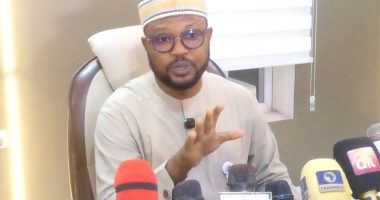
The State Coordinator of the ROOSC Project, Mr. Ezra Angai, disclosed this while briefing journalists in Kaduna as part of activities marking the International Literacy Day.
Angai said the project had identified 187,719 out-of-school children across Kaduna State, with more than half of them being boys forced out of school by household economic pressures.
He explained that the figures were generated through a comprehensive mapping exercise that covered about 360,000 households across the 23 local government areas, enabling the project to identify the children by name, location and reasons for being out of school.
According to him, more than 90 per cent of the children were out of school because of household-related challenges, particularly poverty, while about 57 per cent were boys engaged in farming, hawking and other economic activities to support their families.
Angai said the findings had provided the government with reliable data to properly target interventions instead of relying on estimates.
ROOSC Funding
He disclosed that the ROOSC programme had attracted $62.8 million in funding from development partners, including the Islamic Development Bank, Kuwait Fund for Arab Economic Development, Global Partnership for Education, Education Above All, Save the Children International and UNICEF.
He said the intervention would include the construction of 102 new schools and renovation of 170 existing schools, adding that work was already ongoing at 42 sites.
The ROOSC Coordinator said the project was also incorporating Sangaya learning centres into the education system through collaboration with Alarammas, providing learners with foundational literacy, numeracy and life skills alongside their religious education.
Mr. Ezra Angai maintained that the project had adopted the Accelerated Basic Education Programme (ABEP) to provide an alternative learning pathway for overage children between 11 and 17 years who might otherwise remain excluded from formal education.
Under the programme, he explained, the basic education curriculum is condensed into two years and six months, after which learners can transition to secondary education or acquire vocational skills.
Mr. Angai said 44,000 teaching and learning materials had so far been distributed under the ROOSC project, while radio learning was being deployed in hard-to-reach and security-sensitive communities.
He added that more than 2,000 menstrual health and hygiene materials had been provided to girls to help reduce school absenteeism associated with menstruation.
ROOSC Inclusive Education
On inclusive education, Angai said children living with disabilities had been identified during the mapping exercise and assessed by medical professionals and therapists, with appropriate assistive devices provided to those in need.
He cited the case of a boy, Israel, whose inability to stand had prevented him from attending school, saying the project provided him with a wheelchair and physiotherapy support to improve his mobility.
The coordinator stressed that the ROOSC intervention was not limited to enrolling children but also focused on ensuring that they remained in school.
Monitoring Mechanism
He said case workers, community coalitions, teachers and government monitoring teams had been deployed to track attendance and intervene whenever a child stopped attending school.
The coordinator stressed that the community-based monitoring mechanism had helped return children to school after family-related challenges, including cases where parents had withdrawn their daughters from school for marriage.
He further said the project had established a multi-layered monitoring system involving Save the Children International, SUBEB, the Kaduna State Quality Assurance Authority and the Ministry of Education to track learners and assess implementation.
Significance of Literacy Day
Speaking on the significance of literacy in the 21st century, Angai said literacy had gone beyond the ability to read and write, stressing the need for people to acquire digital, artificial intelligence, technical and vocational skills.
He said modern literacy must also include environmental awareness and the ability to use knowledge and skills to create sustainable livelihoods and prosperity.
Angai noted that the 2026 International Literacy Day marked 60 years since the global observance was established in 1966, adding that UNESCO estimates show that about 739 million people worldwide still lack literacy skills.
He emphasized that the Kaduna experience demonstrated that addressing the out-of-school children crisis required a holistic approach that tackles poverty, disability, gender, distance, social practices and inadequate learning opportunities.
He reaffirmed the project’s commitment to ensuring that every child in Kaduna State has access to quality and inclusive education.
Edited by Shafii Abubakar Wababe