By Ali Muhammad Rabiu
The Presidential Livestock Reforms Implementation Committee says the ongoing training of livestock farmers in Kwara state on forage production will reduce farmer-herder conflicts and strengthen the livestock sector.
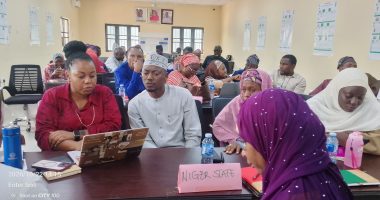
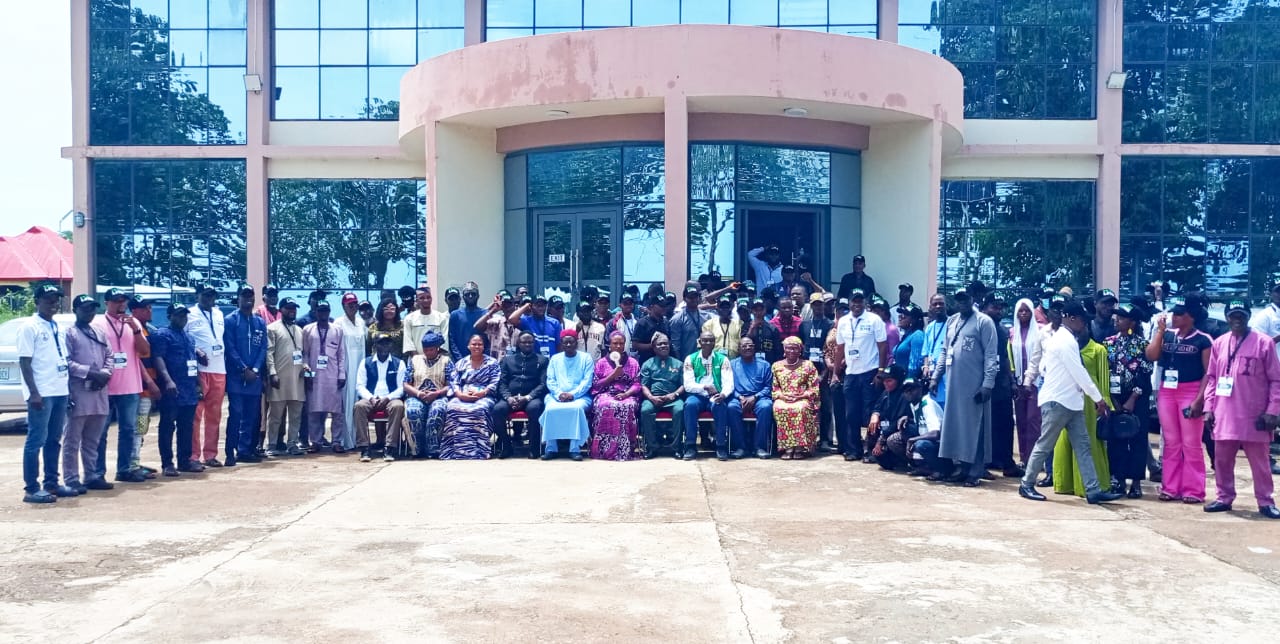
A member of the committee, Professor Demo Kalla stated this while speaking with Journalists during a capacity-building programme for 100 livestock farmers on the conservation and preservation of forage crops for sustainable livestock feed production under the Kwara State Livestock Productivity and Resilience Support Project (L-PRES) .
According to him , the programme is aimed at equipping farmers with practical skills to produce and preserve feeds for livestock.
Professor Kalla , who is also the Director of the TETFUND Centre of Excellence on Food Security, Dairy Research and Development Centre at Abubakar Tafawa Balewa University, Bauchi, said the initiative was timely, considering the importance of adequate feeds to livestock production.
He said the L-PRES project provides opportunities for youths, women and farmers actively involved in the livestock value chain to acquire skills that can improve their livelihoods while contributing to Nigeria’s food and feed security.
“For this particular cohort, people have been drawn across the state to share their experiences and learn skills hands-on, particularly for forage conservation,” he said.
Kalla stressed that shortage of feed could worsen competition over available resources and fuel conflicts between farmers and herders.
“We cannot have enough feed for our animals; definitely, there will be crisis,” he said.
He described the training as a potential game changer, saying it would create new opportunities for participants, improve livelihoods and contribute to increased production of animal-source food.
Kalla also welcomed the establishment of the Federal Ministry of Livestock Development, describing it as a significant step towards giving greater attention to Nigeria’s livestock economy.
He said members of the Presidential Livestock Reforms Implementation Committee had advocated for the creation of a dedicated ministry, adding that its establishment meant livestock development was finally receiving focused attention at the federal level.
In his address , Kwara state Governor AbdulRahman AbdulRazaq, represented by the state commissioner for Livestock Development, Mrs. Oloruntoyosi Thomas, said that there is no longer excuse for youth unemployment in Kwara state, especially, with efforts and activities of the present government at developing livestock sector.
The governor enjoined the youth to make use of the knowledge garnered at the training programme to grow themselves.
He explained that the state’s Livestock Productivity and Resilience Support Project (L-PRES) and other strategic interventions (such as SAPZ) have helped in building a livestock sector around: productivity, resilience and commercialisation, adding that the results are becoming visible.
According to him, 8,951 people have been profiled along selected livestock value chains, with around 100 stakeholder engagements involving communities and value-chain actors since L-PRES activities started in the state in October 2023.
“we are interested in results and impact .Our records show that 238,718 animals have been vaccinated against key livestock diseases; cattle, sheep, goats and poultry, with more than 1,100 livestock farmers directly benefiting from vaccination activities”
“As a government, our aim is to protect the animals that represent the livelihoods, savings and businesses of thousands of Kwara families.”
“We have rehabilitated and equipped the veterinary laboratory in Ilorin and strengthened the vaccine cold-chain system with solar power. Following these interventions, the number of animals screened by the laboratory increased from 157 to 246,” he listed, among others.
On his part, the Director of Ranch and Pastoral Resources Development in the Federal Ministry of Livestock Development, Hakeem Ibilade, said the ministry had made progress since its creation, but noted that meaningful results in agriculture could not be achieved overnight.
Ibilade explained that livestock development involved biological and administrative processes that required time before results could be fully realised.
“Anything agriculture, be it livestock, crop or fisheries, has a waiting period. If you have maybe a goat, if it gets pregnant today, it will not deliver today. You have to wait at least five months. It is the same thing with processes.”
He assured Nigerians that the ministry was moving forward, stressing that the progress already made in developing the livestock sector would be sustained.
Editing By Godwin Duru