
Federal Government has inaugurated an Interministerial Committee on the Nigerian Agricultural Quarantine Service (NAQS) to strengthen Nigeria’s agricultural biosecurity system, enhance non-oil exports, and improve the country’s competitiveness in regional and international markets.
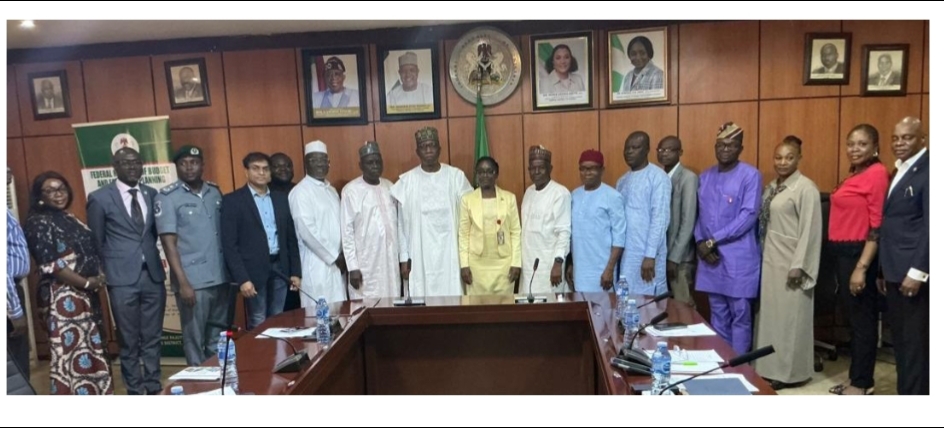
The Committee, inaugurated by the Permanent Secretary of the Federal Ministry of Budget and Economic Planning, Dr Deborah Odoh, on behalf of the Minister, Senator Abubakar Bagudu, is aimed at building an efficient, internationally compliant agricultural quarantine system that will protect Nigeria’s agricultural resources while expanding access to global markets.
Dr Odoh noted that Nigeria could no longer afford the losses resulting from the rejection of agricultural exports due to non-compliance with international standards.
She said the Committee reflects the Federal Government’s commitment to strengthening policy coordination, removing institutional bottlenecks, harmonising regulatory processes, and aligning the country’s quarantine system with global best practices.
Dr Odoh urged members to discharge their responsibilities with professionalism, patriotism, and a strong sense of national duty.
Speaking at the inauguration, the Comptroller-General and Chief Executive Officer of the Nigerian Agricultural Quarantine Service, Dr Vincent Isegbe, said the agency carries out pest risk analysis, inspections, surveillance, certification, and other quarantine procedures to ensure agricultural products entering or leaving Nigeria meet internationally accepted standards.
He stressed that a stronger agricultural quarantine system would reduce the rejection of Nigerian exports, increase foreign exchange earnings, enhance the country’s reputation as a reliable exporter of safe agricultural products, and create more opportunities for farmers, exporters, and agribusinesses.
Earlier, the Director of Economic Growth at the Federal Ministry of Budget and Economic Planning, Mr Auwal Mohammed, described the inauguration as a major step towards strengthening inter-agency collaboration to support agricultural development, food security, and economic diversification.
He added that an effective agricultural quarantine system is essential for protecting Nigeria’s crops, livestock, fisheries, and natural resources from transboundary pests and diseases while ensuring compliance with international sanitary and phytosanitary standards.
The Committee is mandated to review proposals for strengthening the operational capacity of NAQS, assess infrastructure and laboratory needs, recommend sustainable funding mechanisms, and develop practical strategies to improve compliance with international sanitary and phytosanitary standards while promoting Nigeria’s agricultural exports.
Its membership includes representatives of the Federal Ministry of Budget and Economic Planning, the Federal Ministry of Agriculture and Food Security, the Federal Ministry of Finance, the Federal Ministry of Industry, Trade and Investment, the Budget Office of the Federation,
Also, the Nigeria Customs Service, the Nigerian Agricultural Quarantine Service, the Nigeria Civil Aviation Authority, the Nigerian National Accreditation System, the All Farmers Association of Nigeria (AFAN), the International Institute of Tropical Agriculture (IITA), freight forwarding associations, and other key stakeholders.
RN