
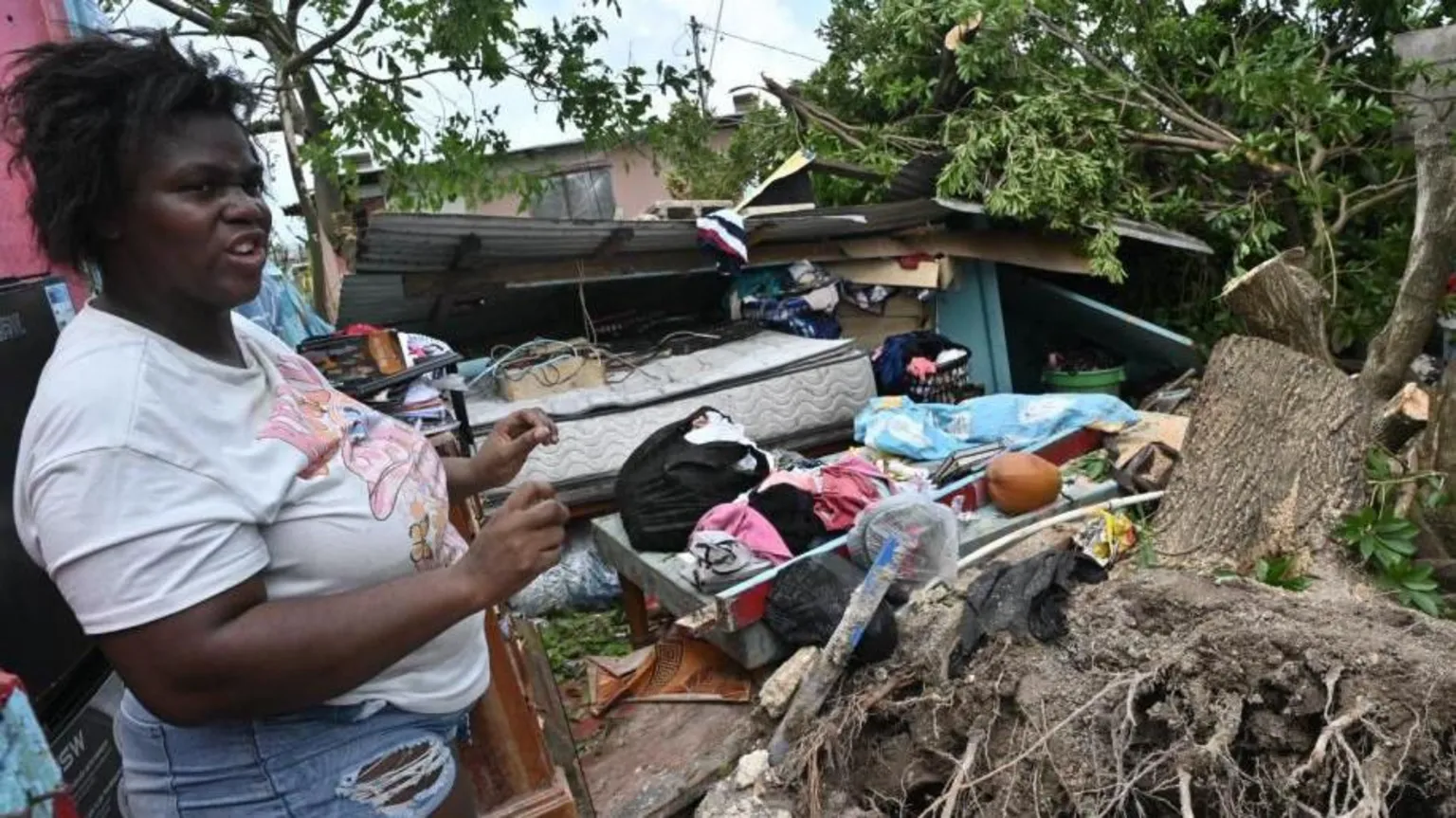
Jamaicans are taking stock after Hurricane Melissa, the strongest storm to strike the island in modern history, barrelled across the country leaving behind a trail of ruin.
Without power or phone coverage, much of the country is isolated and so information is trickling through.
Authorities were only able to confirm the first deaths as a result of the hurricane over 24 hours after landfall. The bodies of three men and one woman were washed up by the flood waters in St Elizabeth Parish, local government minister Desmond McKenzie said.
There, Prime Minister Andrew Holness said “images of destruction are all around”.
“The damage is great, but we are going to devote all our energy to mount a strong recovery,” he said.
Three-quarters of the country are still without power, according to the latest media briefing.
On the road west out of the capital Kingston we saw minimal damage – some structures torn down, trees strewn across roads and gardens.
But once we arrived in central Jamaica we started to see how severely the island has been hit. The town of Mandeville has been, for want of a better word, flattened. A petrol station had lost its roof and most of its pumps.
The main road that runs through the town is littered in debris, foliage is stuck to everything and bits of building material were scattered along the road.
By early Wednesday the hurricane had made landfall in Cuba, causing flooding and damage. In Haiti more than 25 people were killed, most when a river burst its banks in Petit-Goave, the local mayor said.
At its peak, the hurricane sustained winds of 298 km/h (185 mph) – stronger than Hurricane Katrina, which devastated New Orleans in 2005 and killed 1,392 people. It has since weakened to a Category 3 hurricane.
BBC