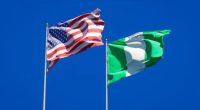
When Nigeria gained independence on October 1st, 1960, it wasn’t just the lowering of a colonial flag and the rise of a new one; it was the result of decades of struggle, sacrifice, and unshakable vision from men and women who believed in the dream of a free Nigeria.
The journey to freedom was not walked by one person, but by a generation of leaders who carried the hopes of millions. Some fought with words, others with policies, some through activism, and others by breaking barriers. Together, they paved the way for a sovereign Nigeria.
Here are some of the key figures who shaped Nigeria’s path to independence:
Herbert Macaulay (The Father of Nigerian Nationalism)
Long before independence was near, Herbert Macaulay raised his voice against colonial injustice. Trained as a surveyor, he became one of the first Nigerians to openly challenge British rule. As founder of the Nigerian National Democratic Party (NNDP) in 1923, he created Nigeria’s first political party and gave people a platform to speak against oppression.
Through his newspaper, Lagos Daily News, he exposed corruption and stood for the rights of ordinary Nigerians. He also mentored younger nationalists like Nnamdi Azikiwe, lighting the torch of Nigerian self-determination.
Though he died in 1946, his legacy lives on. His face appears on the ₦1 coin, and he is immortalized with the Herbert Macaulay Way in Abuja and Lagos. In Nigeria’s story of independence, Macaulay is remembered as the man who laid the first stones of freedom.
He may not have lived to see independence, but without him, the story of Nigeria’s freedom would be incomplete.
Sir Abubakar Tafawa Balewa
Known as the “Golden Voice of Africa,” Sir Abubakar Tafawa Balewa was Nigeria’s first Prime Minister and one of the central figures of independence. On October 1st, 1960, his independence speech became a historic moment; calm, eloquent, and filled with hope for a new nation. His words carried both gratitude to Britain for a peaceful transition and a vision of Nigeria as a leader of unity in Africa.
Balewa wasn’t just a politician; he was a trained teacher who believed in the power of education to transform society. A humble man from Bauchi, he rose from modest beginnings to become a statesman recognized globally. As Prime Minister, he worked tirelessly to balance Nigeria’s diverse ethnic and regional interests, putting national unity above personal ambition.
On the world stage, Balewa was a respected diplomat. He represented Nigeria at the United Nations, the Commonwealth, and the Organization of African Unity (OAU), where he advocated for African solidarity and peaceful conflict resolution. His leadership gave Nigeria a voice in international affairs almost immediately after independence.
Tragically, Balewa’s life was cut short when he was assassinated during Nigeria’s first military coup in January 1966. Yet, his legacy as the calm statesman who led Nigeria into independence endures. Abubakar Tafawa Balewa University (ATBU) in Bauchi was named in his honor, keeping alive his belief in education as a tool for progress. The iconic Tafawa Balewa Square (TBS) in Lagos, where the independence flag was first hoisted, also bears his name. And every Nigerian still carries a piece of him daily through the ₦5 note, where his portrait reminds the nation of the teacher-turned-statesman who led them into freedom.
Dr. Nnamdi Azikiwe (“Zik of Africa”)
Fondly called “Zik of Africa,” Dr. Nnamdi Azikiwe was Nigeria’s first President and one of the most charismatic champions of independence. A visionary journalist, orator, and nationalist, he used his pen and voice to inspire Nigerians to believe in freedom and self-rule. His dream was of a united, progressive Nigeria that could stand tall among nations.
On Independence Day, Azikiwe stood as a unifying symbol. He accepted Nigeria’s constitutional instruments of freedom from Princess Alexandra on behalf of the nation, a historic moment that marked the end of colonial rule.
Beyond politics, Azikiwe valued education as the foundation for progress. He studied in the United States and brought home a worldview that combined African pride with global awareness. As a politician, he embodied resilience, bridging divides and encouraging Nigerians to rise above regionalism.
His legacy shines through institutions and monuments that bear his name, most notably the Nnamdi Azikiwe International Airport in Abuja and Nnamdi Azikiwe University in Awka. His portrait also appeared on the 500 naira note, so every time Nigerians spent it, they carried a piece of independence history in their hands.
Chief Obafemi Awolowo
Chief Obafemi Awolowo, often remembered as the “sage of the West,” was a brilliant nationalist, thinker, and reformer. In the independence struggle, Awolowo represented the Western Region during the constitutional negotiations that paved the way for self-rule. He was instrumental in shaping the federal system of government adopted at independence, a system designed to balance Nigeria’s diverse regions.
For Awolowo, independence was not just political; it meant social progress, economic growth and education for all.
He introduced free primary education and healthcare in Western Nigeria, policies that set a standard for governance across the country. His brilliance as a lawyer, writer, and political strategist gave him a place among Nigeria’s most influential leaders.
Today, his name lives on in many ways, including the Obafemi Awolowo University (OAU) in Ile-Ife and the Obafemi Awolowo Way in Ikeja, Lagos. Awolowo’s face smiles from the ₦100 note, making him one of the most recognized leaders in Nigeria’s daily life; a symbol of wisdom and vision that people literally carry in their wallets.. These legacies honor a leader who believed that knowledge and social justice were the true foundations of freedom.
Sir Ahmadu Bello, the Sardauna of Sokoto
Sir Ahmadu Bello, the Sardauna of Sokoto, was the Premier of Northern Nigeria and a towering figure in the independence movement. During the constitutional talks leading to 1960, he championed the interests of the North, ensuring the region’s voice was heard in the design of a united Nigeria.
Known for his wisdom and strong sense of cultural identity, he worked to modernize the North while preserving its traditions. His vision was rooted in development, education, and harmony among Nigeria’s diverse peoples.
Bello emphasized unity and fairness, ensuring that all Nigerians, regardless of origin, had a place in the new nation. He was also instrumental in founding institutions that strengthened regional and national growth.
His memory lives on most prominently through the Ahmadu Bello University (ABU) in Zaria, one of Africa’s largest and most respected universities. This institution stands as a living legacy to his passion for education and leadership. His portrait is also on the ₦200 note, a daily reminder of his leadership and dedication to development.
Chief Anthony Enahoro
A fearless journalist and politician, Anthony Enahoro made history in 1953 when, at just 29 years old, he moved the first motion for Nigeria’s independence in parliament. Though the motion was initially rejected, his boldness set in motion a political momentum that could not be stopped.
Beyond that moment, Enahoro was deeply involved in the nationalist struggle, working alongside figures like Awolowo and Azikiwe, and later played key roles in shaping Nigeria’s post-independence politics.
Today, he is remembered as the “Father of Nigeria’s Independence Motion.” Streets, institutions, and monuments across the country bear his name, including Anthony Enahoro Way in Abuja. His legacy is that of a young man whose courage changed the course of history.
Chief Margaret Ekpo
A pioneer for women in politics, Margaret Ekpo gave Nigerian women a strong voice during the independence struggle. At a time when politics was dominated by men, she stepped forward, determined that women would not be left behind.
She began as a teacher and midwife but quickly grew into activism, using women’s associations to fight colonial injustice and demand representation. By mobilizing market women and ordinary Nigerians, she ensured that women became a vital force in the push for independence.
Ekpo later won a seat in the Eastern Regional House of Assembly in 1961, making her one of Nigeria’s first female legislators. Her presence in politics broke barriers and inspired generations of women to see themselves as equal partners in nation-building.
Her legacy is preserved in places like Margaret Ekpo International Airport in Calabar, and her name remains a symbol of courage, resilience, and the fight for equality. She proved that Nigeria’s independence was not only a men’s story, it was also a women’s victory.
Funmilayo Ransome-Kuti (The Lioness of Lisabi)
Known as the Lioness of Lisabi, Funmilayo Ransome-Kuti was one of Nigeria’s most fearless activists. She organized the Abeokuta Women’s Union, leading thousands of women in protest against unfair colonial taxes and discriminatory practices. Her boldness forced the colonial authorities to back down, proving that women could not be silenced.
Her activism went beyond women’s rights. She spoke out for democracy, workers’ rights, and full independence, connecting Nigeria’s struggle with broader global movements against oppression. She was also one of the first Nigerian women to drive a car, a symbol of how she constantly broke barriers.
Though she paid a high price for her activism, even suffering fatal injuries during a military raid in 1978, her courage left a permanent mark on Nigeria’s history.
Today, she is honoured with monuments, schools, and streets bearing her name, and her story lives on as proof that the fight for Nigeria’s freedom was not complete without women. Ransome-Kuti stood as a voice of justice, courage, and defiance in the face of oppression.
Mallam Aminu Kano
Mallam Aminu Kano was a rare voice for the common people during Nigeria’s independence era. While many politicians focused on elite interests, he dedicated himself to the talakawa — the ordinary working class in Northern Nigeria.
He championed social equality, women’s education, and an end to feudal oppression in the North. His radical views set him apart, as he argued that independence would be meaningless if it did not bring real change to the lives of everyday Nigerians.
As a leading figure in the Northern Elements Progressive Union (NEPU), he mobilized peasants and workers, showing that the struggle for independence was not just about politics in Lagos or regional leaders — it was also about justice in the villages and farmlands.
His legacy is honoured today through Aminu Kano International Airport in Kano and institutions that bear his name, symbolizing his lasting commitment to social justice. Mallam Aminu Kano is remembered not only as a nationalist but as a reformer who gave independence a human face.
Nigeria’s journey to independence reflects a universal truth: freedom is never accidental, it is built through struggle, unity, and resilience. Just as Nigeria rose to claim its sovereignty, so too have many nations walked their own paths from colonial rule to self-determination.
Independence Day for Nigeria is, therefore, not just a national milestone; it is part of a global legacy of people who dared to dream of freedom and had the courage to make it real.
RN ( ClickNaija)