
Federal Government has attributed the flood that ravaged Mokwa Local Government in Niger State to unregulated buildings and construction activities that blocked River Dingi and heavy rainfall as a result of climate change.
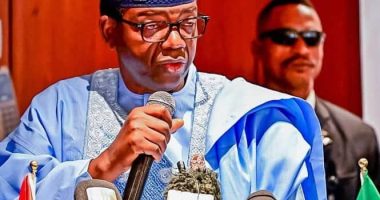
The Minister of Water Resources and Sanitation, Professor Joseph Utsev, while addressing journalists in Abuja, said both the Kainji and Jebba dams remain structurally sound and operational, contrary to reports making the rounds that the flood was caused by damaged dams in Mokwa.
The Minister also warned that 1,249 communities in 176 local government areas in 33 states and the FCT still fall within high flood risk areas.
Updating journalists on the flooding in Mokwa, the Minister of Water Resources and Sanitation, Professor Joseph Utsev, explained that the devastating flood was caused mostly by human-induced problems and climate change.
”The flood in Mokwa town was primarily caused by heavy rainfall due to extreme weather conditions occasioned by climate change, an emerging global phenomenon that overwhelmed local drainage systems. Additionally, unregulated buildings and construction activities blocked an ephemeral tributary of River Dingi, a regressive river, a tributary of River Niger, which remains dry almost all year round with flows solely dependent on surface runoff from rainfall. The absence of efficient alternative pathways to redirect the excess water further worsened the flood’s impact on the communities.”
Professor Utsev stressed that the Ministry has deployed a technical team comprising different stakeholders to Mokwa for a detailed assessment of the situation.
”As a ministry, we remain fully committed to our mandate of managing the nation’s water resources in a sustainable and climate-resilient manner. We call on all stakeholders—government agencies, the private sector, civil society organizations, and community leaders—to work together in building safer, more resilient communities.
Technical personnel from the Ministry, Nigeria Hydrological Services Agency (NIHSA), Upper Niger River Basin Development Authority (UNRBDA), and National Water Resources Institute (NWRI) are on the ground in Mokwa taking assessments of the cause of the flood to come up with an appropriate report. We once again express our condolences and unwavering support to the people and government of Niger State,” he said.
The Minister of Water Resources and Sanitation, who commiserated with the affected families, added that efforts were already underway to forestall a recurrence, underscoring the need for Nigerians to support the government in building safer communities.
Flooding in Nigeria has become an annual tragedy, growing in scale and devastation with each passing year. What were once considered seasonal inconveniences have now escalated into full-blown national emergencies, displacing communities, crippling economies, and costing lives.
From the ravaged homes of Mokwa Local Government in niger state to the submerged farmlands of Borno and across other vulnerable regions, the story is the same: heartbreak, helplessness, and a perceived lack of preparedness.
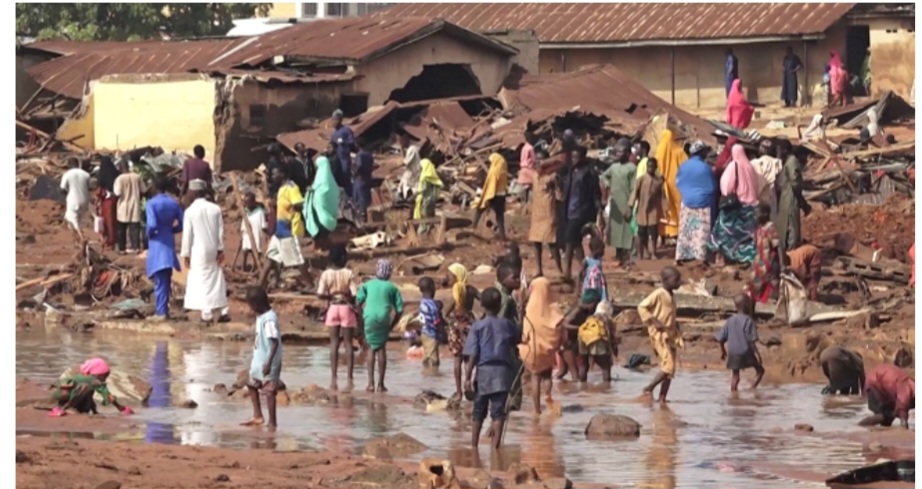
In Mokwa, heavy rainfall in recent weeks unleashed a flood that swept through villages, washed away roads, killed over one hundred people, and destroyed farms that represent the backbone of the local economy. Families were left stranded without shelter or food, while schools and health centers were rendered inaccessible.
Meanwhile, President Bola Tinubu has activated the National Emergency Response Centre and directed federal agencies to provide immediate relief to the victims.
Similarly, the National Emergency Management Agency (NEMA) has delivered essential relief items to flood victims displaced in Mokwa, Niger State.
Search and rescue teams from NEMA, the Nigerian Red Cross, and local volunteers continue operations to save trapped victims and recover bodies.
RN