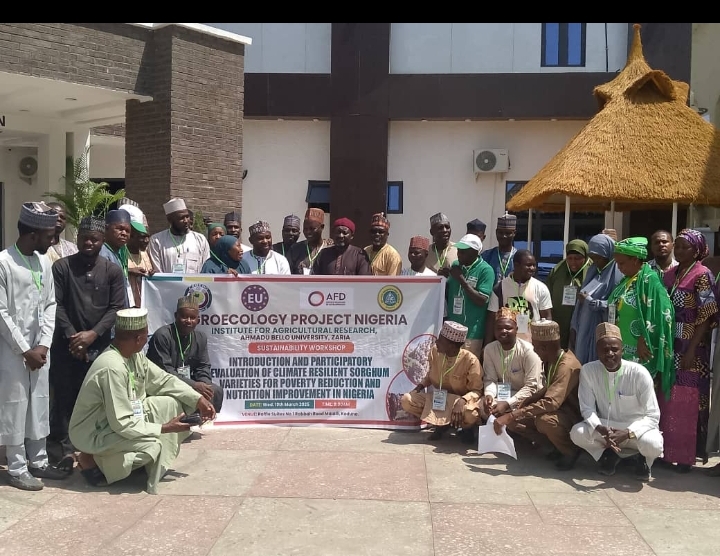
The Institute for Agricultural Research (IAR), in collaboration with the National Agricultural Extension and Research Liaison Services (NAERLS), Ahmadu Bello University, Zaria, has organized a one-day workshop for stakeholders on the sorghum agroecology project in Nigeria.
The workshop, held in Kaduna, focused on the theme: “Introductory and Participatory Evaluation of Climate-Resilient Sorghum Varieties for Poverty Reduction and Nutrition Improvement in Nigeria.”
Key partners in the project include the Economic Community of West African States (ECOWAS), the Sorghum and Millet Farmers Association of Nigeria, the European Union, and others.
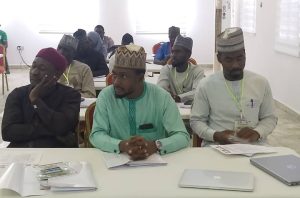
Speaking at the event, the Deputy Director of NAERLS, Professor Muhammad Musa Jaliya, emphasized that the primary aim of the workshop was to ensure the sustainability of the agroecology project in Nigeria.
“We do not want to implement the project and allow it to fade away without sustainability. One of the major objectives of this gathering is to ensure the continuity of the project. Farmers have embraced the project, particularly the new sorghum seed varieties, which offer significant advantages,” he stated.
In an interview with Radio Nigeria Kaduna, the National President of the Sorghum Association of Nigeria, Dr. Adamu Yusuf, highlighted Nigeria’s leading role in global sorghum production.
He called for continuous efforts to maintain the country’s position as the world’s first or second largest producer of the crop.
“We need to pray and work hard to retain our top spot in sorghum farming globally,” he added.
Also speaking, Professor Aisha AbdulKadir from IAR, ABU Zaria, noted that the institute had successfully introduced several new sorghum varieties in the country.
“We want to see widespread adoption of these varieties, we are seeking feedback from stakeholders and farmers to understand how we can make further progress,” she said.
Representing ECOWAS at the workshop, Professor Mamman Saleh reiterated the regional body’s commitment to improving the living standards of people and promoting economic development through agricultural initiatives.
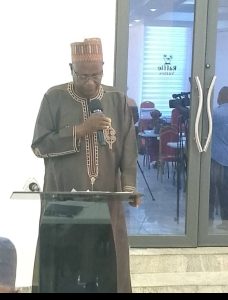
“ECOWAS, through its Commission on Agriculture and Natural Resources, is dedicated to supporting agroecology-specific projects.
These efforts are aimed at creating employment opportunities for youth, improving soil fertility, and restoring degraded lands for agricultural productivity,” he explained.
Participants at the workshop were drawn from Kaduna State and various sectors involved in sorghum production and agroecology.
Cov/Adamu Yusuf