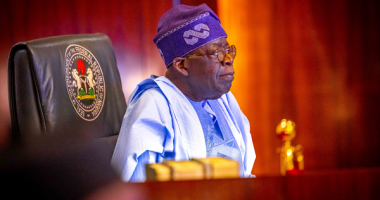
President Bola Tinubu presented Nigeria’s 2025 budget, titled “Budget of Restoration: Securing Peace and Rebuilding Prosperity,” to the National Assembly on December 18, 2024.
President Tinubu emphasized the government’s efforts to strengthen key sectors and stimulate economic growth.
Key Figures
Total Expenditure: ₦49.7 trillion
Projected Revenue: ₦34.82 trillion
Budget Deficit: ₦13.08 trillion (3.89% of GDP)
Debt Servicing Allocation: ₦15.81 trillion
Sectoral Allocations:
Defence and Security: ₦4.91 trillion
Infrastructure Development: ₦4.06 trillion
Education: ₦3.52 trillion
Health: ₦2.48 trillion.
Economic Projections
Inflation Rate is Expected to decrease from 34.6% to 15% in 2025
Exchange Rate is Projected to improve from approximately ₦1,700 to ₦1,500 per US dollar
Crude Oil Production is believed to increase to 2.06 million barrels per day (mbpd)
Highlights
Defence and Security: Significant funding is allocated to military, paramilitary, and police forces to enhance national security and protect borders.
Infrastructure: Investments focus on key projects, such as the Lagos-Calabar and Sokoto-Badagry highways, aimed at boosting economic output and creating jobs.
Education: Provision of ₦826.90 billion for infrastructure development, including the Universal Basic Education (UBEC) and nine new higher educational institutions.
Health: Allocation includes ₦402 billion for infrastructure investments and ₦282.65 billion for the Basic Health Care Fund, aimed at revitalizing hospitals and improving access to healthcare.
Agriculture: Support for farmers through funding and inputs to enhance productivity, focusing on achieving food security.
The ambitious budget reflects the government’s commitment to addressing critical sectors to drive economic growth and improve the well-being of Nigerians.
Nigeria’s economic landscape has been marked by a mixture of challenges and opportunities. With rising inflation, an ongoing foreign exchange crisis, and a mounting debt burden, the government faces a delicate balancing act.
Also, there is heightened public expectation for decisive action on unemployment, infrastructure deficits, and energy reform. Against this backdrop, the 2025 budget will serve as a litmus test for President Tinubu’s economic agenda.
RN