By Adamu Yusuf
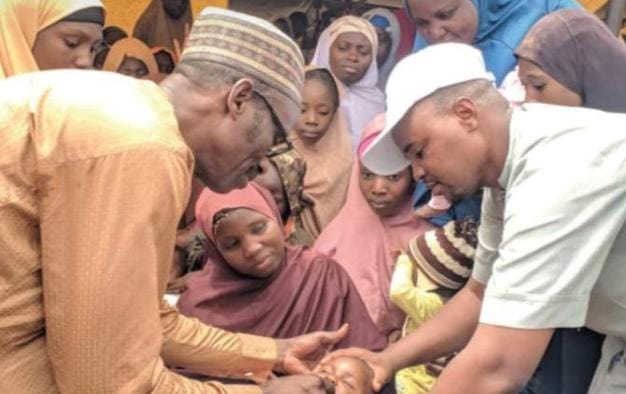
Nigeria’s Safety and Antimicrobial Resistance of Mass Administration of Azithromycin in Children (SARMAAN) project says it has reached more than 16 million children across 11 states in northern Nigeria through its child-survival intervention programme.
The achievement highlights the potential of large-scale, evidence-based public health interventions in reducing child mortality through effective collaboration among government institutions, health workers, researchers and local communities.
The development comes as global public health leaders, policymakers, researchers and advocates prepare for the 18th World Congress on Public Health in Cape Town, South Africa, where Nigeria’s experience is expected to underscore the importance of sustainable child-health programmes.
Nigeria has recorded some improvement in child survival, with under-five mortality declining from 132 deaths per 1,000 live births in the 2018 Nigeria Demographic and Health Survey to 102 deaths per 1,000 live births in the 2023–2024 survey.
However, the figure remains considerably higher than the Sustainable Development Goal target of 25 deaths per 1,000 live births.
Lead Investigator of the SARMAAN project and Director of Research at the Nigerian Institute of Medical Research, Professor Oliver Ezechi, said the programme had demonstrated that safety monitoring and antimicrobial resistance surveillance could be integrated into mass drug administration on a large scale.
He explained that the approach ensured that safety and resistance monitoring were incorporated into the programme from the outset rather than introduced after implementation.
Similarly, SARMAAN Champion and paediatrician, Dr Zainab Shinkafi-Bagudu, attributed the programme’s achievements to collaboration among health workers, caregivers, communities and government institutions.
She stressed that equitable healthcare delivery required interventions capable of reaching every child, irrespective of geographical location.
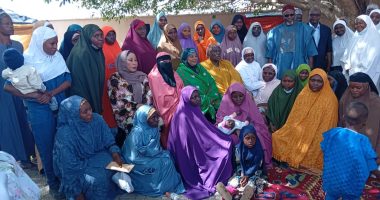
In Jigawa State, the First Lady and SARMAAN Champion, Hadiza Umar Namadi, emphasised the importance of community trust in sustaining public health interventions.
She noted that the programme’s success went beyond the number of children reached, saying the confidence and cooperation of mothers, caregivers and communities had played a significant role in its implementation.
Another SARMAAN Champion and paediatrician, Professor Robinson Daniel Wammanda, said reaching millions of children required a carefully designed and effectively coordinated delivery system.
He highlighted the importance of using multiple delivery platforms to ensure that the intervention reached children across participating communities.
The programme has also engaged government stakeholders on integrating its achievements and lessons into broader child-health policies, with discussions focusing on institutional ownership, strengthening existing health systems and sustainable financing.
Its organisers say the systems, evidence and partnerships established through the initiative could provide a foundation for expanding sustainable child-survival interventions in Nigeria and other countries facing similar public health challenges.
SARMAAN is part of the regional Resiliency through Azithromycin in Children (REACH) Network, which adopts a government-led, multi-partner approach to mass administration of azithromycin, with emphasis on scalability, sustainability and health-system strengthening.
Editing by Khadija Kubau