
Writing By Daniel Karlmax; Editing By Godwin Duru
Stakeholders in Nigeria’s water and sanitation sector have called for the urgent adoption of inclusive and innovative approaches to water governance and environmental sustainability, emphasizing the critical intersection of water, gender equity, and national development.
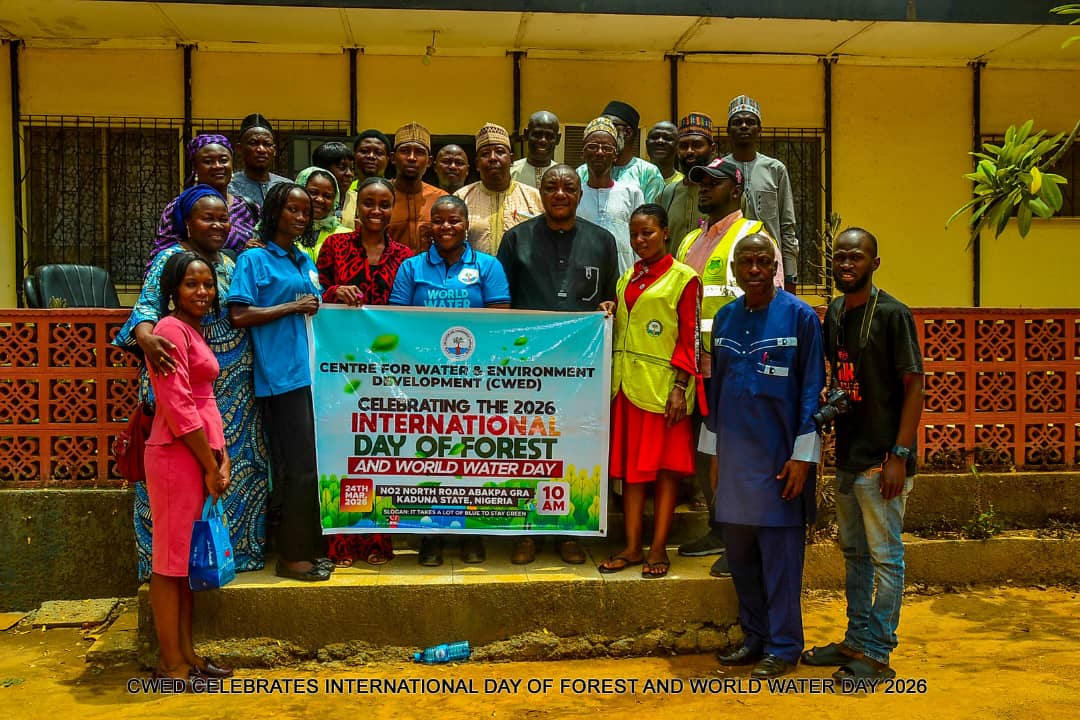
The call was made during a joint commemoration of World Water Day and International Day of Forests held in Kaduna, where a keynote lecture titled “Water and Gender: Challenges, Progress, and Opportunities” was delivered.
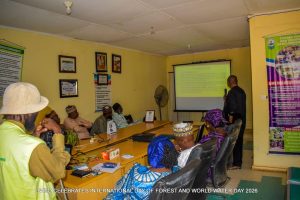
The event brought together stakeholders from government institutions, academia, civil society organizations, and community groups among others.
In a communique signed by Professor Donatus B. Adie of the Centre for Water and Environment Development, the participants highlighted the importance of aligning water governance with the United Nations 2030 development agenda, particularly the Sustainable Development Goals, with a strong focus on SDG 6.
They noted that while water remains essential across domestic, agricultural, and industrial sectors, access to safe and sufficient water in Nigeria continues to be shaped by factors such as settlement type, infrastructure availability, climate variability, and socio-economic and gender dynamics.
The communique stressed that women and girls bear a disproportionate burden of water insecurity, particularly due to their roles in water collection, caregiving, and household management.
It observed that limited access to safely managed water services contributes to increased exposure to gender-based risks, poor health outcomes, school absenteeism among girls, reduced economic productivity, and widening inequality gaps.
“Despite being primary users and managers of household water resources, women remain underrepresented in water leadership and governance structures.
The Stakeholders emphasized the need to strengthen women’s representation in water-sector institutions and support gender-responsive policies in WASH programming.
This they say , will ensure the safe placement of community water infrastructure, integrate menstrual hygiene considerations into school water systems, and improve women’s participation in borehole planning and management.
They also underscored the importance of ensuring that girls remain in school through improved access to safe water and sanitation facilities.
The forum further highlighted the strong link between forests, water security, and climate systems, noting that forests play a critical role in regulating climate, sustaining livelihoods, enhancing biodiversity, and supporting nutritional security.
Concerns were raised over increasing deforestation and its implications for climate change, drought risks, and declining water availability, although ongoing community-based forest protection efforts were commended.
On institutional and policy issues, participants acknowledged progress made through Integrated Water Resources Management approaches but pointed out that implementation gaps remain significant across Nigeria.
They called for improved borehole mapping and monitoring systems, strengthened rainwater harvesting strategies, scaling of solar-powered motorized boreholes, better community ownership of water infrastructure, stricter regulation of industrial waste disposal, and the expansion of climate-resilient water planning.
The importance of data-driven decision-making in sustainable water resource management was also emphasized, stressing that community engagement is essential for the sustainability of water infrastructure.
They also highlighted the need for inclusive public awareness campaigns that engage both women and men, as well as the importance of involving boys and men in gender-sensitivity education to promote shared responsibility.
In the education sector, representatives reported progress in expanding access to water in public schools and reaffirmed commitments to improving WASH infrastructure to support school attendance, particularly for girls.
Sustained investment in school water systems was identified as critical for improving menstrual hygiene management and reducing dropout rates.
At the close of the session, stakeholders collectively agreed on the need to strengthen gender-responsive water governance frameworks, increase women’s participation in decision-making and scale climate-resilient water infrastructure.
Other areas are, expand rainwater harvesting initiatives, improve borehole monitoring systems, enhance community ownership of water facilities, strengthen cross-sector collaboration, and promote environmental protection through forest conservation.
They reaffirmed their commitment to continued advocacy and inclusive engagement to ensure equitable access to safe water for all.
Daniel Karlmax