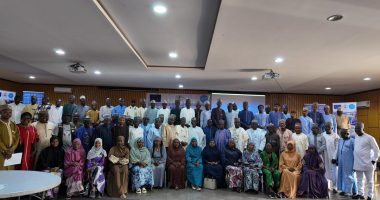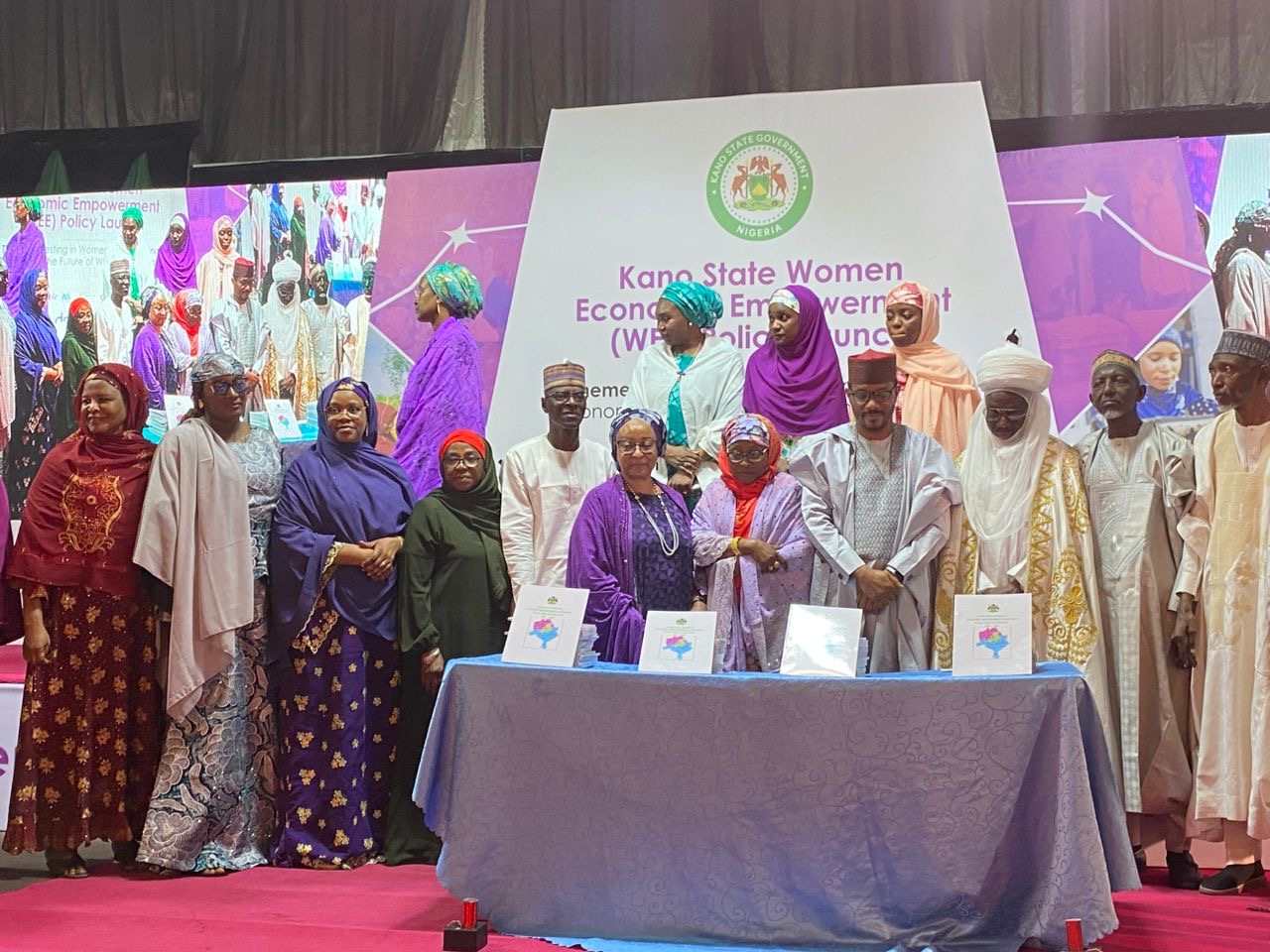

The Kano State Government has officially launched the Kano State Women Economic Empowerment (WEE) Policy, reaffirming its commitment to inclusive governance and sustainable economic opportunities for women and vulnerable groups across the state.
The policy was unveiled during a ceremony attended by government officials, development partners, traditional and religious leaders, civil society organizations (CSOs), and women representatives from across the state.
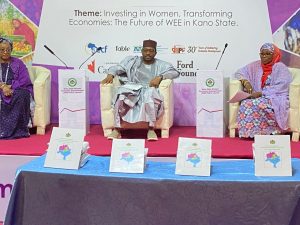
In his keynote address, Governor Yusuf, represented by the Commissioner for Rural Development, Abdulkadir Abdussalam, described the launch as a defining moment in Kano’s journey toward building a more inclusive, just, and prosperous society.

According to the governor, the policy is rooted in the administration’s development blueprint, which prioritizes people-centered governance anchored on dignity, justice, and equal opportunities for all citizens.
He disclosed that about 5,200 women across the 484 wards in the state’s 44 local government areas are currently receiving a monthly stipend of ₦50,000 as part of the government’s efforts to support women’s economic participation.
Governor Yusuf also announced the establishment of a dedicated department for Persons with Disabilities (PWDs), adding that plans are underway to create a commission that will safeguard the rights and opportunities of people living with disabilities in the state.
As part of efforts to expand opportunities for women, the governor revealed that the Gyadi-Gyadi Women Skill Acquisition Centre is undergoing renovation to transform it into a major hub for skills development and entrepreneurship for women and adolescent girls.
Earlier in her welcome address, the Commissioner for Women Affairs, Children and Persons with Special Needs, Amina Sani, described the launch of the policy as a historic milestone for women and vulnerable groups in the state.
She commended Governor Yusuf for his leadership and commitment to people-centered governance and praised the state government for backing its commitments with significant financial investments in programmes targeting women, children, and other vulnerable populations.
Also speaking at the event, the Emir of Kano, Muhammadu Sanusi II, representative of the Federal Ministry of Women Affairs, among others lauded the initiative and emphasized the importance of empowering women for sustainable development.
The domestication of the policy received support from several development partners, including the Development Research and Projects Centre (DRPC), the Africa Enterprise Challenge Fund (AECF), and the Isa Wali Empowerment Initiative, among others.
Khadijah Aliyu