By Khadija Kubau
The Kaduna State Government has intensified efforts to strengthen water, sanitation and hygiene (WASH) service delivery as it flagged off a three-day training programme to boost implementation of the Sustainable Urban and Rural Water Supply, Sanitation and Hygiene (SURWASH) initiative.
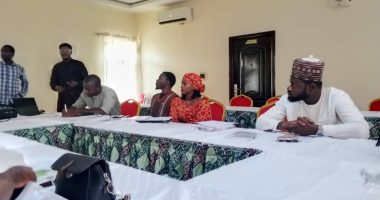
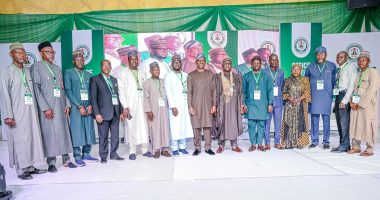
The training, organized by the Kaduna State Ministry of Public Works and Infrastructure in Zaria, brings together participants from various departments of the ministry and other relevant Ministries, Departments and Agencies (MDAs) to enhance coordination, partnership approaches and institutional performance.
Declaring the programme open, the Director of Water Supply, Engr. Usman Ibrahim, who represented the Commissioner of Public Works and Infrastructure, Arc. Ibrahim Hamza, said the objective is to position Kaduna State to excel in SURWASH activities.
He noted that Kaduna is among the first tier of seven participating states under the SURWASH programme, which is supported by the World Bank as part of Nigeria’s drive to ensure universal access to sustainable and safely managed WASH services.
According to him, the ministry is committed to strengthening institutional capacity, improving project coordination mechanisms, and enhancing partnership frameworks to ensure the state stands out in implementation and service delivery.
Unlike previous infrastructure-focused interventions, SURWASH adopts a results-based financing approach that promotes policy reforms, regulatory improvements and institutional strengthening alongside infrastructure development.
The programme, which became effective in January 2022 for a six-year implementation period, combines Investment Project Financing (IPF) and Programme for Results (PforR) instruments to drive measurable outcomes.
In Kaduna State, the programme is being implemented through key agencies, including the Kaduna State Rural Water Supply and Sanitation Agency (KADRUWASSA), Kaduna State Water Corporation (KADSWAC), Kaduna Environmental Protection Agency (KEPA), and Kaduna State Regulatory Commission (KADWREC).
Pilot Local Government Areas include Chikun, Igabi, Jaba, Jema’a, Sabon Gari and Soba.
Under KD-SURWASH, the state targets the provision of basic drinking water services to 6.1 million people, improved sanitation access to 1.4 million people, verification of 500 ODF+ communities, and improved WASH services in 2,000 schools and healthcare facilities.
The State Programme Implementation Unit (SPIU), headed by the Programme Coordinator, Engr. Esau A. Ambinjah, is coordinating the implementation across relevant MDAs.
At the training, resource person Hassan Ahmed delivered sessions on project coordination mechanisms, describing them as structured processes, tools and systems designed to ensure effective project execution.
He emphasized the importance of clearly defined roles and responsibilities using the RACI matrix- Responsible, Accountable, Consulted and Informed- as a critical success factor.
Also speaking, Engr. Sani Dauda Ahmed highlighted the role of Public-Private Partnerships (PPP) in WASH delivery, noting that strategic collaboration with the private sector can mobilize additional expertise and investment to complement government efforts.
He stressed that transparency, accountability and sound regulatory frameworks are essential for sustainable partnerships.
Participants are expected to leverage the knowledge gained from the training to improve coordination, strengthen sector governance and accelerate progress toward achieving universal access to safe water and sanitation services in Kaduna State by 2030.