
Writing By Shindong Bala; Editing By Yusuf Zubairu
A fact-finding team of journalists, supported by Education as a Vaccine (EVA), has uncovered a troubling trend at Government Secondary School, Galadimawa, in Sabon Gari Local Government Area of Kaduna State, where about 20 percent of female students reportedly drop out before reaching their final year.
The investigation revealed that although the school records a higher enrollment of girls than boys at the junior level, a significant number fail to complete their studies.
Findings attribute the development to several factors, including early marriage, child hawking, insecurity, parental indifference, lack of toilet facilities, and inadequate classroom furniture.
Speaking on the situation, the Vice Principal, Mallam Mohammed Auwal, alongside a teacher, Mrs. Gloria David, expressed concern over the rising dropout rate.
They noted that at the point of admission, girls often outnumber boys and demonstrate remarkable enthusiasm and commitment to learning.

“Many of the girls show seriousness and dedication to their studies in the early years,” they said, stressing that education remains a vital tool for empowering the girl-child and securing a better future for families and society at large.
However, as students progress to higher classes, the number of girls steadily declines.
According to school authorities, socio-cultural pressures and economic hardship often compel parents to withdraw their daughters from school, either for marriage or to support household income through petty trading.
The Head Girl of the school, Halima Mukhtar, lamented that some of her peers are unable to attend school due to poor family background and the unwillingness of parents to support their education.
She described the situation as discouraging, especially for students who are determined to complete their studies.
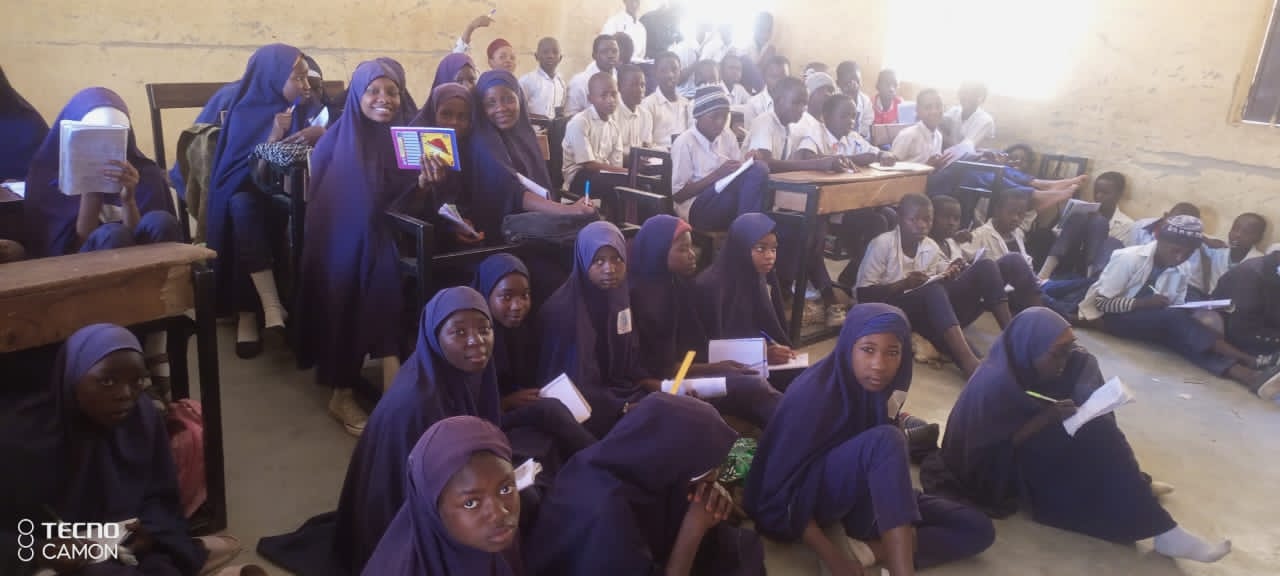
Another student, Fatiha Tajuddeen, highlighted the poor learning environment, noting that the school lacks adequate seating, proper toilet facilities, and free textbooks.
“We sometimes struggle to concentrate because there are not enough desks and learning materials,” she said.
Fatiha further observed that public schools in the state often produce outstanding results comparable to, and sometimes better than, private institutions.
She wondered why some school-age children still shy away from education despite its obvious benefits.
Other students, Khadija Ibrahim and Hafsat Ahmad, described education as the cornerstone of social and economic development.
According to them, schooling equips the girl-child with the knowledge, skills, and confidence needed to make informed life decisions and contribute meaningfully to society.
The students collectively appealed to the government and relevant stakeholders to intervene by providing adequate infrastructure, free textbooks, improved sanitation facilities, and enhanced security measures, including a perimeter fence or gate to safeguard the school from hoodlums.
EVA, which is a Malala supported Project had earlier argue that addressing the challenges at various schools is critical to reducing dropout rates and ensuring that every girl has the opportunity to complete her education.
They maintain that investing in girls’ education is not only a moral obligation but also a strategic step toward sustainable development in Kaduna State and beyond.
Cov/Shindong Bala