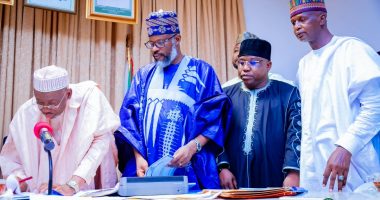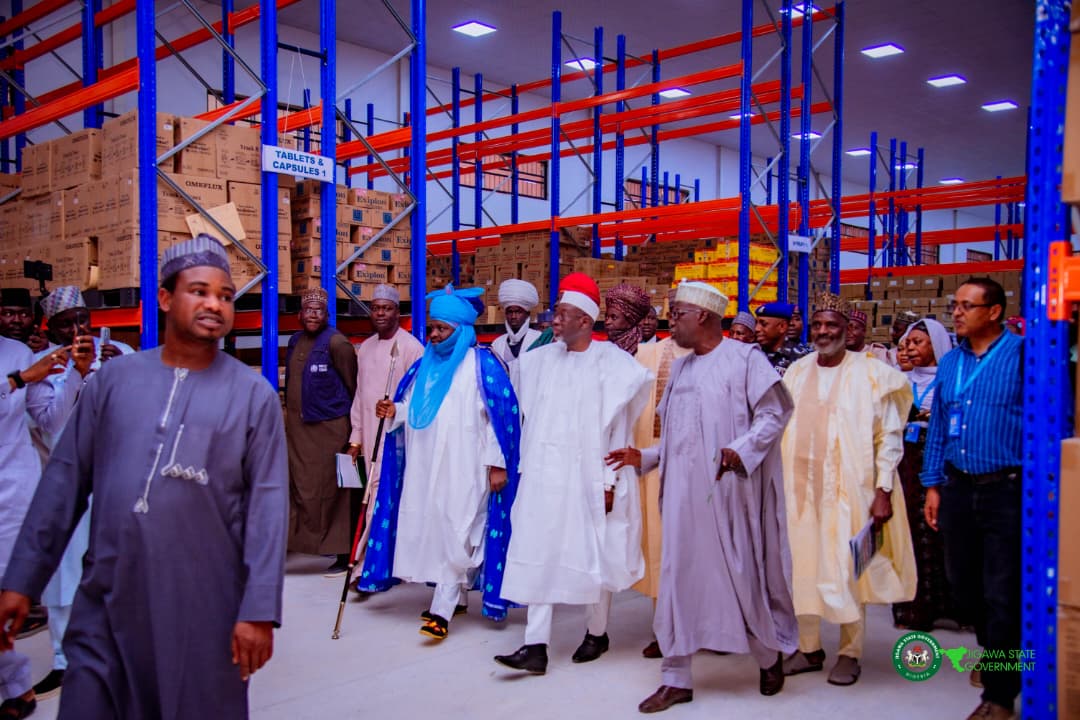

Governor Umar Namadi of Jigawa State has commissioned a newly constructed ultra-modern Central Medical Store in Dutse, describing it as a major boost to healthcare delivery and pharmaceutical management in the state.
Speaking at the commissioning ceremony on Wednesday, the governor said the facility marked a historic milestone that would benefit residents across Jigawa through improved access to safe and effective medicines.
He explained that the project was the outcome of years of collaboration involving the Jigawa State Government, the Federal Ministry of Health, the Global Fund and UNICEF, implemented under the National Supply Chain Policy for Pharmaceuticals.
According to Namadi, the partnership mobilised about ₦1.4 billion to deliver the project, reflecting strong inter-agency and development partner commitment to strengthening the health sector.
The governor noted that long-standing challenges in Nigeria’s pharmaceutical supply chain, including poor infrastructure, weak coordination, frequent stock-outs and wastage, have negatively affected healthcare services.
He said the new Central Medical Store was designed to address these issues through a harmonised and responsive management system that promotes efficiency, accountability, safety and quality service delivery.
Governor Namadi directed the State Ministry of Health to ensure that all health programmes and implementing partners immediately move their pharmaceutical products into the facility to guarantee quality, potency and safety.
In a statement, the Chief Press Secretary, Hamisu Mohammed Gumel, said Governor Namadi thanked the Federal Ministry of Health, the Global Fund, UNICEF, and other partners, officially commissioning the store for public use.
Earlier, the Commissioner for Health, Dr. Muhammad Abdullahi Kainuwa, described the facility as the first state-built Central Medical Store in Jigawa’s history and one of the largest in the country.
He said the store, with a capacity of about 25,000 pallets, multiple cold rooms, modern warehouse equipment, IT systems, fire safety infrastructure and cold-chain vehicles, would eliminate reliance on rented warehouses and improve medicine distribution statewide.
Usman Mohammed Zaria