
Writing By Daniel Karlmax, Editing By Godwin Duru
Environmental experts have emphasized the need for continuous sensitization on tree-planting and nurturing to safeguard the environment from collapse.
They described the environment as humanity’s life-support system, noting its vital role in absorbing harmful gases such as carbon monoxide and releasing oxygen for human survival.
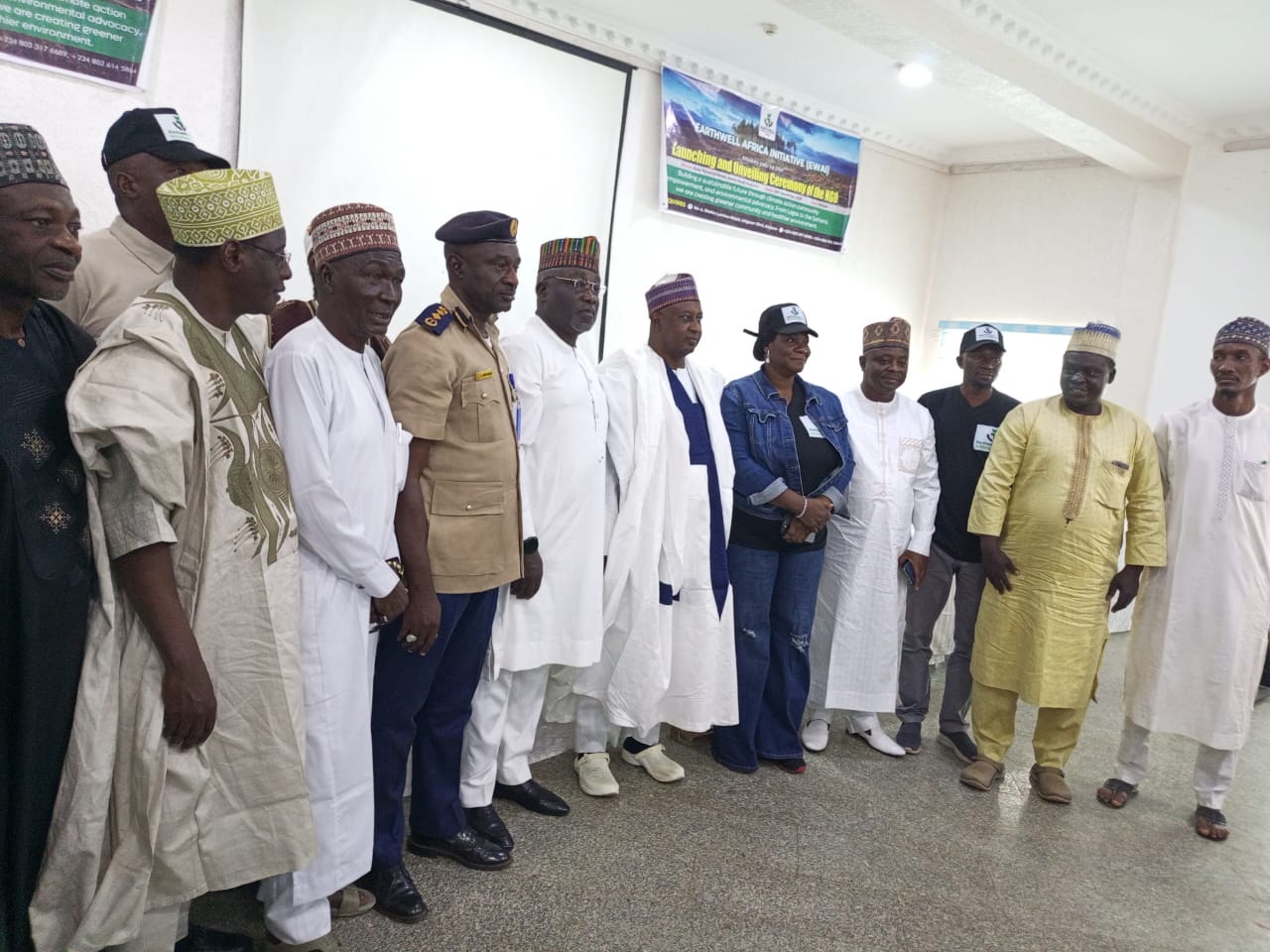
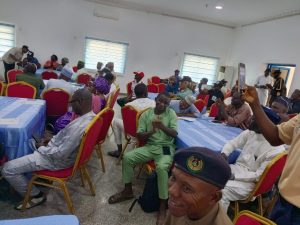
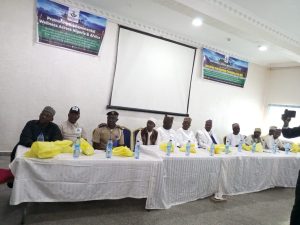
This was the central focus during the strategic unveiling and launch of an environmental Non-Governmental Organization, Earthwell Africa Initiative (EWAI), held in Kaduna.
Speaking to Newsmen during the program, a Fellow of the Forestry Association of Nigeria (FAN), Malam Abdullahi Hassan Mohammed, the Wambai Jama’a, explained that various human activities carried out in the struggle for survival often lead to environmental degradation and other related challenges.
The trustee of FAN and former Director of Forestry in Kaduna State called on governments at all levels to intensify afforestation programmes and policies as a key strategy for addressing climate change and its numerous effects.
“The trees perform benevolent activities for the environment. They absorb carbon dioxide, carbon monoxide, methane, and other impurities, and give us oxygen as by-products for our survival.
“That is why government must intensify, and sustain public enlightenment. This generation sees trees merely as decoration, forgetting their irreplaceable impact on the environment,” he said.
The Wambai Jama’a clarified that forest conservation does not mean trees should never be harvested, but that, the public should adhere strictly to environmental laws and procedures before cutting down trees for either timber, firewood or charcoal.
In his keynote address, forestry expert Godwin Michael identified climate change and global warming as the major environmental challenges confronting Nigeria and the global community.
Speaking on the theme “Restoring Africa’s Forests: Promoting Biodiversity and Combating Climate Change,” he described climate change as a severe threat to Africa’s rich biodiversity, causing habitat loss, species decline, ecosystem shifts, and extreme weather events.
According to Mr. Michael, rising temperatures, irregular rainfall patterns, vegetation loss, wildlife disruption, and stressed species are some of the impacts of climate change on Africa’s biodiversity.
He noted that, no law in Kaduna State, Nigeria, or globally legalizes charcoal production, describing charcoal as “an enemy of the environment” because it results from indiscriminate tree-felling.
“You can imagine the level of carbon dioxide released by vehicles, waste, and pollution. Trees trap carbon monoxide and methane, store them, and release oxygen. Without this process, human beings cannot survive.”
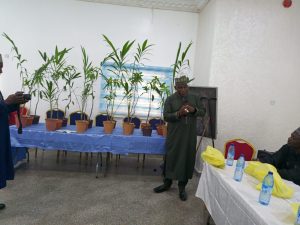
He added that human activities have contributed to the depletion of the ozone layer, which protects the earth from excessive heat.
“So it is our activities—especially deforestation—that cause climate change. We must minimize it,” he stated.
Mr. Michael also identified agriculture and overgrazing as drivers of climate change, noting that farmers often clear large portions of land that could otherwise support tree-planting.
He listed reforestation, afforestation, sustainable land management, and increased awareness—especially in rural and semi-urban communities—as key remedies.
Other recommended interventions include conservation policies and community engagement to highlight the economic and environmental benefits of trees.
These practices, he said, would help tackle food insecurity, water scarcity, and environmental health risks.
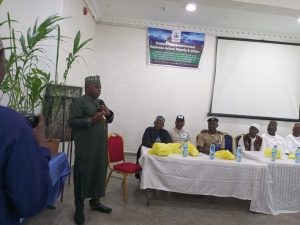
The formation of Earthwell Africa Initiative (EWAI) was described by experts as timely and significant in the global effort to preserve the environment.
Goodwill messages were delivered by the former Governor of Kaduna State, Malam Mukhtar Ramalan Yero; the Dallatun Zazzau, and Sardaunan Jama’a; former Zonal Director, Radio Nigeria Kaduna, Auwalu Buhari; the Secretary General of the Military Veterans Federation of Nigeria, Abdullahi Aliyu; and the Founder of EWAI, Mrs. Rashidat Abiola Niyi among others.
Daniel Karlmax