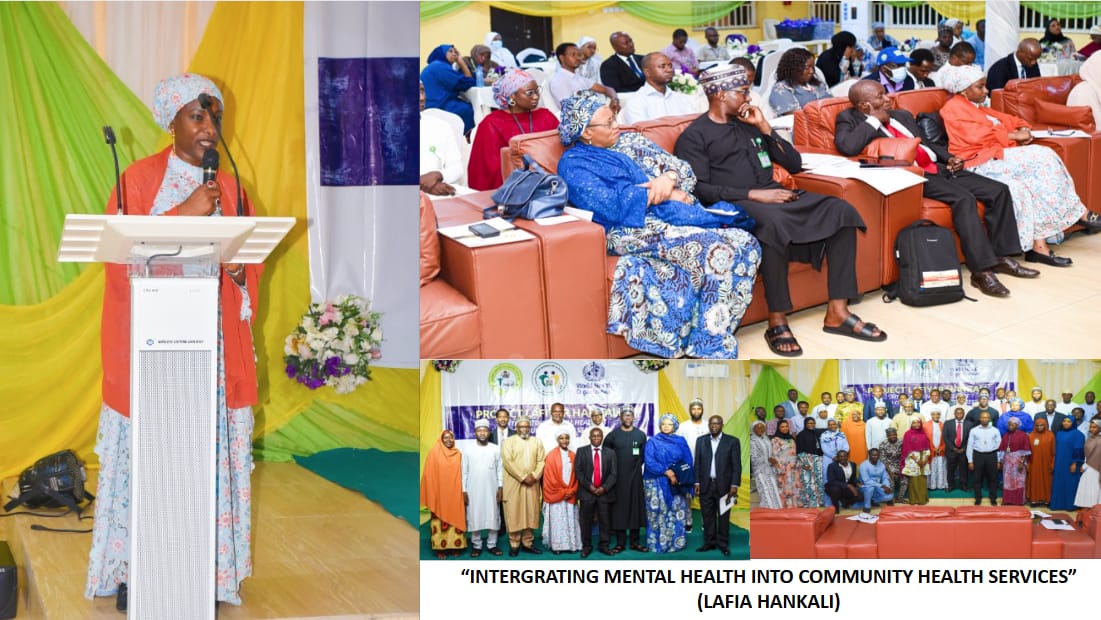

The Chief Executive Officer of the Federal Neuropsychiatric Hospital, Kaduna, Prof. Aishatu Yusha’u Armiya’u, has reaffirmed the institution’s commitment to driving transformational mental health reform across Northern Nigeria.
She said the hospital’s progress in policy development, service expansion, and multisectoral collaboration over the past three years reflects its vision of becoming a model for modern, culturally responsive mental healthcare.
Prof. Armiya’u credited her training under the Africa CDC Mental Health Leadership Programme for sharpening her capacity in governance, advocacy, and system-wide reform.
According to her, the hospital has undergone major institutional changes to strengthen integrated mental and physical healthcare, deepen research, and expand specialist training.
“A significant part of this progress stems from the hospital’s partnership with the Kaduna State Substance Abuse and Mental Health Services Agency (KADSAMHSA), which supported key policy achievements in the state.
These include the inclusion of psychotropic medicines in the Kaduna State Essential Medicines List 2025, the passage of the State Mental Health Law, and a new policy integrating mental healthcare into community facilities.
The hospital also implemented a Training of Trainers initiative that expanded mhGAP services, enabling 165 health workers across 15 general hospitals to provide improved mental healthcare, including for adolescents living with HIV,” She explained.
Prof. Armiya’u noted that the hospital now has 10 alumni of the Africa CDC Leadership Programme, each driving targeted reforms across various service areas.
The Professor emphasized staff welfare as a top priority, with new programmes introduced to strengthen physical, mental, and social wellbeing, alongside an improved healthcare environment that has driven patient satisfaction above 90 percent.
Looking ahead, she said the hospital plans to expand community-based mental healthcare, enhance research and innovation, adopt digital mental health tools, and build a resilient workforce capable of meeting Nigeria’s evolving mental health needs.
SULEIMAN RIGACHIKUN