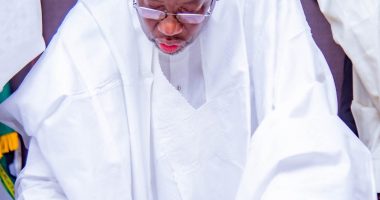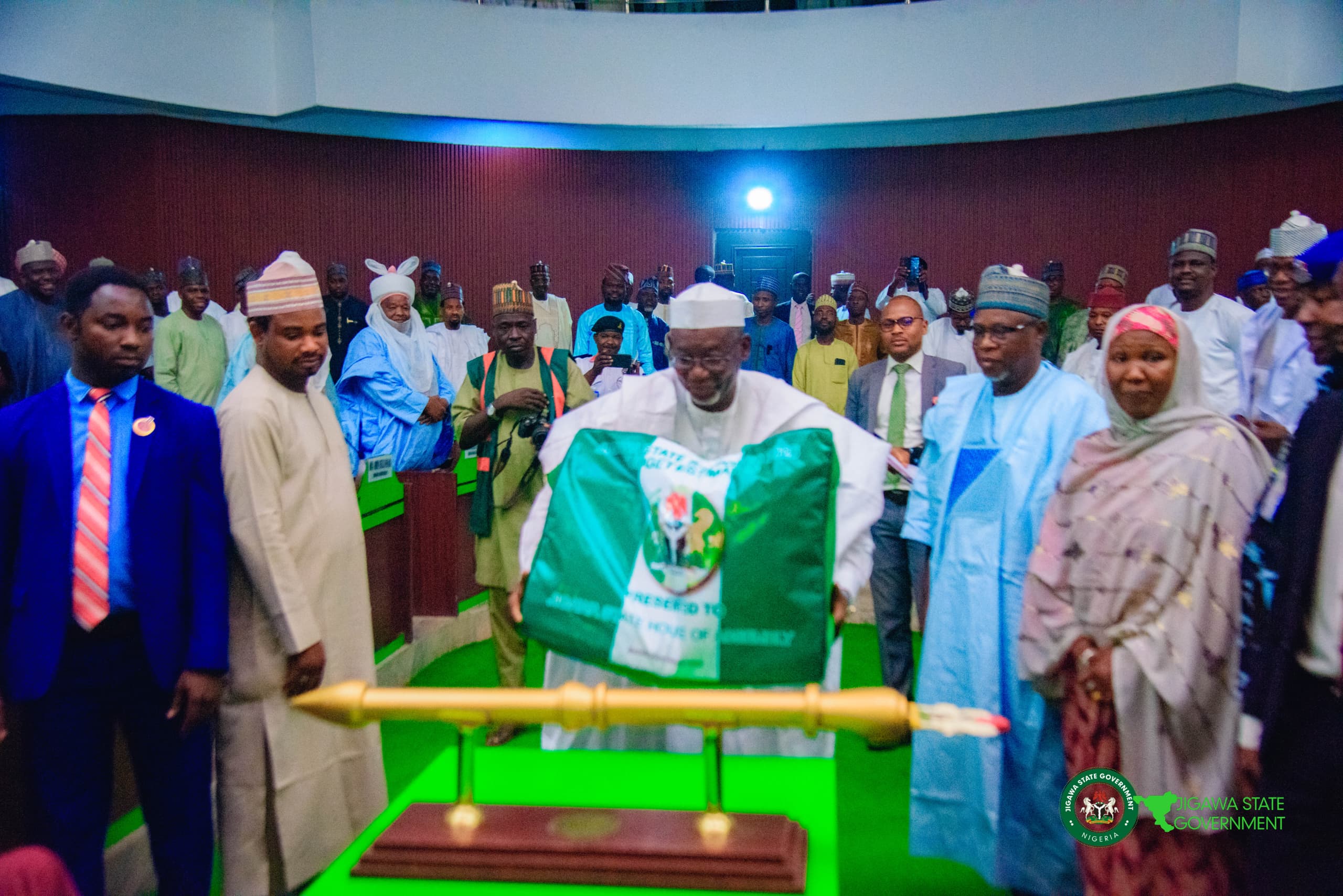
Jigawa State Governor, Malam Umar Namadi, has presented a ₦901.8 billion Appropriation Bill for the 2026 fiscal year to the State House of Assembly, describing it as an ambitious but achievable plan to drive rapid development across key sectors.
The governor said the proposal represents a 19.2 percent rise above the 2025 budget of ₦756.3 billion, reflecting his administration’s commitment to expanding infrastructure, modernising agriculture, strengthening energy supply, and improving education, health, and social services.
The Chief Press Secretary to the Governor, Hamisu Mohammed Gumel, said in a statement from Dutse that Governor Namadi confirmed the 2026 budget is anchored on the state’s 12-Point Agenda and its Comprehensive Development Framework, designed to drive sustainable long-term growth.
Governor Namadi outlined the projected revenue sources, which include ₦96.2 billion from statutory allocations, ₦102 billion from VAT, ₦223 billion from other federal transfers, ₦88.9 billion from internally generated revenue, ₦42 billion from LEA and PHC reimbursements, and ₦349.5 billion from capital receipts.
He assured lawmakers that all projections were carefully reviewed to ensure a realistic and credible financing framework.
The expenditure structure, he said, prioritises long-term development, with ₦693.4 billion representing 76.9 percent of the entire budget allocated to capital projects. Personnel costs take ₦120 billion, overheads ₦75.6 billion, contingency and stabilisation ₦7 billion, and public debt charges ₦5.7 billion.
Presenting sectoral allocations, Governor Namadi announced over ₦396 billion for the economic sector, covering roads, agriculture, power, commerce, investment promotion, and youth empowerment.
This includes ₦186.3 billion for roads and transport, ₦74.9 billion for agriculture, ₦50.7 billion for power and energy, and ₦12.6 billion for youth empowerment.
He said the investments will boost productivity, improve connectivity, strengthen the energy system, widen economic opportunities, and expand job creation for young people.
The social sector received more than ₦236 billion, with education and health taking priority. Basic, post-basic, and tertiary education received a combined allocation exceeding ₦139 billion, while the Ministry of Health and the Primary Health Care Development Agency jointly received ₦47.3 billion. Women’s affairs and social development received ₦13.9 billion.
The governor highlighted additional allocations to water supply, environmental protection, and urban development, including ₦25.4 billion for water and sanitation, ₦35.4 billion for environmental and climate resilience programmes, and ₦7.9 billion for land and urban development.
He said these investments will strengthen climate adaptation, expand access to clean water, curb erosion, and enhance urban planning.
Governor Namadi also presented the consolidated 2026 budget for the 27 local government councils, totalling ₦288.8 billion, with ₦137.5 billion committed to capital projects, while personnel and overheads account for ₦68.8 billion and ₦74.2 billion respectively.
Usman Mohammed Zaria.