
Writing By Daniel Karlmax, Editing By Godwin Duru
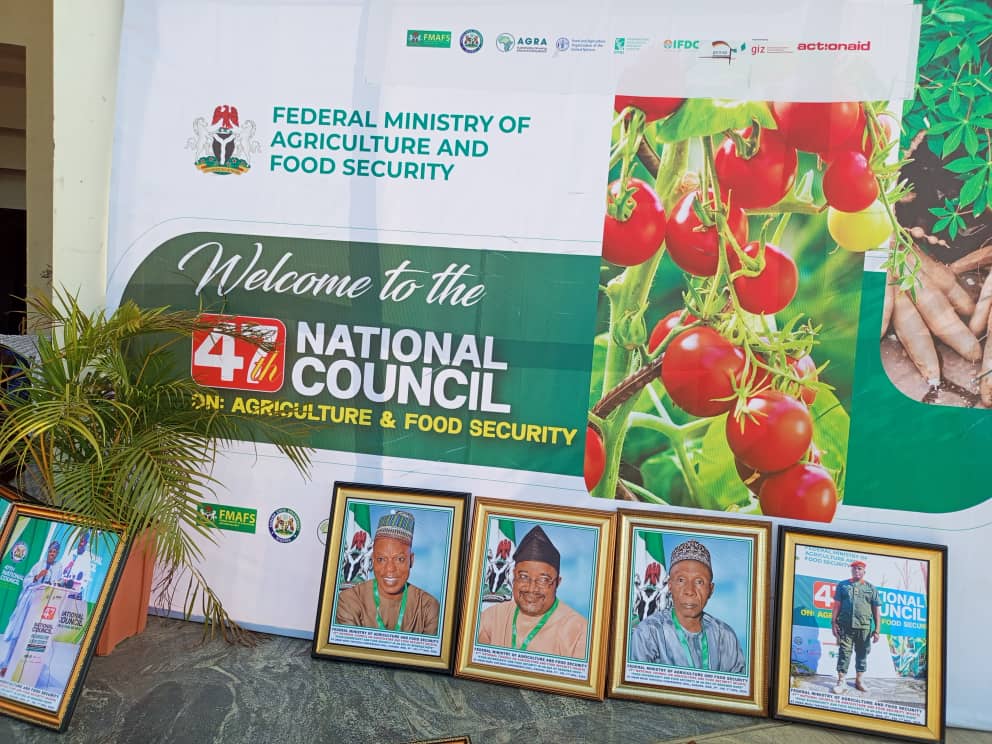
The Forty-Seventh National Council on Agriculture and Food Security (NCAFS) has brought together key players in Nigeria’s agricultural sector, including government representatives, private agro-industrial firms, development partners, and farmers, to deliberate on policies that promote agricultural productivity, food security, and sustainable livelihoods.
The annual council held in Kaduna featured the participation of major agro-industrial processing firms such as Olam Farms, TMDK, Tomato Jos Factory, Rice Processing Mills, and the International Fertilizer Development Center (IFDC), among others.
The event provided a platform for stakeholders across the agricultural value chain to share knowledge and experiences in addressing climate variability, improving productivity, and expanding livelihood opportunities nationwide.
Speaking on the sidelines of the meeting, Mr. Mohammad Salasi, Country Representative of the International Fertilizer Development Center (IFDC), disclosed that memos had been submitted to the Federal Ministry of Agriculture and Food Security advocating the inclusion of new value chains in the vegetable sector, such as carrots, cabbage and tomatoes among others.
According to him, these initiatives align with IFDC’s ongoing efforts under the organization’s Dutch-funded agricultural development programs.
“We are committed to strengthening and expanding these new value chains, and we hope that development partners will key into this initiative to ensure its success,” Mr. Salasi stated.
He highlighted that post-harvest losses, particularly among tomato farmers, remain a major challenge in the value chain.
On effors at mitigating these losses, the representative explained that, IFDC has been training farmers on post-harvest best practices and promoting the use of plastic tomato crates in place of traditional raffia baskets.
“Imagine transporting tomatoes in raffia baskets from Kaduna to Lagos—over a thousand kilometers. By the time they arrive, barely half of the produce is still in good condition,”
“That’s why we are advocating for the use of plastic crates. The current Minister is also keen on this, and through our collaboration with the National Tomato Plastic Crate Association, we are mobilizing funding and financing to scale up production.” he explained.
Salasi revealed that funding challenges, particularly around credit risk guarantees, had previously limited expansion.
However, with the Nigeria Incentive-Based Risk Sharing System for Agricultural Lending (NIRSAL), increasing its credit risk guarantee from 50 to 75 percent, new opportunities are opening for stakeholders in the tomato value chain.
“Through a ₦500 million special intervention program by NIRSAL in collaboration with IFDC, more plastic crates will soon be injected into the sector,”
“This intervention will not only reduce post-harvest losses but also curb the importation of fake tomato paste, ensuring that local processors have sufficient supply.” he announced.
Mr. Salasi also emphasized the importance of improved agricultural practices in bridging Nigeria’s tomato supply gap.
“God has blessed us with land and human resources. What is needed now are improved farming practices,”
“Over the last four years, we have worked with farmers to raise tomato yields from 9–10 metric tonnes per hectare to as high as 24 tonnes—and even up to 40 tonnes in some farms such as Tomato Jos.” he said.
He expressed optimism that with sustained collaboration and government support, Nigeria will soon achieve self-sufficiency in tomato production and significantly reduce post-harvest losses.
Daniel Karlmax