Writing By Daniel Karlmax, Editing By Godwin Duru
Kaduna State has emerged as a leading force in climate governance in Nigeria, climbing from 16th position to 3rd place in the 2025 Sub-national Climate Governance Performance Ranking.
This remarkable leap, placing Kaduna just behind Lagos and Katsina, is a testament to the state’s intensified efforts toward climate adaptation and environmental sustainability.
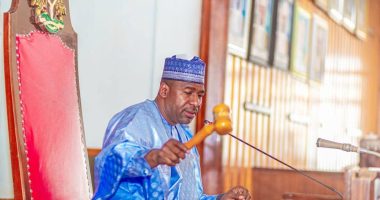
This achievement is largely credited to the strategic leadership of Governor Uba Sani, who has prioritized renewable energy, environmental sustainability, and climate resilience as key pillars of his administration.
Under his leadership, Kaduna State has launched bold initiatives aimed at mitigating and adapting to the growing impacts of climate change.
One of the first steps taken by the administration was the appointment of a Special Assistant on Climate Change, Mr. Yusuf Idris Amoke.
He unveiled the Kaduna State Climate Change Policy Document to guide climate governance and has since spearheaded numerous community engagements with civil society organizations, African Climate Reporters, and the media.
These forums have focused on raising awareness about the dangers of deforestation, environmental degradation, and improper waste disposal.
Mr. Amoke is also known for hosting the Green Climate Hangout in Kaduna, an initiative that simplifies global climate action strategies for grassroots communities.
These events attract people from various backgrounds, including the academia and media, to discuss climate solutions and promote individual and collective action.
The state government has made notable progress in deploying renewable energy solutions across public institutions.
This includes solar-powered streetlights and boreholes, which have improved energy access and water supply in underserved communities.
The transportation sector has also received attention, with the recent launch of an eco-friendly public transport system designed to reduce greenhouse gas emissions.
Kaduna’s climate efforts are further strengthened by coordinated action among various government agencies such as the State Emergency Management Agency (SEMA), the Ministry of Environment, and the Kaduna State Environmental Protection Authority (KEPA).
These agencies work closely together to ensure a unified and effective response to environmental challenges across the state.
Afforestation programs, erosion control projects, and public awareness campaigns have been intensified to build climate resilience.
The government has also undertaken large-scale desilting and clearing of water channels to prevent flooding, while economic tree planting campaigns are being promoted as part of long-term environmental sustainability efforts.
In addition, there are community-based training programs for women on the use of climate-smart cooking stoves, which helps in reducing deforestation and indoor air pollution.
Governor Uba Sani has also empowered communities through the Acresal project, offering financial support and procuring swamp buggies and excavators for dredging the River Kaduna.
These interventions are aimed at improving flood control and preserving natural ecosystems.
Commissioner for Environment and Natural Resources, Mr. Abubakar Bubba, in collaboration with Mr. Amoke, has led efforts to promote local innovations and technologies in tackling environmental issues.
Both officials have emphasized the need to develop homegrown solutions to global problems and encouraging community participation in climate governance.
Environmental experts, including Professor Ibrahim Sale, have commended Kaduna’s approach while stressing the need for more sustainable adaptation strategies such as the planting of economic trees and long-term land restoration.
According to Professor Sale, it is essential to plan for the future by investing in practices that ensure both environmental health and economic stability.
The urgency of climate action is increasingly evident across Nigeria, with persistent flooding in northern regions, desertification, land degradation, and the ongoing shrinking of Lake Chad.
These climate-related issues are contributing to low agricultural productivity, displacement, and rising insecurity.
As extreme weather events become more frequent, stakeholders are calling for stronger adherence to NiMET’s weather forecasts and environmental advisories.
Governor Uba Sani has reaffirmed his administration’s commitment to building a greener and climate-smart Kaduna.
With strategic leadership, community participation, and innovative solutions, Kaduna State is proving that sub-national governments can lead the way in climate resilience and environmental stewardship.
Daniel Karlmax