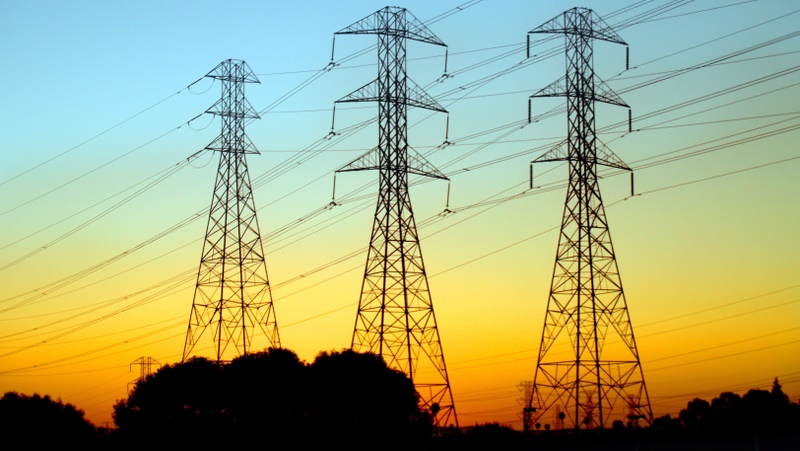

Federal Government has finalized the implementation framework for the ₦4 trillion Presidential Power Sector Debt Reduction Plan, a major step aimed at restoring financial stability and investor confidence in Nigeria’s electricity market.
The initiative, approved by President Bola Ahmed Tinubu and endorsed by the Federal Executive Council (FEC) in August 2025, seeks to address longstanding liquidity challenges that have constrained investment and weakened the performance of power generation companies (GenCos) and gas suppliers.
At a meeting held on October 7, 2025, in Abuja, the Minister of Finance and Coordinating Minister of the Economy, Mr. Wale Edun; the Minister of Power, Chief Bayo Adelabu; and the Special Adviser to the President on Energy, Mrs. Olu Verheijen, met with senior executives of the GenCos to finalize settlement modalities for verified debts.
The parties agreed to conduct bilateral negotiations that will lead to full and final settlement agreements balancing government’s fiscal realities with the financial needs of the power generation firms.
Under the plan, the Federal Government will issue up to ₦4 trillion in government-backed bonds to clear outstanding arrears owed to GenCos and gas suppliers.
The intervention is expected to ease liquidity pressures, strengthen utility balance sheets, and improve power supply reliability across the country.
Chairman of Heirs Holdings and Transcorp Power, Mr. Tony Elumelu, described the initiative as “a credible and systematic effort by government to tackle the root liquidity challenges in the power sector.” He commended President Tinubu’s economic team for what he called “a bold and transformative step.”
Similarly, the Group Managing Director of Sahara Group, Mr. Kola Adesina, said the move signals renewed confidence in ongoing power sector reforms, describing it as “significant in every respect.”
According to the Special Adviser to the President on Energy, Mrs. Olu Verheijen, the plan marks a strategic reset for Nigeria’s electricity market. “Our focus is on creating the right conditions for investment — from modernizing the grid and scaling embedded generation to improving distribution and metering,” she said.
She added that reforms under the initiative also include aligning tariffs with efficient costs, improving subsidy targeting for the poor and vulnerable, and rebuilding regulatory trust to attract private capital.
Finance Minister Wale Edun noted that the reforms go beyond settling debts. “They are about rebuilding the fundamentals so that Nigeria’s power sector works for investors, citizens, and the next generation,” he said. “Reliable power will become a catalyst for economic growth and industrialization.”
Complementary measures to expand renewable energy, leverage domestic gas as a transition fuel, and build local technical capacity are also part of the broader energy reform agenda.
The Presidential Power Sector Debt Reduction Plan is being jointly implemented by the Federal Ministry of Finance, the Federal Ministry of Power, and the Office of the Special Adviser to the President on Energy, in collaboration with the Nigerian Bulk Electricity Trading (NBET) Plc and other stakeholders.
Bello wakili