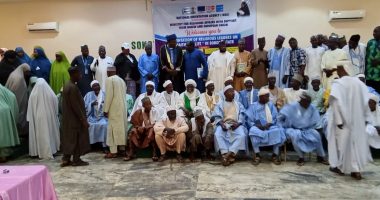
The Nigerian Export Promotion Council (NEPC) has called on sesame seed farmers in Jigawa State to scale up their production capacity to strengthen Nigeria’s non-oil export performance.
Speaking at a one-day sensitization workshop for sesame farmers in Dutse, the Chief Executive Officer of the Council, Mrs. Nonye Ayeni, said Nigeria’s non-oil export value for the first quarter of 2025 stood at $1.791 billion, marking a 24.75 percent increase compared to the same period in 2024.
Represented by the Chief Trade Promotion Officer of the Council, Mrs. OkanyChika Sylvia, Ayeni explained that sesame seed ranked third among Nigeria’s top 20 export products in 2024, accounting for over 337,825 metric tonnes or 4.63 percent of the country’s total export volume.
She said sesame seed has become a high-demand commodity in the global market and Nigeria could secure a significant share of the foreign exchange earnings if production and quality standards are improved.
Ayeni emphasized the need to enhance yield, ensure compliance with international standards, and strengthen value chain operations, from cultivation to export packaging.
In his remark, the NEPC Coordinator in Jigawa State, Alhaji Abdulkadir Aliyu, said the forum was organized to help farmers understand market demands and prepare them to tap into foreign exchange opportunities through sesame export.
He described the engagement as a platform for farmers and exporters to share ideas and contribute to the sustainable growth of the sector.
During her presentation, Mrs. Sylvia disclosed that Nigeria’s sesame seed export to Japan had faced challenges due to the detection of excess pesticide residues and salmonella contamination between 2019 and 2021.
She explained that the Japan Oil and Fat Importers and Exporters Association (JOFIEA) raised the concern in August 2022, after confirming that pesticide residue levels exceeded Japan’s Maximum Residue Limit (MRL) by nearly 1.9 times.
Sylvia identified other challenges affecting sesame seed export, including poor compliance with Sanitary and Phytosanitary standards, cross-contamination during packaging and transport, and lack of proper export documentation.
To tackle these issues, she recommended introducing Good Agricultural Practices (GAP) training for farmers, implementing a technology-driven traceability system, and improving packaging, logistics, and product differentiation.
She further stressed the importance of modern quality testing, awareness campaigns, and proper storage facilities with adequate ventilation to maintain product quality.
Ayeni also called for the creation of production clusters and collaboration among stakeholders to achieve zero rejection of Nigeria’s agricultural exports, especially sesame seed.
She assured that the NEPC would continue to engage development partners to improve quality standards and make Nigerian sesame seed more competitive globally.
One of the participants, Mrs. Balaraba Ibrahim, appealed for the establishment of an agrarian centre for sesame processing in Jigawa, to enable farmers to add value and avoid exploitation by middlemen.
Another participant, Mr. Magaji Rabi’u of the Jigawa Chamber of Commerce, urged residents to take advantage of NEPC’s export initiatives to access international markets.
The workshop, themed “A Tactical Involvement for Enhancing the Production Capacity of Sesame Seed in Jigawa State,” brought together stakeholders from the agricultural and export sectors.
Usman MZ