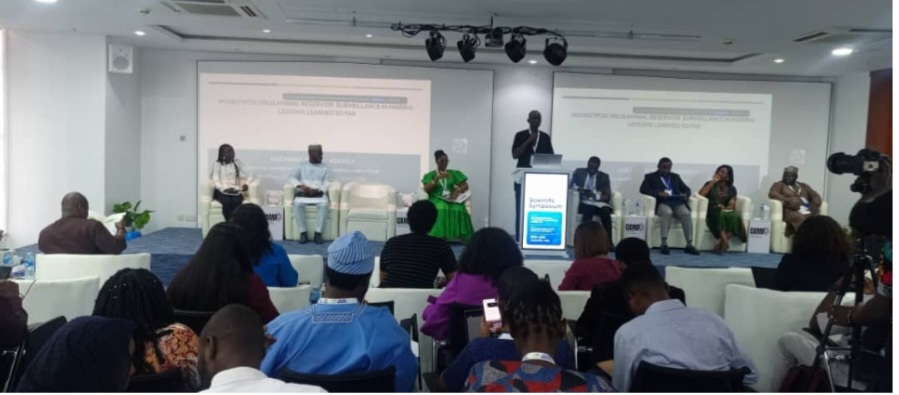

Public health experts have called for more investment in health infrastructure and stronger surveillance systems to combat recurring viral outbreaks such as Lassa fever, Mpox, Dengue, and potential future pandemics.
They made the call at the third International Research Center of Excellence (IRCE) Scientific Symposium held in Abuja, where discussions focused on lessons from past epidemics and the need to strengthen the country’s health security.
According to the experts, the rising cases of viral outbreaks have exposed deep gaps in the sector, ranging from weak surveillance and limited laboratory capacity to inadequate community awareness.
In a presentation titled ‘Viruses of Pandemic and Public Health Importance in Nigeria,’ Dr. Tosin Afowowe, of the Nigeria Centre for Disease Control and Prevention ( NCDC ) disclosed that Nigeria records at least five major outbreaks every year, with about 50 per cent caused by viruses.
“We must strengthen our laboratories, surveillance, and health worker training while also investing in public awareness campaigns,” he said. “Rapid detection, response time, and effective infection prevention are critical. Without stronger infrastructure and community campaigns, outbreaks will keep recurring.”
Building on this, Prof. Alash’le Abimiku, Executive Director of IRCE at the Institute of Human Virology Nigeria (IHVN), stressed that research is central to effective outbreak control.
“Unless we do research, we are working in darkness,” she said. “We already know how Lassa spreads, but preventive messages are not reaching the rural communities where they matter most. Vaccines alone will not be enough; grassroots education is vital.”
Earlier, Chief Executive Officer of IHVN, Dr. Patrick Dakum, said the symposium was organised to sharpen preparedness for future pandemics through targeted research and interventions.
“We cannot just throw our funding everywhere,” he explained. “Resources must be directed to high-risk viruses, supported by strong diagnostics and research that guide the response. That is how we prepare ahead for the next pandemic.”
From the policy perspective, Director-General of the National Agency for the Control of AIDS ( NACA) Dr Temitope Ilori, pointed out that people living with HIV are more vulnerable to viral infections and called for stronger collaboration among health agencies to build a more resilient system.
“Even though HIV is under control with effective treatment, patients remain more prone to diseases like hepatitis, Lassa fever, or Ebola. This is why collaboration across agencies is critical if we are to build a resilient health system,” she said.
State governments also shared their experiences. In Edo, Commissioner for Health Dr Cyril Oshomole identified environmental and cultural practices, such as drying garri on roadsides, as key drivers of Lassa transmission.
“In Edo, we are investing in both infrastructure and education,” he said. “The government has earmarked N64 billion for health this year, with funds set aside to expand laboratories and strengthen community outreach.”
In neighbouring Ondo State, one of the country’s Lassa fever hotspots, Prof. Michael Odimayo, Special Adviser to the State Government on Health, reaffirmed the government’s commitment to improving health outcomes for residents.
“The government has approved N96 million for Lassa fever research,” he disclosed. “Our studies will focus on understanding the role of rodents in spreading the disease so that we can better control transmission.”
RN