Writing By Ismai’l Adamu, Editing By Godwin Duru
Katsina State government says it will plant 6.4 million trees this year to combat desertification and its adverse effects on agriculture and the environment.
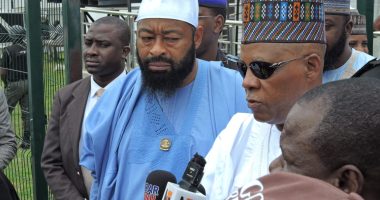
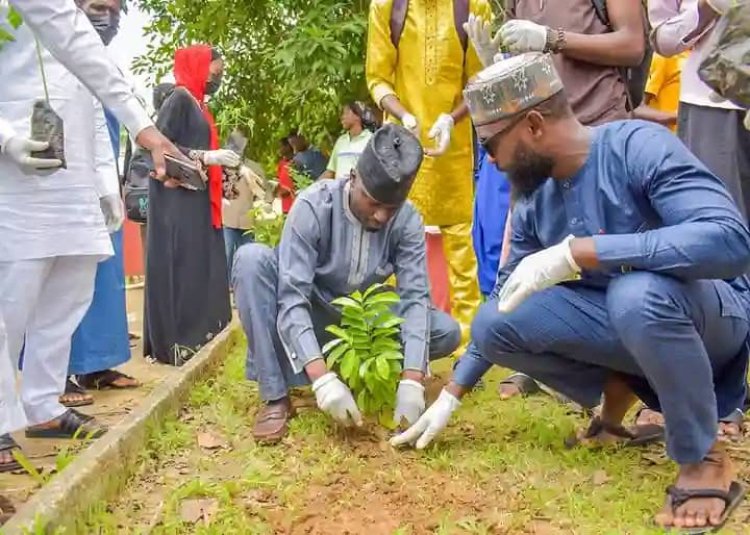
The Director Waste Management and Environmental Assessment at the state Ministry of Environment, Malam Nura Abubakar, stated this in Katsina during a tree planting campaign co-organized by UNICEF as part of activities to mark the 2025 World Environment Day.
Mr. Abubakar explained that the Katsina State government has nurtured three million trees which it will plant in July this year, while the thirty four local councils in the state will each plant 100,000 trees, bringing the total to 6.4 million.
He noted that the shelter belts that will be erected will consist of draught-resistant economic trees that will be distributed to schools, youth groups, organizations and individuals for planting.
“The Katsina State government”, he said “will provide incentives to individuals and groups” that successfully grow the trees in their plantation.
“The ministry will provide boreholes and other logistics to individuals and groups that grow the trees to a certain level, this is to encourage others to follow suit.
“The governor has also approved for the state Ministry of Environment to plant trees along the Katsina Eastern bye-pass, the trees will also serve as a shelter belt again desertification.
“The governor has also directed the state Environmental Protection Agency, the Urban and Regional Planning Board and the Department of Forestry to embark on a city beautification project.
“This project which is a component of the Katsina Urban Renewal Project will entail the planting of draught-resistant trees all over Katsina town and other major towns in the state.
“Besides these trees, the NNPCL will also provide the state with more trees in the effort to combat desertification in the state”, Abubakar said.
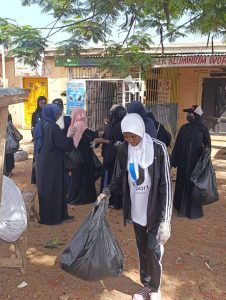
In a speech, the Chief of Kano Field Office of UNICEF, Mr. Rahama Farah said on its part the agency will plant 100,000 trees in Nigeria this year under its Green Rising initiative.
“In Nigeria, Green Rising aims to plant 100,000 trees, recycle 100,000 kilograms of plastic waste and mobilize 100,000 youth for climate action by 2025.
“The Green Rising initiative”, Farah explained “is aimed at mobilizing youth-led climate action through volunteering, green skills development, and environmental advocacy”.
He said the tree planting component of the initiative will contribute to Nigeria’s environmental sustainability goals and foster climate-smart entrepreneurship among young people, particularly women.
“Trees are very significant because they symbolize nature which we should do our best to protect and preserve by saving the ones we have and planting new ones.
“We started this tree planting campaign from schools because students and children are the most vulnerable when it comes to environmental risks and hazards.
“We also want the students to be our champions, we want them to serve their role as social change agents, and we have hundreds of trees to be planted in schools, communities and the Local Government Areas.
“But the purpose is not just to organize a one-time occasion for people to plant trees, we have mechanisms in place to make it a continuous process, we will cultivate a culture of tree planting in communities across Kano, Jigawa and Katsina states”,Farah said.
In his remarks the WASH Facilitator for UNICEF in Katsina State, Mr. Atah Samuel-Itodo, explained that ten various tree species were planted during the campaign while appealing to school managements, communities and households to sustain the culture of tree planting in the state.
The Katsina State Focal Person for U-Report, one of the youth groups that participated in the campaign, Zainab Suleiman, appealed to communities in the state to take ownership of the tree planting campaign.
She also urged all levels of government and its development partners to sustain the commitment to fight desertification which contributes to global warming.
Isma’il Adamu