By Khadija Kubau
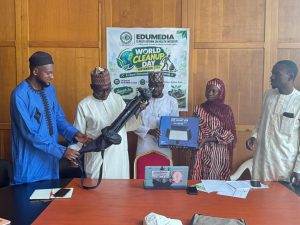
The EduMedia Climate Reform on Health Initiative (e-MICH) has launched a TV Podcast to amplify public awareness and dialogue on climate change, health, education, environmental sustainability and the One Health agenda.
The initiative was unveiled in Kaduna as part of activities marking World Animal Day 2026.
In a statement signed by the Director of Strategic Communication, e-MICH, Dr. Hadiza Abdullahi, the organisation said the new media platform would provide opportunities for expert interviews, community voices, evidence-based discussions and public enlightenment on issues affecting people, animals and the environment.
Dr. Abdullahi said the initiative was part of e-MICH’s commitment to using media, education and strategic communication to promote greater understanding of the interconnected relationship between human health, animal health and environmental health.
She noted that extreme heat, prolonged droughts, floods, wildfires, water scarcity and changing rainfall patterns were increasingly threatening wildlife, livestock and natural ecosystems, with serious consequences for human health, food security, livelihoods and education.
According to her, the TV Podcast would focus on climate change, One Health, WASH, biodiversity, animal health, environmental sustainability and other emerging issues affecting communities.
She explained that the platform would also bridge the gap between scientific and policy discussions and the information available to ordinary citizens by translating complex climate, environmental, health and development issues into accessible and actionable information.
The organisation called for stronger collaboration among governments, development partners, civil society organisations, educational institutions, communities and the media to strengthen ecosystem protection, climate-resilient water management, sustainable livestock practices, disease surveillance and biodiversity conservation.
e-MICH also urged the media to deepen reporting on climate, health, education, environmental and One Health issues, while amplifying the experiences of affected communities and holding institutions accountable for commitments to climate action, biodiversity conservation, animal welfare and public health.
The organisation called on individuals and communities to protect wildlife and their habitats, conserve water, plant and protect trees, maintain clean environments, practise responsible animal care and report activities that threaten forests, wetlands and other natural resources.
It further encouraged young people, students, teachers and educational institutions to become champions of climate and environmental awareness by translating knowledge into practical action in schools, homes and communities.
Governments and policymakers, e-MICH said, must move beyond commitments to measurable action by investing in climate-resilient communities, environmental and health education, sustainable agriculture and livestock systems, biodiversity protection, clean water and disease prevention.
The organisation also encouraged the private sector, development partners and civil society groups to support community-led solutions that protect vulnerable populations, animals and ecosystems while building resilience to climate change.
Dr. Abdullahi urged Nigerians and the wider public to engage with the e-MICH TV Podcast, share credible climate and health information and participate in conversations that promote practical solutions and environmental accountability.
She stressed that awareness must translate into action at every level, from individuals and households to communities, institutions and governments.
“Protecting animals means protecting ecosystems, human health and our collective future. Every action counts, and everyone has a role to play,” she said.