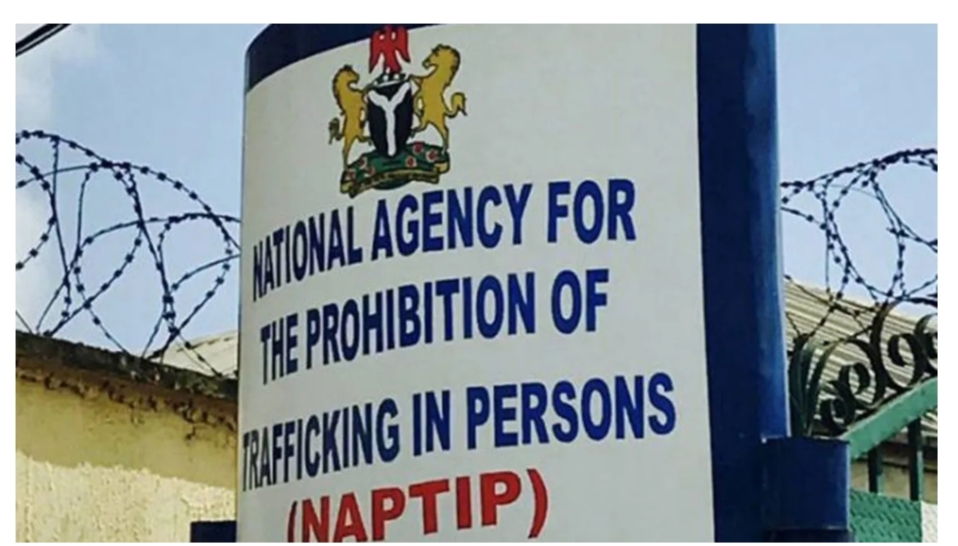

National Agency for the Prohibition of Trafficking in Persons (NAPTIP) has inaugurated an “End Sexual and Gender-Based Violence (ESGBV) Media Corps” to strengthen advocacy and public awareness against sexual and gender-based violence in Nigeria.
The initiative brings together media professionals to amplify reporting on SGBV, challenge harmful cultural narratives and promote greater accountability for perpetrators.
Head of NAPTIP’s Press and Public Relations Unit, Vincent Adekoye, said the agency had rescued more than 3,000 survivors of SGBV across the country since January 2026.
He said NAPTIP had also intensified community engagement at the grassroots and leveraged the Violence Against Persons (VAP) law to arrest and prosecute perpetrators.
“It’s our obligation to protect the victims; we must ensure that their dignity is protected.
Media urged to challenge harmful narratives
The Civil Society and Community Mobilisation Lead in the EU Support to End SGBV Programme, Wynyfred Achu-Egbuson, said sustained media attention would help challenge cultural beliefs that enable gender-based violence.
“As issues of SGBV continue to be highlighted and with an increase in the successful number of prosecutions, such incidents will be reduced in our communities. And some cultural perceptions encourage gender based violence that need to be adequately interrogated and changed.”
An advocate for the rights of persons with disabilities, Chris Obiora, identified people with disabilities as particularly vulnerable to SGBV.
“Most Persons with Disabilities are always victims of SGBV. I know of a blind lady – a rape victim. She couldn’t identify the culprit and it was hard to prove her case, because people were saying, ‘so among all the ladies, you are the one he chose to sleep with.’”
About 40 media professionals drawn from various media organisations participated in the inauguration, organised by NAPTIP in collaboration with the EU Support to End SGBV Programme and implemented by International IDEA.
The media corps is expected to strengthen sustained reporting, advocacy and public discourse around SGBV while promoting survivor-centred approaches and accountability for perpetrators.
RN