
Professor Toba Alabi of the Nigerian Defence Academy (NDA) has identified corruption, insecurity, unemployment, inadequate education and overdependence on crude oil as some of the major challenges hindering Nigeria’s development.
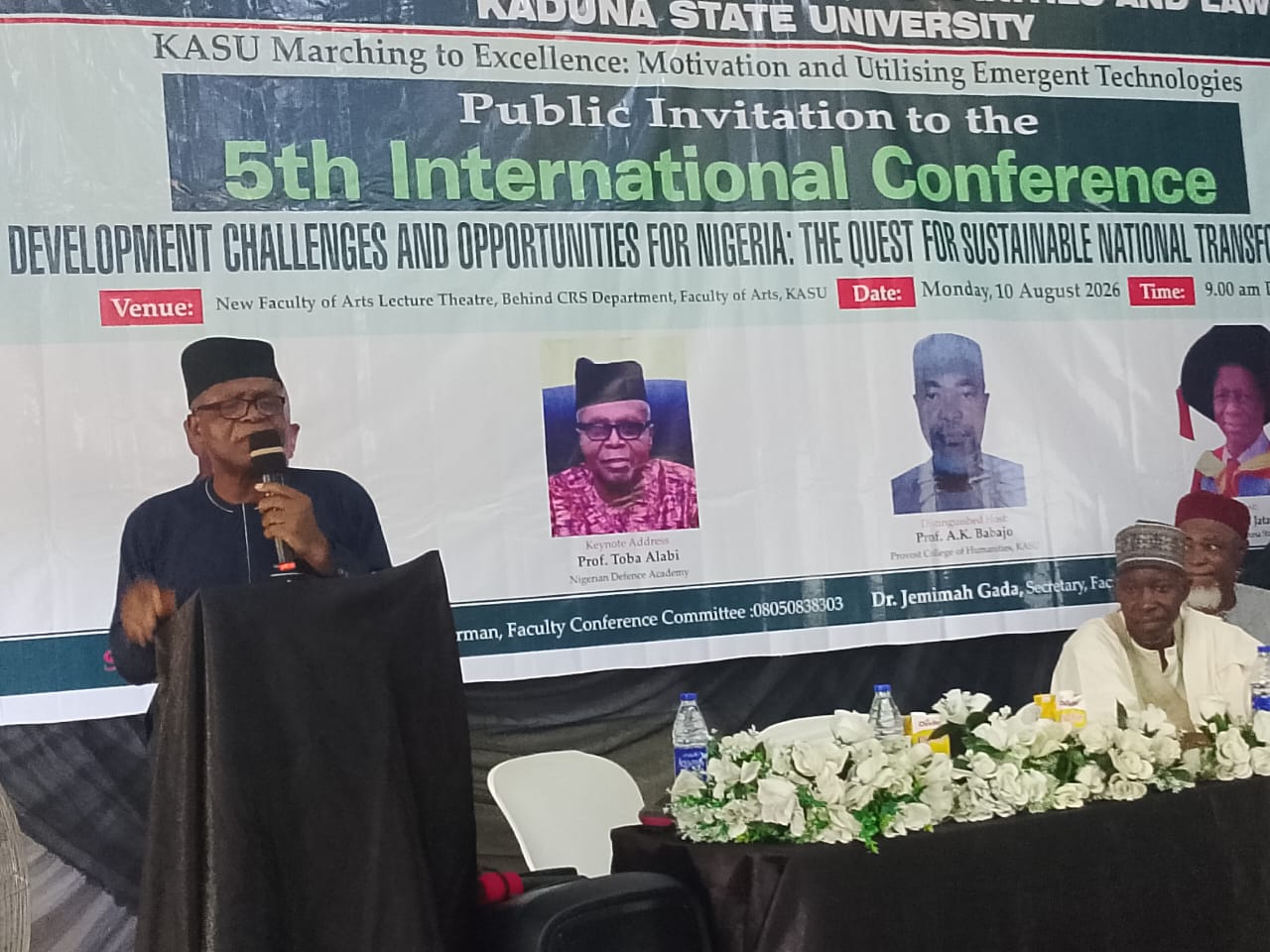
Professor Alabi stated this while delivering a keynote address at the Fifth International Conference on Development Challenges and Opportunities for Nigeria: The Quest for Sustainable National Transformation, organised by the Faculty of Arts, Kaduna State University (KASU).
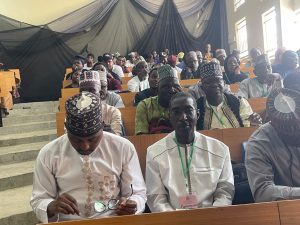
He said conferences of such nature were important platforms for scholars and experts to exchange ideas, interrogate societal challenges and contribute to the advancement of knowledge.
According to him, many innovations and inventions that have transformed societies were products of intellectual engagement and collaboration among scholars seeking solutions to complex problems.
Professor Alabi commended the Faculty of Arts for organising the conference, describing its theme as timely in view of the numerous development challenges confronting Nigeria.
He explained that his presentation examined the conceptual foundations of development, Nigeria’s development paradox, major economic, political and security challenges, as well as the imperatives for sustainable national transformation.
The professor described development as a multidimensional process that should improve the living conditions of citizens by ensuring access to basic necessities such as food, shelter, clothing, employment, security and fundamental human rights.
He observed that despite Nigeria’s abundant human and natural resources, the country continued to grapple with poverty and underdevelopment, describing the situation as a major development paradox.
On corruption, Professor Alabi stressed that the problem should not be blamed solely on political leaders, ministers or members of the National Assembly, but should be regarded as a societal challenge requiring collective responsibility.
He said corruption could manifest in everyday activities, including academic malpractice, dishonesty and failure to provide services for which people had been paid.
Professor Alabi also identified insecurity as a major obstacle to economic development, noting that farmers could not effectively engage in agricultural activities when they were afraid of attacks.
He said insecurity had far-reaching consequences for the economy because it affected agriculture, employment, investment and other productive activities.
The professor further identified unemployment as another major challenge, warning that the inability of young people to secure jobs and establish stable livelihoods could have serious social and economic consequences.
He expressed concern over the large number of Nigerian children and youths who are out of school, stressing that the country could not achieve meaningful human capital development without investing adequately in education.
Professor Alabi also criticised Nigeria’s continued overdependence on crude oil, arguing that the country must diversify its revenue base and develop other productive sectors of the economy.
He urged the Federal, State and Local Governments to promote agriculture, manufacturing, textiles and other industries capable of generating employment, strengthening local production and increasing internally generated revenue.
According to him, Nigeria has the resources and capacity to produce many of the goods it currently imports, stressing that greater patronage of locally made products would help revive domestic industries and create employment opportunities.
Professor Alabi called for stronger commitment by political leaders and citizens to national development, saying sustainable transformation requires responsible leadership, accountability, patriotism and collective action.
He emphasised the need for Nigeria to reduce its dependence on petroleum revenues and harness its agricultural, industrial and human resources to build a sustainable and productive economy.
Adamu Yusuf