
House of Representatives is set to host a National and Regional Conference on Public Accounts and Fiscal Governance in July 2025.
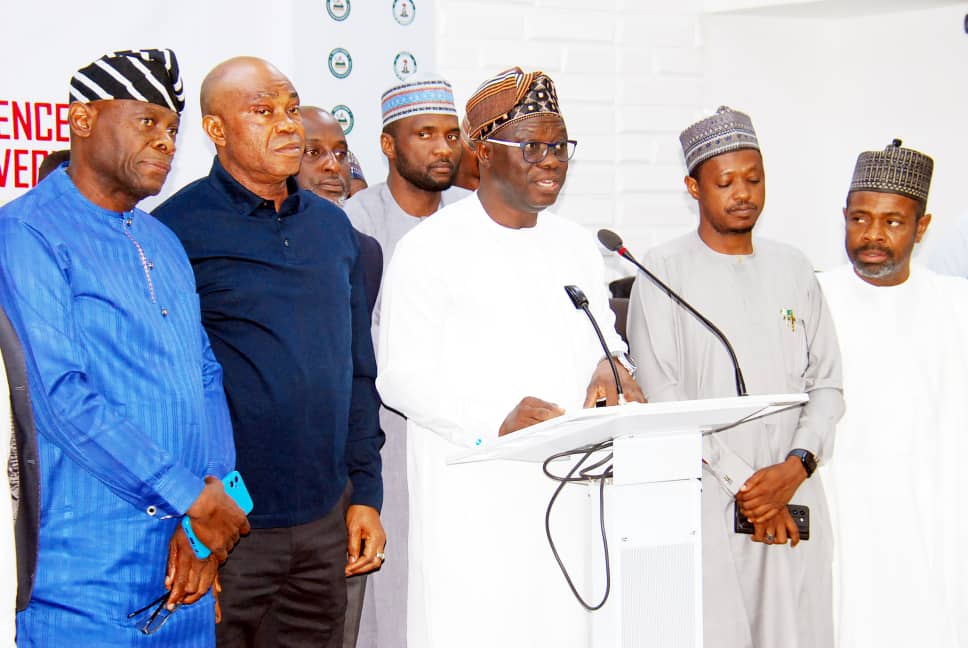
The Chairman of the House Committee on Public Accounts, Mr. Bamidele Salam, announced this during a press briefing at the National Assembly Press Centre in Abuja.
Mr. Salam explained that the national gathering is aimed at reshaping the country’s fiscal accountability architecture.
He explained that the event is a central component of the 10th People’s House Legislative Agenda, which focuses on strengthening democratic institutions through transparency, accountability, and sustainable fiscal management.
The Committee Chairman noted that the event is designed to serve as a prelude to Nigeria’s hosting of the 2025 edition of the West African Association of Public Accounts Committees (WAPAC) Conference, for which the country recently secured the hosting rights.
Mr Salami, further expressed concern that Over 60 percent of Federal Ministries, Departments, and Agencies (MDAs), have continue to flout financial regulations, further eroding public confidence in government institutions.
“The rate of non-compliance among MDAs is also expected to fall from its current rate of over 60 percent to single digits. The conference will also aim to significantly boost Nigeria’s standing in the Fiscal Governance Health Index (FGHI) through the adoption of transparent digital systems”
The sessions according to him will focus on equipping stakeholders with modern tools and practices in audit efficiency and oversight, as well as knowledge-sharing on public sector reforms and digital innovations in financial management.
He maintained that another key focus of the event will be the integration of international best practices in digital governance, audit automation, fiscal tracking, and anti-corruption technologies.
The conference which will last for about five days is expected to bring together Nigeria’s top public sector financial managers, lawmakers, regulatory agencies, anti-corruption institutions, development partners, civil society organizations, and representatives from across the three tiers of government.
COV/TSIBIRI