By Aminu Dalhatu
A two-day workshop on Public Finance for Children (PF4C), supported by the United Nations Children’s Fund (UNICEF), has called on the governments of Sokoto, Kebbi and Zamfara States to strengthen investment in children, ensure timely release of budgetary allocations and establish effective social protection systems.
The participants also urged the three state governments to ensure the full release of their 2026 Child Nutrition Fund (CNF) matching contributions of five hundred million naira each to enable them benefit from UNICEF’s matching-fund opportunity.
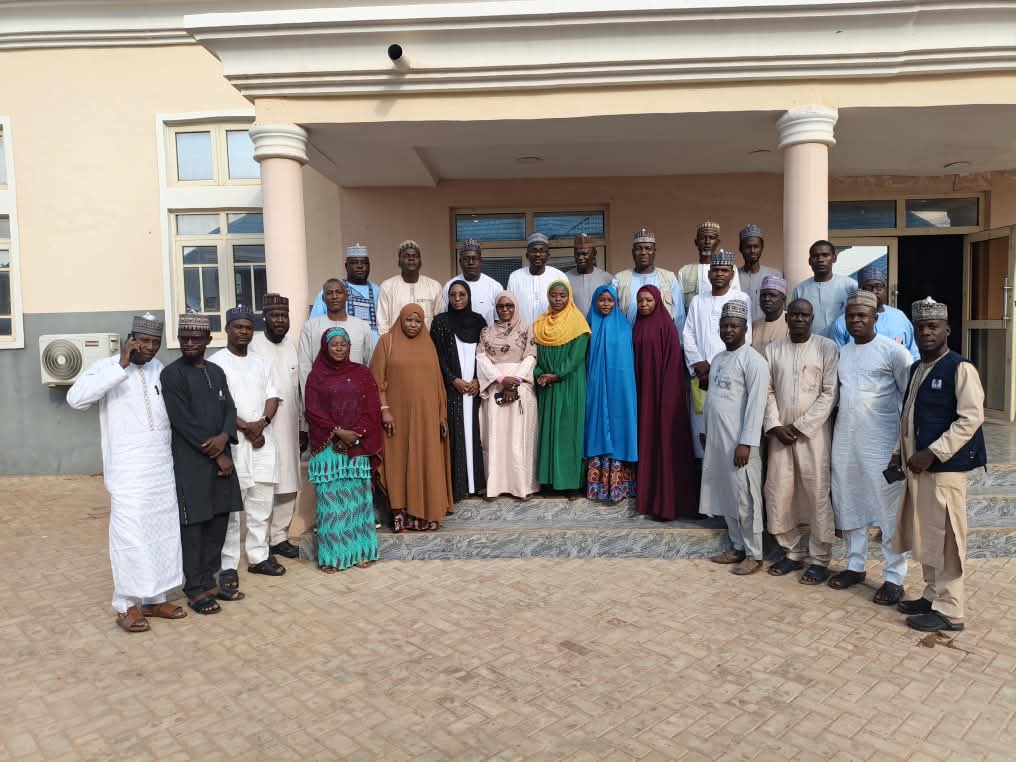
This is contained in a communiqué issued at the end of a two-day capacity-building workshop for Civil Society Organisations (CSOs), media representatives and officials of the State Ministries of Budget and Economic Planning from the three states.
The workshop which held Birnin Kebbi, Kebbi State, was organised in collaboration with the respective state ministries, with support from UNICEF Sokoto Field Office.
The 33 participants examined public finance management and the need to ensure that government budgets are credible, adequately funded, effectively implemented and translated into improved outcomes for children, particularly in health, nutrition, education, water, sanitation and hygiene, social protection and child protection.
The communiqué noted that, although allocations to critical sectors were improving, the release and utilisation of funds remained major challenges across the three states.
It observed that, Sokoto State’s 2026 budget of 758.7 billion naira allocated 122.73 billion naira, representing 16.2 per cent, to health, while 115.95 billion naira, representing 15.3 per cent, was earmarked for education, meeting national benchmarks.
Kebbi State was also acknowledged for prioritising health and education in its 2026 budget, while Zamfara was recognised for significant allocations and releases towards social protection programmes during the year.
However, participants expressed concern that, capital budget performance across the three states remained below 50 per cent by the third quarter of 2026, attributing the situation to inadequate releases and implementation challenges.
On child nutrition, the communiqué described the situation as an emergency, noting that, stunting in Sokoto State stood at 42.8 per cent, with more than 200,000 children suffering from Severe Acute Malnutrition (SAM).
It added that Kebbi and Zamfara States were also experiencing high levels of stunting, wasting and micronutrient deficiencies.
The participants expressed concern that, none of the three states had released its 2026 matching contribution of 500 million naira to the Child Nutrition Fund, despite the opportunity to leverage additional UNICEF support.
They therefore called on the governments to release the contributions in full and strengthen interventions aimed at improving child survival, particularly during the first 1,000 days of life.
On education, the communiqué disclosed that, approximately 624,000 out-of-school children had been mapped across Sokoto, Kebbi and Zamfara States, with girls and Almajiri children among the most affected.
It stressed that increasing school enrolment alone would not address the challenge without adequate teachers, improved learning environments, retention strategies and functional water, sanitation and hygiene facilities in schools.
The participants also identified weaknesses in social protection systems, transparency and beneficiary tracking.
They observed that, Sokoto State had yet to enact a Social Protection Law or establish a Basket Fund, while 8.37 billion naira spent on welfare packages in 2025 was reportedly not adequately targeted through the Social Register.
The communiqué acknowledged that, Zamfara State had a Social Protection Law and policy, while Kebbi State had a draft bill and an approved policy, but noted that implementation, sustainable funding and validation of the Social Register remained weak.
To address the gaps, the workshop called on the State Houses of Assembly to fast-track the passage of Social Protection Bills by December 2027, with provisions for a Basket Fund, a Social Protection Council or Agency and mandatory utilisation of the Social Register.
The governments were also urged to ensure timely release, sustained funding and increased allocations to social protection programmes, particularly universal benefit cash transfers targeted through the Social Register.
On transparency and accountability, participants called on the Ministries of Budget in the three states to publish Budget Implementation Reports within 30 days after the end of every quarter.
The reports, they said, should provide detailed information on expenditure under health, education and social protection functions, identified as Functions 707, 709 and 710, respectively, as well as breakdowns by Local Government Areas.
They further recommended that Citizens’ Budgets be published in both Hausa and English within seven days of the Governor’s assent to the annual budget.
The communiqué also called for all welfare interventions, including cash transfers, food distribution, Ready-to-Use Therapeutic Food (RUTF) and school support, to be channelled through a validated and deduplicated Social Register, rather than discretionary beneficiary lists.
The State Operations Coordinating Units (SOCUS) were urged to publish Local Government-level summaries of households and children captured in the Social Register, including information on birth registration, zero-dose immunisation, nutrition and out-of-school children.
On the 2027 budget, participants advised the three state governments to base their revenue projections on realistic estimates of between 40 and 50 per cent of actual revenue performance rather than inflated projections.
They also recommended the introduction of measurable child-sensitive indicators to assess government performance, including the number of Severe Acute Malnutrition cases treated and cured, out-of-school children enrolled and retained in school, births registered, zero-dose children immunised, primary healthcare centres and schools completed, and water and sanitation facilities provided, particularly in public girls’ schools.
The communiqué further outlined responsibilities for Civil Society Organisations, urging them to adopt the 10-Indicator Scorecard and CSO Question Card developed during the workshop for annual assessments of government budget performance.
CSOs were also encouraged to verify at least five primary healthcare centres, five schools and five programme beneficiaries in each state every quarter, using photographs and testimonies to establish whether budgetary allocations were translating into actual services.
They were directed to produce and publish two-page public assessment scorecards for each state by January 31, 2027, highlighting the scorecard results, three positive findings, three areas of concern and five recommendations for improved investment and implementation in the 2027 budget.
The assessments are expected to be shared with State Houses of Assembly, Governors, UNICEF, media organisations and citizens through traditional and social media platforms.
Participants also unanimously agreed to establish State Public Finance for Children Networks, bringing together CSOs and media organisations to strengthen advocacy and monitoring, with particular attention to child health and nutrition during the first 1,000 days of life, out-of-school children and social protection.
The media were specifically urged to move beyond reporting budgetary figures to investigating the actual benefits delivered to children.
They were encouraged to report how many children received therapeutic food, returned to school, had their births registered or benefited from immunisation and social protection programmes.
Media organisations were also advised to publish quarterly budget-tracking reports using Budget Implementation Reports, beneficiary information and field verification.
Participants commended UNICEF Sokoto Field Office for supporting the workshop and requested continued technical assistance in capacity building, Budget Implementation Report analysis, Social Register validation and advocacy on child survival, quality education and sustainable social protection.
The communiqué was signed on behalf of the CSOs and media participants by Dr. Abdulrahman Umar for Sokoto State, Isah Mansur for Kebbi State and Adamu A. Katorkoshi for Zamfara State.