
By Aminu Dalhatu
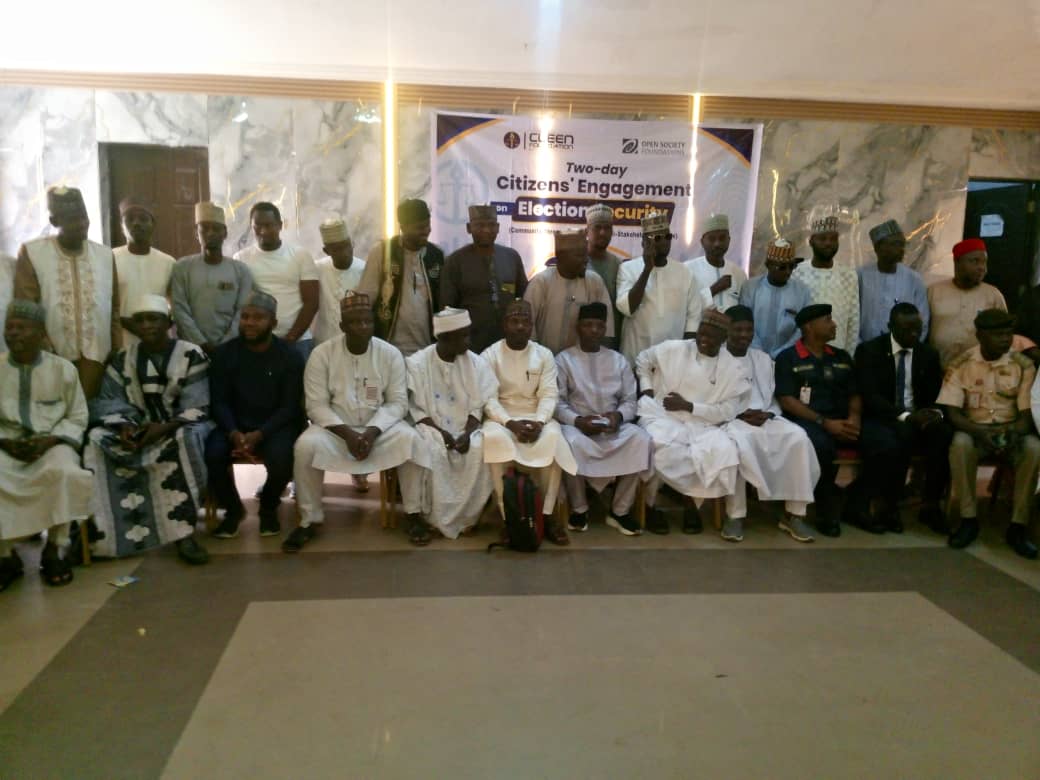
Participants at a two-day citizens’ engagement on election security in Zamfara State have identified banditry, kidnapping, political violence, inadequate security deployment and weak early-warning mechanisms as major threats to peaceful and credible elections in the state.
The participants made the observations in an Election Security Risk Assessment and Citizens’ Charter of Demand endorsed at the end of the multi-stakeholder engagement held in Gusau, the Zamfara State Capital.
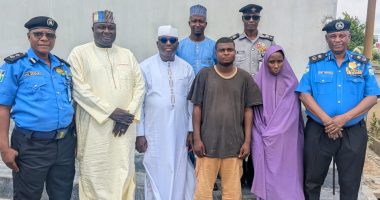
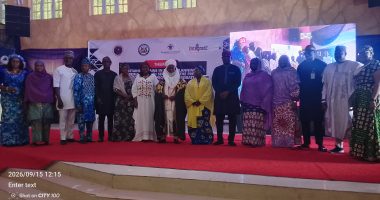
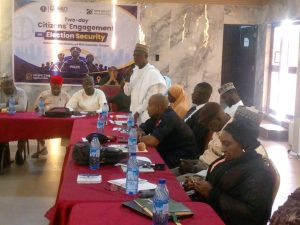
The two-day engagement was facilitated by the CLEEN Foundation with support from the Open Society Foundation, brought together community representatives, security agencies,INEC, political parties, traditional and religious leaders, civil society organisations, Women and Youth Groups and the media among others.
The assessment identified several local government areas, including Tsafe, Zurmi, Maru, Anka, Bukkuyum, Shinkafi and Birnin Magaji, as areas requiring pertculer attention in election security planning because of existing security challenges.
It also listed Gusau, Kaura Namoda and Talata Mafara among areas requiring enhanced election security preparedness.
According to the assessment, other threats included election-related violence and political thuggery, easy access to weapons and dangerous substances, voter intimidation, vote buying and selling, ballot snatching, misinformation, disinformation and hate speech.
The stakeholders also identified inadequate logistics and election preparedness in hard-to-reach areas, drug abuse among vulnerable youths, low civic awareness, poverty, unemployment and economic vulnerability as factors that could affect election security.
The assessment further highlighted weak Early Warning and Early Response mechanisms and inadequate information-sharing among relevant institutions and communities as critical gaps that requiring urgent attention.
On internally displaced persons, the participants called for deliberate measures to ensure that, people displaced from conflict-affected communities are able to register and access polling facilities without discrimination or undue hardship.
In the Citizens’ Charter of Demand, the stakeholders called for timely and adequate deployment of security personnel to identified high-risk and hard-to-reach areas ahead of elections.
They also demanded coordinated action by security agencies to prevent armed groups from controlling communities and to curb the circulation of small arms and other dangerous substances.
The participants called for firm action against vote buying, vote selling, ballot snatching and other electoral malpractice, as well as protection for women, youths, persons with disabilities and internally displaced persons against intimidation and voter suppression.
They further called for stronger community-based Early Warning and Early Response systems, accessible channels for reporting threats, and effective measures to counter misinformation, disinformation and hate speech during the election period.
The stakeholders also demanded improved civic and voter education, youth employment and livelihood programmes, measures to address drug abuse, and support for communities affected by conflict and displacement.
They called for regular engagement among the Independent National Electoral Commission, security agencies, the Zamfara State Government, political parties, civil society organisations, traditional rulers and community leaders on election preparedness.
The participants urged relevant authorities to publicly commit to implementing the demands contained in the Charter and called on civil society, the media and citizens to monitor and hold duty-bearers accountable for their implementation.
The Election Security Risk Assessment and Citizens’ Charter of Demand would be distributed to all relevant stakeholders on Election in Zamfara to do the needful.
Similarly, the Election Security Risk Assessment and Citizens’ Charter of Demand was duly signed by the representatives of the participants.
Editing By Yusuf Zubairu