
By ALI MUHAMMAD RABIU
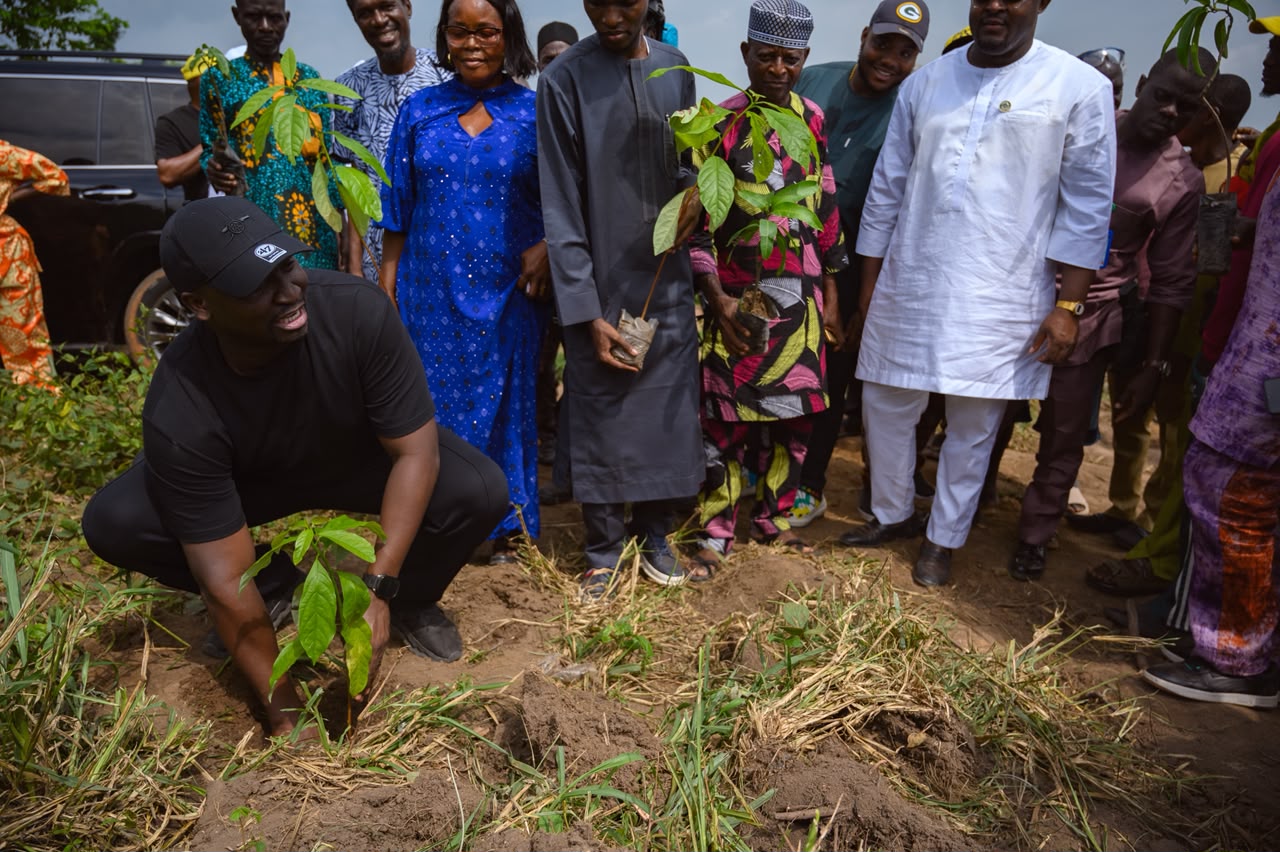
The National Agricultural Land Development Authority (NALDA) has commenced planting of at least one million economic trees across Nigeria’s six geopolitical zones to tackle climate change, restore degraded ecosystems and boost rural livelihoods.
Speaking during the close-out of the first phase of the campaign in Onigbin, Isin local government area of Kwara state, the NALDA’s Special Assistant (Project) to the Executive Secretary, Almustafa Ibrahim, said the authority had received approval to plant an additional 56,000 trees across 34 horticultural clusters nationwide.
He said the trees, including mango, coconut, avocado and fig, would serve as perimeter fencing for NALDA’s horticultural clusters while providing fruits, supporting food security and creating additional income for beneficiaries.
Ibrahim said the authority was also working with the National Council on Climate Change to explore carbon credit opportunities for the trees planted.
He explained that the next phase would engage about 2,500 youths, who would participate in tree planting and climate awareness campaigns in their communities.
On his part, the NALDA’s Senior Assistant (Technical) to the Executive Secretary, Olusegun Owolabi, said the programme was designed to restore the ecosystem while expanding horticultural production.
He said the authority planned to plant at least 500 trees at the Kwara site, depending on the spacing requirements of the different tree species.
Owolabi explained that NALDA’s horticultural programme was being implemented through controlled-environment farming, greenhouse production and open-field horticulture.
According to him, the economic trees would be planted around horticultural fields to restore vegetation removed during land development while providing long-term economic benefits to surrounding communities.
“We don’t plant and leave. It’s not an intervention programme,” he said, stressing that NALDA maintained contact with communities where its agricultural projects had been established.
He also assured that the seedlings being introduced had been acclimatised to Nigeria’s tropical environment, while trained horticultural farmers would remain responsible for maintaining the sites.
One of the Green Hope Ambassadors, Emmanuel Phillips, said the initiative would help regenerate forest areas and mitigate the effects of climate change.
He said ambassadors were expected to plant, protect and sustain the trees while encouraging others to embrace environmental protection.
Editing by BASIRAT MEMUDU