
By Ali Muhammad Rabiu
Kwara State Government has unveiled Emergency Obstetric and Newborn Care (EmONC) Assessment and Improvement Plan of Action, to reducing preventable maternal and newborn deaths across the State.
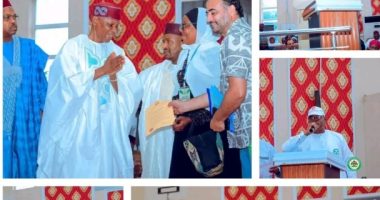
The state Commissioner for Health, Dr. Amina Ahmed El-Imam, made the disclosure during the dissemination of the report held in Ilorin.
She said the assessment, conducted between November and December 2025 under the Strengthening Access to Reproductive and Adolescent Health (SARAH) initiative, covered 202 public health facilities across all 16 Local Government Areas of the state.
According to her, the assessment provides evidence on the availability, accessibility, functionality, quality and readiness of EmONC services, while identifying critical gaps and providing an actionable roadmap for improvement.
Dr. El-Imam highlighted the present administration’s investments in maternal and newborn health, to include the renovation and upgrading of health facilities, free Caesarean section services in designated facilities, free delivery kits, recruitment and capacity building for health workers, and expansion of health insurance coverage.
The Commissioner commended Governor AbdulRahman AbdulRazaq for his sustained investment in the health sector and reaffirmed the State Government’s commitment to implementing the recommendations of the assessment in collaboration with relevant stakeholders.
Earlier in his address, the Permanent Secretary, Ministry of Health, Dr. Taoheed Abdullahi, said the report would help the State translate evidence into practical action.
He urged stakeholders to focus on identifying solutions, setting priorities and ensuring accountability.
In her goodwill message, the United Nations Population Fund (UNFPA), representative Ms. Abbigail Msemburi, commended the State Government and partners for supporting the assessment, describing it as an important investment in saving the lives of women and newborns.
Msemburi urged stakeholders to use the findings to guide planning, budgeting, infrastructure development, human-resource deployment, referral systems and quality improvement.
The assessment was supported under the SARAH initiative, a joint UNFPA-UNICEF programme funded by the European Union, in collaboration with the Kwara State Ministry of Health, Kwara State Primary Health Care Development Agency, WHARC and other partners.
Editing By Godwin Duru