
Writing By Khadijah Aliyu ; Editing By Godwin Duru
The Kano State Government has intensified the implementation of the Task Shifting and Task Sharing (TSTS) policy across primary and secondary healthcare facilities to improve healthcare delivery and reduce maternal mortality, particularly in rural communities.
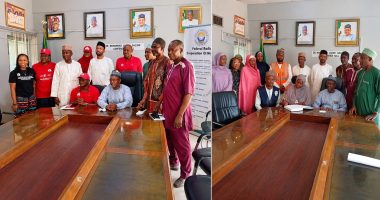
The Director General of the Kano State Primary Healthcare Management Board (SPHCMB), Professor Salisu Shehu, disclosed this during a meeting on the adaptation of the TSTS Policy on Maternal, Newborn and Child Health/Family Planning (MNCH/FP) organised by KanSLAM.
Professor Shehu explained that the policy, which is nationally approved and domesticated by states, was introduced to address shortages of trained medical personnel in hard-to-reach and underserved communities.
According to him, the initiative allows some healthcare responsibilities traditionally handled by highly trained professionals to be delegated to lower-level healthcare workers under proper supervision.
He noted that the programme initially focused on improving antenatal care, urinalysis and ultrasound services at primary healthcare centres through the training of midwives and community health workers.
“However, under the Federal Government’s Maternal Mortality Reduction Innovation Initiative (MAMII), the scope has expanded to include the identification and management of excessive bleeding, eclampsia, anaemia, infections and postpartum haemorrhage during pregnancy and childbirth”
Professor Shehu said frontline healthcare workers are now trained to measure blood loss during delivery using calibrated drapes, identify silent signs of infection and provide emergency first aid before referral.
He added that the programme has also been extended to address childhood illnesses such as malaria, malnutrition and infections at the community level.
He further disclosed that Kano State has introduced a mentorship initiative involving experienced doctors and nurses deployed across local government areas to supervise healthcare workers and ensure effective implementation of the policy.
Despite the progress recorded, he identified poor awareness, transportation difficulties and delays in seeking healthcare as major challenges affecting maternal healthcare delivery in rural communities.
According to him, emergency transport interventions introduced through NEMSAS, SEMSAS and RESMAT have supported the movement of pregnant women from remote communities to health facilities, with over 12,500 women benefiting from the scheme within a few months.
Khadijah Aliyu