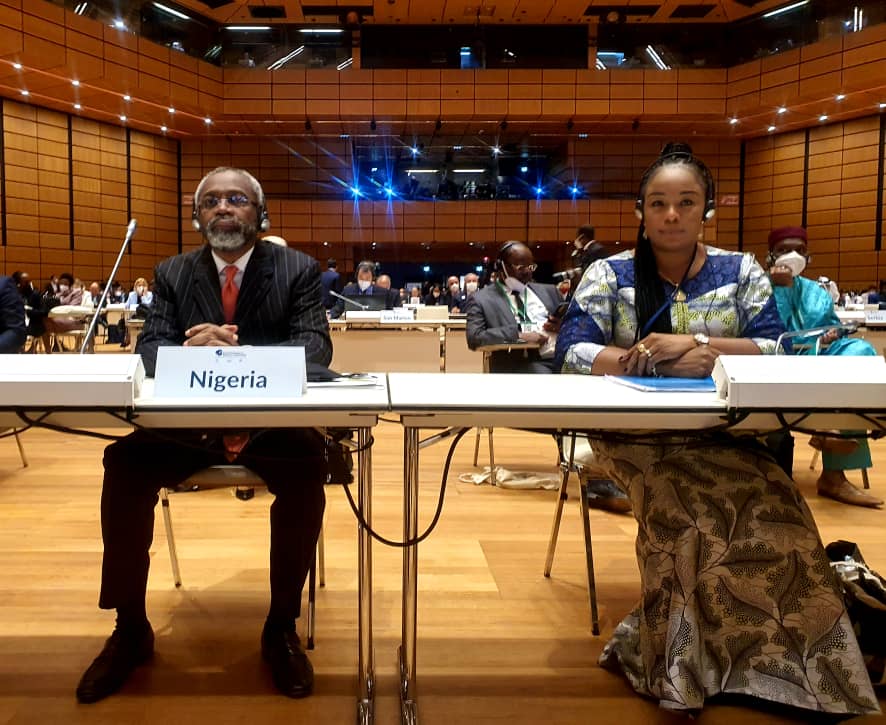

The Speaker of the House of Representatives, Mr Femi Gbajabiamila, says tackling hate speech and misinformation has become the responsibility of all major stakeholders, especially Parliaments around the world, as the negative consequences of the two can only be imagined.
Mr Gbajabiamila was speaking on the topic, ‘Countering Misinformation and Hate Speech On and Offline Requires Stronger Regulations’, at the Fifth World Conference of Speakers of Parliament taking place in Vienna, Austria.
He stated that parliaments must find in all regulatory or legislative interventions, a balance between protecting the right to free speech and the right to life, peace and dignity.
According to him, proper and legal means should be followed in countering hate speech and misinformation both off and online so as not to tamper with the rights of citizens to free expression.
The Speaker said technology and new media had led to the democratization of public debate in a way that, if appropriately managed, could be to the benefit of citizens and nations worldwide.
“However, at the same time, it has created the ideal circumstances for bad actors to spread misinformation, and to manipulate people in ways that threaten our societies,” he added.
Gbajabiamila said the right to free speech was not without limits as it did not include the freedom to plant wilful misinformation and that it did not excuse the actions of those who sought to use the freedom of public debate to exacerbate existing fissures in the society, “and it does not include a right to ignite social tensions, through lies and fake news in our societies, without consequence.
The speaker noted that when individuals or entities use misinformation for their own gain but undermine constructive public policy debates, they should and must be held accountable. Indeed, when misinformation results in harm to individuals and institutions, the perpetrators should be identified and held liable.
However, Gbajabiamila, observed that this is not to suggest that governments should be in the business of deciding who gets to speak or what amounts to proper speech.
The speaker added that when it is clear that speech has had negative consequences, it falls to the government to define the criminal and civil processes for accountability.
Coming to Nigeria, Gbajabiamila said with the country’s diverse cultures and religions that were still working toward achieving a more perfect union, hate speech off and online could have a devastating real-world effect very quickly.
He cited examples of the misinformation on the Control of Infectious Diseases Bill introduced in the House last year; the protests against Covid-19 vaccination around the world, and the problem of racism against some footballers in the UK.
Other speakers of Parliaments that spoke at the session supported the idea of regulating the space for hate speech and misinformation while emphasizing the need to protect freedom of expression.
RN