
Written By Isma’il Adamu; Edited By Godwin Duru
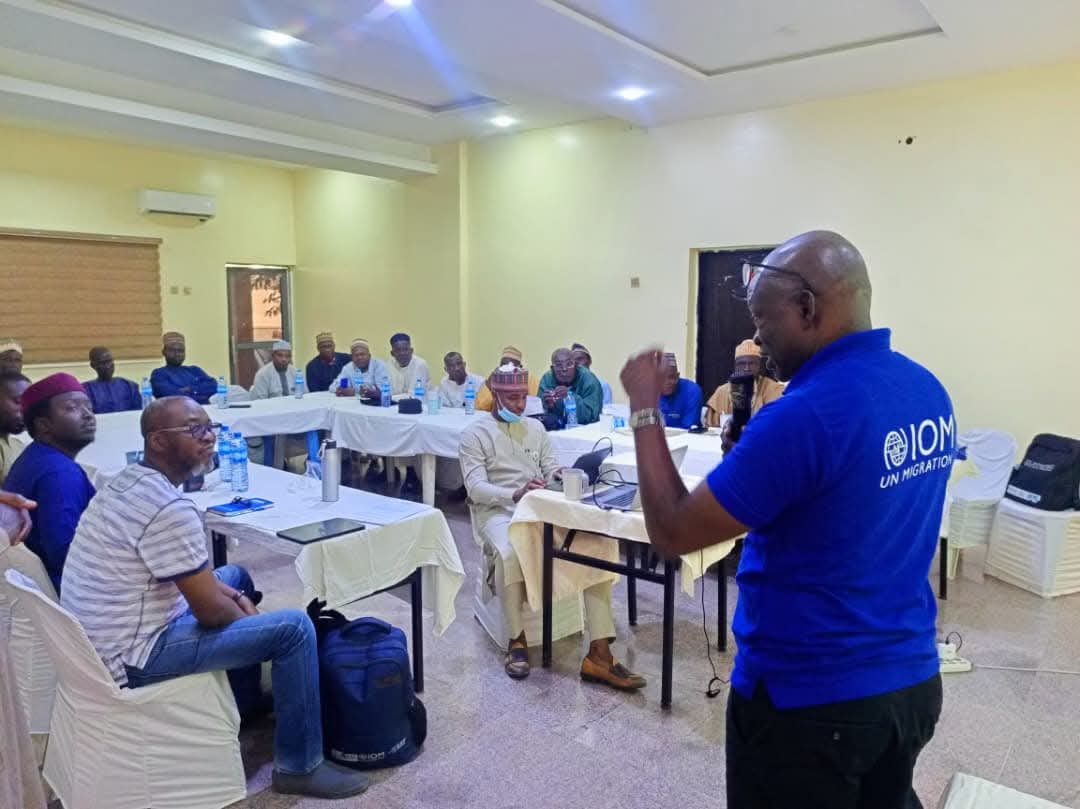
Over one thousand youth and women across eleven local government areas of Katsina and Zamfara States have been trained on conflict prevention and peace building under the Conflict Prevention, Crisis Response and Resilience (CPCRR) program.
The Head of IOM Mission for Northwest and CPCRR Program Manager, Mr. Jean Nahesi, disclosed this at a press conference to review the impact of the EU-funded project which was launched last year.
The €5.1 million intervention will run for eighteen months in Jibia, Batsari, Safana, Danmusa, Kankara, Faskari, Sabuwa and Dandume local government areas in Katsina State and Bungudu, Gusau and Tsafe local government areas in Zamfara State.
Mr. Nahesi explained that the project has also trained 50 persons on providing psycho-social support to IDPs and engaged 160 informants to alert relevant authorities with conflict early warning tip-offs.
“We also established 80 Community Peace Reconciliation Committees that have members drawn from various interest groups and age groups within the communities. Through these committees the program was able to provide protection services to 49,316 vulnerable persons.
Nahesi said under the Climate Change Resilience component of the program, 4,000 economic tree seedlings were distributed to 2,000 households.
He noted that the trees which will be nurtured and guarded by the local government forestry departments will go a long way in checking desertification and providing a means of livelihood for the locals.
“We also distributed climate smart agriculture kits to 300 beneficiaries and clean energy cooking stoves and briquettes to 3,000 households to control greenhouse gas emission which pollutes the atmosphere.
“Among the completed interventions were 13 quick impact projects solar-powered boreholes, classroom blocks, veterinary clinics and other critical infrastructure as well as livestock kits distributed to 200 persons”.
With about seven months to conclude the CPCRR program, Mr. Nahesi said 87 percent of the program objectives have been achieved while several structures have been set up to ensure sustainability.
He urged Community-Based Organizations, traditional institutions, CSOs and government at state and local levels to take full ownership of the program and take deliberate steps to sustain its legacy.