Governor Umar Namadi of Jigawa State has described the Fadama platform under Result Area 2 as the backbone of the NG-CARES programme, emphasizing its critical role in restoring livelihoods and strengthening the state’s agricultural economy.
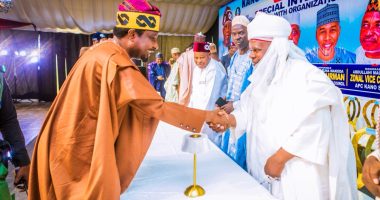
The governor made the remark yesterday during the unveiling of the completion report and wrap-up ceremony of Result Area 2 (Fadama 1.0) held at the Banquet Hall of the Government House in Dutse.
Namadi explained that the programme was designed not only to provide temporary relief to citizens but also to rebuild livelihoods, improve household security, and support the recovery of micro and small enterprises affected by economic shocks.
“Our specific objective is not just to provide temporary relief but to restore livelihoods, improve household security and facilitate the recovery of our micro and small enterprises,” the governor said.
He noted that agriculture remains the lifeline for many households in Jigawa State, stressing that strengthening the agricultural sector would enhance prosperity and stability across communities.
The governor also emphasized his administration’s commitment to transparency and accountability in the implementation of government programmes.

“As a fellow of ICAN, I hold the principles of transparency and accountability as non-negotiable in this government,” he said, adding that a six-member standing committee was established to ensure fairness and transparency in the execution of the programme.
Namadi commended the Federal Government under the leadership of President Bola Ahmed Tinubu as well as the World Bank for supporting the implementation of the NG-CARES initiative.
He also praised members of the standing committee for their dedication and commitment to ensuring accountability throughout the programme, assuring that his administration would continue to build on the achievements recorded.
Earlier, the Chairman of the Standing Committee, Dr. Saifullahi Umar, said the committee was established to ensure that every kobo allocated to the state reached poor and vulnerable beneficiaries through a strict and data-driven selection process.
“We didn’t just monitor; we validated the integrity of the process by visiting homes and verifying the status of those we served,” he said.
Umar disclosed that across five phases of implementation, a total of 47,800 beneficiaries received agricultural inputs and assets in more than 1,200 hard-to-reach communities across the state.
He added that the initiative had significantly improved the livelihoods of vulnerable households while strengthening agricultural productivity in Jigawa State.
Usman Mohammed Zaria