By Daniel Karlmax.
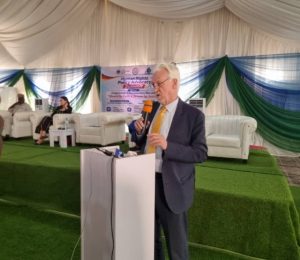
The Deputy Ambassador of the German Embassy to Nigeria, Johannes Lehne, has commended the Kaduna State Government, religious, traditional leaders, and community stakeholders for their contributions towards promoting human rights, access to justice and peaceful coexistence in the state.
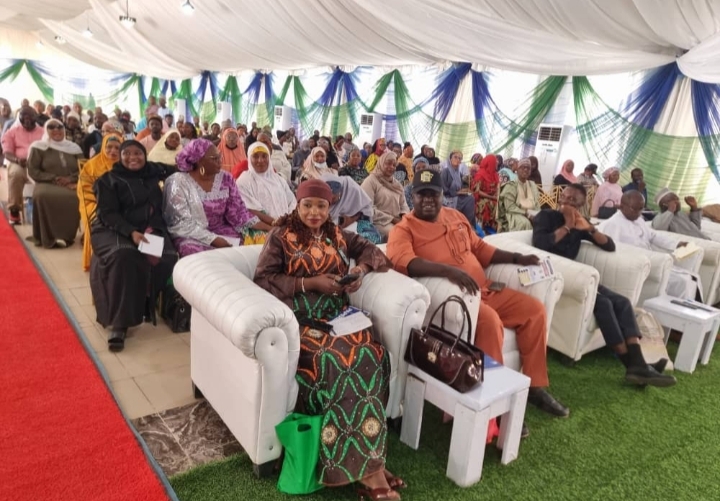
He gave the commendation at the Human Rights Policy Advocacy Summit, which featured the presentation of a project brief and documentary film show titled “Bounded by Faith and Driven by Justice,” organised by the Interfaith Mediation Centre (IMC) in Kaduna.
The summit marked the conclusion of a nine-month project implemented by the IMC under the “Strengthening Women Interfaith Leadership for Human Rights, Transitional Justice and Democratic Stability” initiative, funded by the German Embassy.
Lehne described the project as a successful intervention that had strengthened human rights awareness, community mediation, restorative justice and peaceful coexistence across participating communities in Kaduna State.
He explained that the initiative established local human rights hubs to provide training on fundamental human rights, tolerance and peaceful coexistence, while equipping community members with the skills to identify, prevent and respond to potential conflicts.
According to him, the project also strengthened the link between communities and existing government institutions and mechanisms, stressing Germany’s commitment to complementing the efforts of the Kaduna State Government in promoting peace and justice.
The Deputy Ambassador said the German Embassy was particularly interested in supporting the initiative because of its engagement with religious leaders and its deliberate focus on women as key stakeholders in peacebuilding.
Lehne further emphasised that sustainable peace could only be achieved when women were empowered, protected and given meaningful opportunities to participate in decisions affecting their families and communities.
He disclosed that the German Embassy was exploring the possibility of a second phase of the project in the coming year, adding that feedback from participants would help shape its sustainability and future implementation.
In his remarks, Governor Uba Sani of Kaduna State commended the Interfaith Mediation Centre and the German Embassy for funding and implementing the project aimed at empowering women and advancing peacebuilding in the state.
Represented by the director General, Bureau of Interfaith, Tahir Umar Tahir, the governor urged beneficiaries and participants to put the lessons gained from the programme into practice, while reiterating his administration’s commitment to supporting peacebuilding and community engagement initiatives.
He also stated that Kaduna State had recorded significant progress in promoting peace and peaceful coexistence, with no religious tension or unrest under his administration’s inclusivity agenda, alongside ongoing infrastructure development and other government projects.
On her part, the Kaduna State Commissioner for Women Affairs and Social Development, Hajia Rabi Salisu, described transitional justice and democratic stability as timely and significant issues, emphasising that women are central to peace promotion, human rights protection, family stability and community development.
She stressed that protecting human rights, addressing the consequences of conflicts through transitional justice and rebuilding public trust require collective commitment from government institutions, religious organisations and traditional leaders.
According to her, women’s voices and experiences must be adequately heard and represented, particularly as they are often exposed to violence, displacement, discrimination and other forms of abuse during conflicts.
The commissioner added that survivors and victims of human rights violations deserve access to justice, as well as psychosocial and trauma counselling support, noting that the Kaduna State Ministry of Women Affairs and Social Development has the mandate to provide such support in relation to access to justice.
She urged religious leaders to use their diversity to promote peaceful coexistence and collective responsibility rather than division, noting that justice, peace and democratic stability are strengthened when women of different faiths unite around the principles of human rights and human dignity.
Highlight of the program included documentary film show, testimonials from beneficiaries, participants and facilitators, goodwill messages and the signing of policy document by stakeholders, as well as presentation of Sewing and grinding machine to Khadijah Musa and Sarah Ibrahim by the Commissioner for women affairs and social development.
Editing By Abubakar Hamza.