
By Adamu Yusuf
The Universal Basic Education Commission (UBEC) has flagged off the national distribution of standardized school records and instructional materials for the Integrated Qur’anic and Tsangaya Education (IQTE) Programme.
It’s a move aimed at strengthening non-formal education centres and reducing the number of out-of-school children across Nigeria.
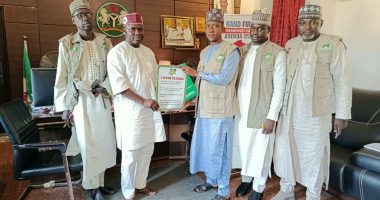
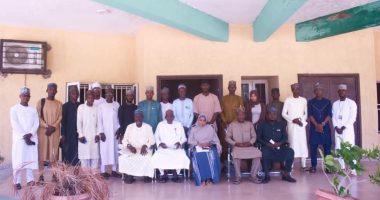
The Deputy Executive Secretary (Technical), Mr. Rasaq Olajuwon Akinyemi led the flag-off ceremony which took place at the UBEC Zonal Office in Millennium City, Kaduna.
Mr. Rasaq Olajuwon Akinyemi said the initiative aligns with the Federal Government’s inclusive education agenda under the Renewed Hope Administration of Bola Ahmed Tinubu, describing the exercise as a significant step toward improving access, quality, and accountability in non-formal basic education.
He commended the Kaduna State Government and the State Universal Basic Education Board (SUBEB) for hosting the national event, noting that the intervention addresses key challenges confronting Integrated Qur’anic and Tsangaya centres, including poor data management, low learner retention, and weak reintegration tracking systems.
According to him, the distribution covers 100,000 copies of standardized school records and instructional materials, including enrolment and attendance registers, lesson plans, facilitator guides, assessment records, and visitors’ books.
The materials are being deployed to IQTE centres in high out-of-school-children zones across the North-West, North-East, North-Central, and South-West geopolitical zones.
Mr. Akinyemi explained that the intervention builds on the evolution of the programme from the 2010 Almajiri Education Programme, through successive expansion phases between 2018 and 2024, which extended support to hundreds of centres nationwide by integrating literacy and numeracy with traditional Qur’anic learning.
Highlighting recent achievements, he said the 2024 IQTE intervention delivered major infrastructure upgrades, including the construction and renovation of classrooms, recitation halls, and sanitation facilities, as well as the provision of furniture and learning aids for tens of thousands of learners.
He, however, expressed concern over inconsistent state counterpart funding and urged SUBEBs nationwide to accord IQTE learners the same priority as pupils in conventional schools.
In his address, the Executive Chairman of the Kaduna State Universal Basic Education Board, Mr. Mubarak Muhammad, described the national flag-off as a historic milestone in advancing inclusive basic education in Nigeria.
He commended UBEC, under the leadership of its Executive Secretary, Aisha Garba, for its strategic direction and sustained commitment to tackling the challenge of out-of-school children through culturally responsive education models.
According to him, the IQTE Programme provides a practical framework for integrating learners from non-formal Qur’anic and Tsangaya centres into Nigeria’s national education system.
Mr. Muhammad said the provision of standardized school records and instructional materials would strengthen planning, improve learner tracking, and support effective reintegration into the formal school system.
He added that the initiative aligns with Kaduna State’s education reform priorities under Governor Uba Sani, particularly programmes aimed at improving learning outcomes and expanding access to basic education.
He assured UBEC of the state government’s commitment to effective distribution, proper utilization, and continuous monitoring of the materials, stressing that success would be measured by improved learning outcomes and a sustained reduction in the number of out-of-school children.
Also speaking, the Director of Social Mobilization at UBEC, Mallam Adamu Gurama, described the exercise as a major milestone in promoting inclusive basic education nationwide.
He said the IQTE Programme bridges religious and secular learning by equipping Almajirai and Tsangaya learners with essential literacy, numeracy, and life skills, while preserving the moral and spiritual values of Qur’anic education.
Mallam Gurama expressed optimism that the intervention would significantly reduce educational exclusion and reaffirmed UBEC’s commitment to ensuring equitable access to quality basic education for all Nigerian children.